


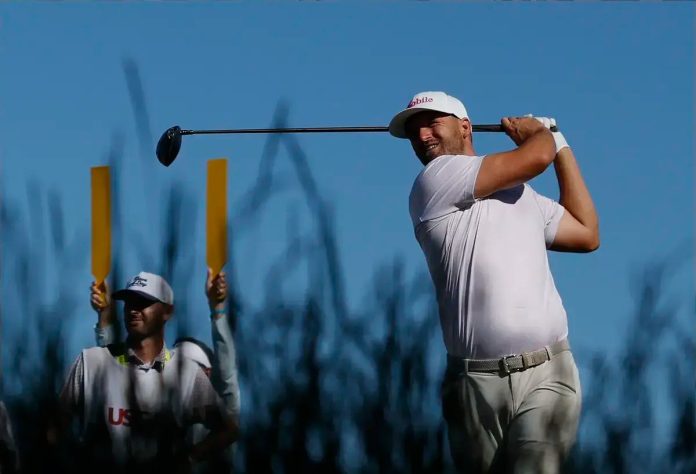
A tense atmosphere and a frenzied crowd marked the final round of the 2026 U.S. Open at Shinnecock Hills, Southampton, as controversy unfolded. Several fans were ejected from the venue for booing and insulting Wyndham Clark, the tournament leader, who faced fierce hostility from the New York crowd that did not relent even as he appeared to be on his way to securing his second title at the event.
The decisive match of the U.S. Open, held this Sunday, pitted Wyndham Clark against Scottie Scheffler, the current world number one, who was celebrating his 30th birthday and seeking to complete the much-coveted career Grand Slam. While Scheffler was greeted with celebration, chants, and applause from the first tee, Clark felt the coldness – and even hostility – of the fans, who reacted more to his mistakes than to his best moments. The animosity escalated when, during one of the decisive shots, a spectator shouted, “Don’t choke, Wyndham!”, prompting immediate intervention from security, which ejected the offender. According to reports from Kevin Van Valkenburg, special correspondent for The Fried Egg, the incident was not isolated, as boos and taunts directed at Clark were audible on the television broadcast throughout much of the final round.

THE 2026 WORLD CUP IS EXPERIENCED WITH LEGO
This news becomes even more relevant in light of Clark’s recent past, as he has sought to rehabilitate his image following a controversial episode in the U.S. Open locker room last year at Oakmont. Despite entering the final round with a comfortable six-shot lead, Clark has faced criticism and a campaign of distrust from fans, who have not forgotten previous incidents and have made a point of marking him as “public enemy” in this edition in New York. The psychological pressure has reached peak levels, making the battle for the trophy even more intense and unpredictable, especially in a venue where the crowd is known for being outspoken, as was clearly demonstrated in the last Ryder Cup.
The tournament organization defended itself with strict measures, having ordered the immediate expulsion of all those who crossed the limits of sportsmanship. The decision was welcomed by many, but it raised questions about the extent to which a hostile environment can influence players’ performance. “New York fans are passionate, but there are limits to everything. I saw several colleagues being bothered during the round. I hope the organization continues to protect the players,” said a PGA Tour athlete, approached after the round ended. Clark, for his part, declined to comment on the incidents, remaining focused on the title fight and simply stating: “I’m here to play my best golf. Everything else stays off the course.”
The unfolding situation suggests renewed discussions about the need to strengthen conduct rules at top sporting events, given the growing involvement – and sometimes excess – of fans. The pressure on Clark is unlikely to ease, but the athlete now has the opportunity to respond on the course and turn adversity into motivation to solidify his status among the best. For Scheffler, this hostile environment towards the opponent can translate into a psychological advantage, but the history of golf is filled with twists in unpredictable scenarios.
In the coming days, attention will remain focused on Shinnecock Hills as the impacts of this toxic environment are analyzed for both the players and the tournament’s reputation. The organization will need to draw conclusions and consider additional measures to ensure that fair play prevails over the excessive passion of the stands. What is certain is that the 2026 U.S. Open will go down in history not only for the achievements on the field but also for the controversy off it, which promises to continue making waves in the world of international golf.
YOU CAN NOW FOLLOW THE WORLD CUP WITH ALL THE INFORMATION – HERE
Discover more from Apito Final
Subscribe to get the latest posts sent to your email.

