FIFA reignited the international debate on freedom of expression in sports by forcing Haiti to urgently change its jersey for the 2026 World Cup due to alleged inclusion of a political message. The jersey, which was already prepared for the biggest stage in world football and celebrated one of the most significant moments in Haitian history, suddenly found itself embroiled in an overwhelming controversy that threatens to overshadow the historic return of the Caribbean team to the World Cup.
The organization that oversees world football has informed Saeta, the manufacturer of Haiti’s kit, that the illustration present at the bottom of the shirt – referencing the Battle of Vertières, fought on November 18, 1803, and regarded as a symbol of the country’s independence – must be removed. This decision was announced by Saeta on Tuesday, through a statement revealing that FIFA demanded the change, considering that “certain visual elements could be interpreted differently in light of its equipment regulations,” suggesting that the historical reference could, in fact, be understood as a political message.
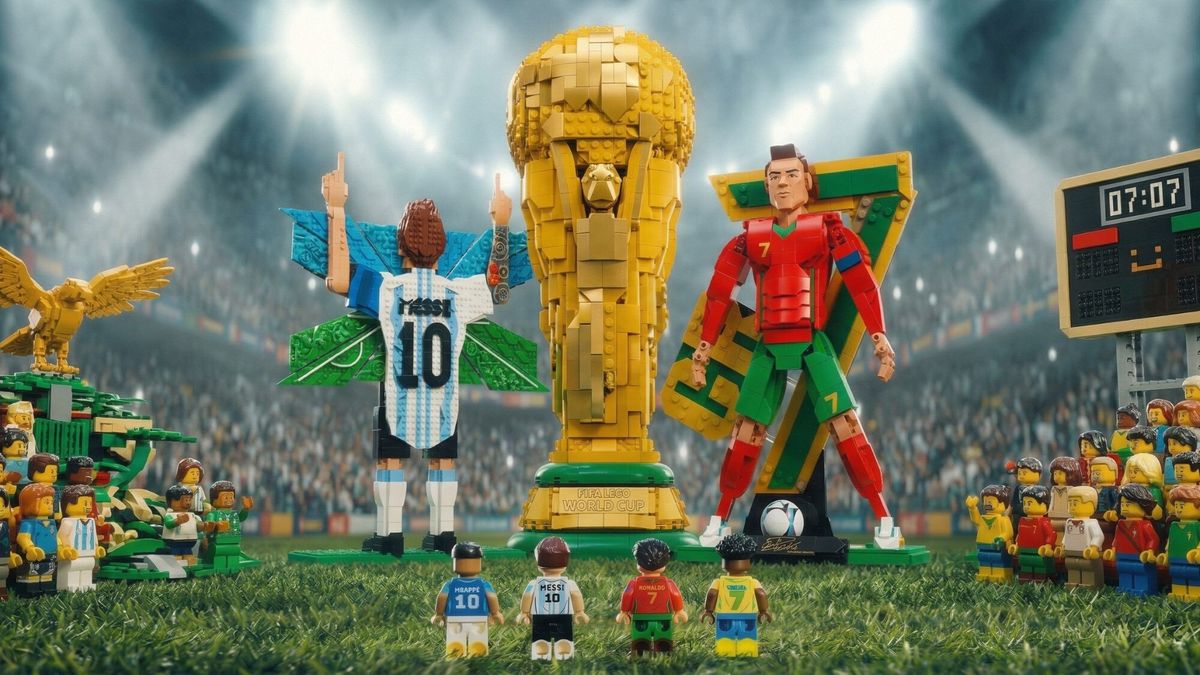
THE 2026 WORLD CUP IS EXPERIENCED WITH LEGO
The Haitian Football Federation and Saeta launched the equipment as a tribute to the “pride, resilience, and spirit of the Haitian people,” marking a truly unique moment: Haiti’s return to the World Cup. The jersey, meticulously crafted over months, aimed to honor those who fought and continue to fight for the future of Haiti. The Battle of Vertières, the final battle of the Haitian Revolution against Napoleon’s troops, is not just a historical episode but the cornerstone of Haitian national identity – and thus, FIFA’s decision is generating an unprecedented wave of outrage among fans, analysts, and even politicians.
The impact of this decision is immediate and enormous: FIFA is once again accused of stifling cultural and historical expressions under the pretext of political neutrality. In a context where international football has become a stage for discussions about identity, equality, and freedom of expression – recalling recent cases involving rainbow armbands or anti-discrimination messages – this decision reignites the debate about the limits of federative regulation. For Haiti, it is a symbolic blow at a time that should be one of celebration and national unity.
In a statement released on Tuesday, Saeta expressed its regret over the situation, recalling that “the final design presented by Saeta was intended to be a tribute to the men and women who contribute every day to the future of Haiti and was not meant to be a political statement.” The company also added: “During the review process, FIFA determined that certain visual elements could be interpreted differently in light of its equipment regulations and ultimately requested modifications to the design. Although this interpretation differed from our intention, Saeta respected the process and implemented the final requirements communicated by FIFA. We remain proud to have contributed, along with the Haitian Football Federation, to this historic moment for Haitian football and wish the team the greatest success at the FIFA World Cup.”
The controversy is far from over. Analysts and fans are questioning whether FIFA is being consistent in the application of its rules or if there is, in fact, a double standard regarding the symbolic content present on national team kits. Haiti, for its part, now faces the challenge of keeping the flame of its history alive, even if it is unable to display it on the pitch. This case could have profound repercussions on how future national teams approach the creation of their kits and the representation of their cultural identities in competitions under FIFA’s auspices.
With the 2026 World Cup on the horizon, it remains to be seen whether this decision will affect the morale of the Haitian squad or serve as motivational fuel to surprise in the tournament. One thing is certain: Haiti has already made history in this World Cup before even stepping onto the pitch, starring in one of the most controversial episodes of the lead-up to the competition. The football world is now waiting to see if FIFA will maintain the same stance in other similar situations or if this case will set a precedent for future revisions of international equipment regulations.
[NOW YOU CAN FOLLOW](https://apitofinal.pt/nacional/schjelderup-trava-renovacao-com-o-benfica-e-da-prioridade-ao-mundial/) THE WORLD CUP WITH ALL THE INFORMATION – [HERE](https://mundialfutebol.com/)
Discover more from Apito Final
Subscribe to get the latest posts sent to your email.