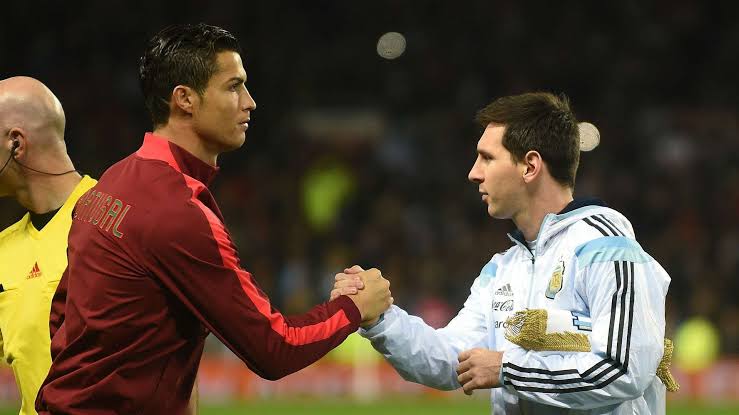
It seemed like the perfect farewell to football: Lionel Messi had achieved the ultimate glory by scoring two goals in the World Cup final, a third in the penalty shootout, and lifting the World Cup trophy as captain of Argentina, equaling the legend Diego Maradona. He was named the tournament’s best player and the best player of the final, capping off a career that seemed unattainable. However, four years later, the Argentine phenomenon is back to compete in his sixth World Cup at the age of 39, accompanied by eternal rival Cristiano Ronaldo, now 41. Age, which once dictated retirement, has become merely a number in a football increasingly dominated by science, motivation, and economic interests.
The 2026 World Cup, to be held in the United States, promises to be the ultimate stage for this group of veterans who defy time. While in 2022 it seemed like the end of the line, the reality is that the longevity of these stars is now a fact driven by advances in physical preparation, strict dietary regimes, unwavering ambition, and even the leniency of associations and organizations that frequently lift suspensions to keep the stars on the field.
While legends like Pelé, Franz Beckenbauer, Johan Cruyff, and Bobby Moore bid farewell to the World Cup in their 20s, today we see players surpassing 35 and even reaching 40 while still competing. Messi has broken Lothar Matthäus’s record, having played 25 matches in World Cup finals. The German was one of four players — three Mexicans included — who had participated in five editions. Messi and Ronaldo, present since 2006, are on their way to a sixth World Cup, a historic achievement. Luka Modric, who would certainly be part of this untouchable group, missed Croatia’s qualification in 2010 but remains an example of longevity and quality.
Cristiano Ronaldo, who turns 41 in September, is set to reach 200 international caps in the United States, while Messi could become a double centurion even before the World Cup whistle blows. Interestingly, in past eras, great figures like Geoff Hurst, Mario Kempes, Paolo Rossi, or Cruyff never even reached 50 international appearances.
Modric is another example of an athlete who, after turning 30, led Croatia to unexpected heights, accompanied by Ivan Perisic, who scored a goal in the 2018 final and is nearing 200 international caps. James Rodríguez, the hero of Colombia in 2014 after winning the World Cup Golden Boot, has faced difficult times recently, even being without a club, but he maintains his relevance in the national team, having signed a temporary contract with Minnesota United.
This new generation of veterans shows that modern football does not accept easy farewells. When science, passion, and business come together, even the oldest resist the inevitable. The 2026 World Cup will likely be the last act of this era of immortals on the field — but until then, brace yourselves for more epic chapters, with Messi, Ronaldo, and company challenging time and history.
This article first appeared on Apito Final.
NOW YOU CAN FOLLOW THE WORLD CUP WITH ALL THE INFORMATION – HERE.
Discover more from Apito Final
Subscribe to get the latest posts sent to your email.