


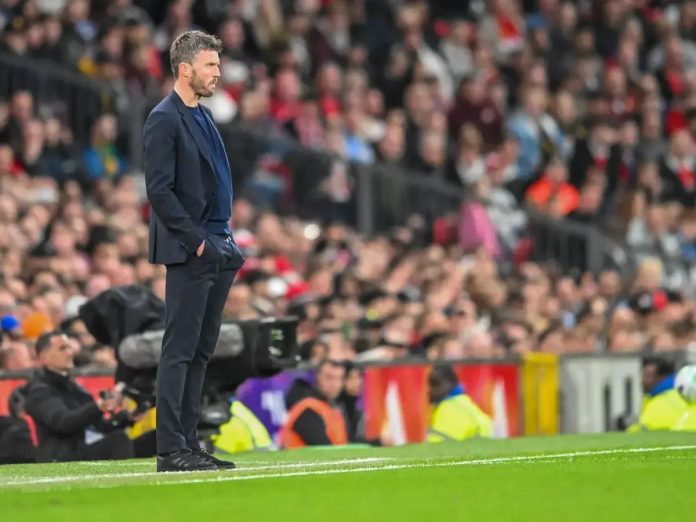
Michael Carrick is gaining traction in his role as the head of Manchester United, but a question is stirring behind the scenes of English football: who is the only name that can truly rival him for the position of head coach? The controversy has been ignited and promises to fuel discussion among fans and experts.
Since taking the helm of the Red Devils, Carrick has demonstrated impressive results. In the Premier League, he has accumulated the most points since taking charge — even more than the famous Pep Guardiola, who still has a game in hand. Working with the same squad as rival coach Amorim, Carrick has managed to extract the best from players who, with the exception of Bruno Fernandes, are not considered world-class. Criticizing his ability for not yet shaping United to the level of powerhouses like Bayern, Barcelona, PSG, or Man City is, at the very least, unfair and shortsighted.
The cold, hard analysis reveals that, despite the open and intense game against Brentford — a 3-3 scoreline at halftime would have been a fair result — Carrick managed the team well, even when Manchester United seemed to retreat with their slim lead. His performance has been underestimated, especially when compared to other coaches who have received more time and resources to build their teams, such as Kompany at Bayern or Arteta at Arsenal. Carrick has proven to be more than capable and deserves a permanent contract — and, if there is another valid option, it would only be the legendary Enrique, perhaps with Carrick preparing to take over in a future transition.
Meanwhile, the controversy does not stop with United. Statements about the “impoverished” state of the local area where Tottenham is based have also sparked debate. The London club, which has aggressively invested in urban regeneration at the expense of local businesses, does not seem to care much about the poor community surrounding it. The idea that the relegation of Spurs would have less negative economic impacts than in other cities falls apart when one understands the political and financial games involving football clubs.
On a more technical level, tactical maneuvers to gain time during matches, such as simulated “injuries,” especially by goalkeepers, continue to tarnish fair play. Players have already admitted that it is a coordinated strategy, a true sham that referees cannot combat. The suggestion that an injured goalkeeper must leave the field for treatment, with the substitute entering for a minimum of 5 to 10 minutes, is gaining traction to prevent these tricks. It is time for refereeing and regulatory bodies to take effective measures to put an end to this dirty trick that pollutes modern football.
Finally, on a lighter note, the ironic eloquence of Liam Rosenior has been a breath of fresh air in football communication, eliciting laughter and showing that humor can thrive even in such a competitive and sometimes bleak environment.
Amidst so much controversy, change, and debate, one thing is clear: Manchester United is at a crucial crossroads. Carrick is not just a temporary name; he is the figure who may define the club’s immediate future. And for the fans, the anticipation remains to see whether the club will opt for a continuity solution or a revolution that, so far, no one has been able to present with such solid arguments. Brace yourselves, because this decision promises to shake up the Premier League and world football.
This article first appeared on Apito Final.
Discover more from Apito Final
Subscribe to get the latest posts sent to your email.

