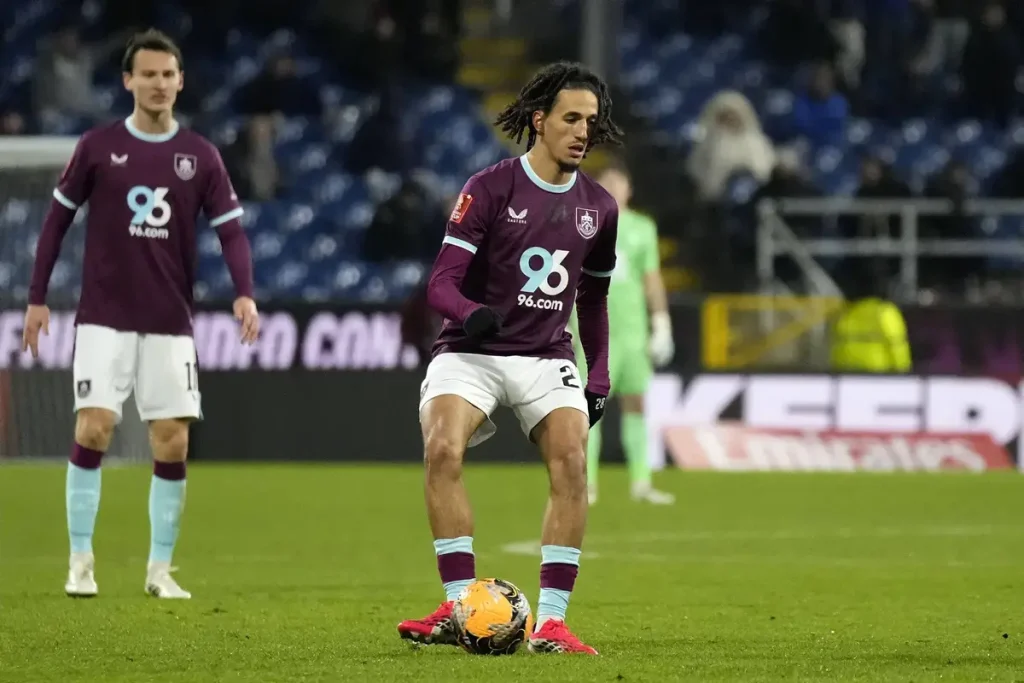
The wave of racism that plagues English football has once again made its presence felt alarmingly, prompting authorities to intervene. The police revealed that they are investigating cases of online racial abuse directed at four players from the Premier League during the last weekend. The victims include Burnley midfielder Hannibal Mejbri and Chelsea defender Wesley Fofana, both of whom were targeted with racist comments on Instagram following the 1-1 draw at Stamford Bridge.
The attacks did not stop there. Wolves forward Tolu Arokodare and Sunderland winger Romaine Mundle were also subjected to racial abuse on social media. The UK Football Policing Unit (UKFPU) confirmed on Monday that it has “launched several investigations” after receiving four distinct reports of online racist abuse.
Mark Roberts, head of the UKFPU, did not hold back in condemning this practice. “There is absolutely no place for racial abuse, whether online or in person, and anyone who thinks they can hide behind their keyboard should rethink that notion,” he said. Roberts emphasized that the UKFPU will “do everything possible to identify those responsible and bring them to justice.”
The situation was described as a “horrible weekend” by the anti-discrimination organization, Kick It Out, which lamented that “the sad reality is that we know this happens regularly.” The UKFPU, which is the body responsible for enforcing the law in cases of online abuse related to football, is working closely with clubs and players to identify the perpetrators.
In recent months, the UKFPU has seen several successful convictions for online racial abuse, resulting in significant football banning orders. However, officials acknowledge that there is still much work to be done, and they will continue to collaborate with Ofcom, English football authorities, and social media platforms to eradicate this issue.
In response to the abuse directed at Fofana and Mejbri, a spokesperson for Meta, the parent company of Instagram, stated: “No one should be subjected to racial abuse, and we remove this content as soon as we find it. No solution will eliminate racist behavior overnight, but we will continue to work to protect our community from abuse and cooperate with police investigations.”
Unfortunately, cases like these are becoming increasingly common. A BBC investigation conducted last November revealed over 2,000 extremely abusive messages on social media, including death and rape threats, directed at coaches and players from the Premier League and the Women’s Super League, all within a single weekend.
The situation is even more concerning when recalling that, in August, the opening match of the Premier League between Liverpool and Bournemouth was interrupted after Bournemouth forward Antoine Semenyo reported being subjected to racial abuse from someone in the Anfield stands. A man from Liverpool denied the accusations and his trial is scheduled for April.
In January, Newcastle United also contacted the police after midfielder Joe Willock was the target of “disgusting racial abuse and deeply disturbing threats” on social media. Additionally, Tottenham forward Mathys Tel experienced similar abuse following his team’s loss in the Super Cup final, and English player Jess Carter was also subjected to racial abuse during Euro 2025. We must not forget that players like Marcus Rashford, Jadon Sancho, and Bukayo Saka also faced racism after the Euro 2020 final, a problem that continues to tarnish the image of football.
Authorities and anti-racism organizations need to join forces and intensify efforts to ensure that football, a sport that should be a symbol of inclusion and diversity, is not a stage for discrimination and hate.
Discover more from Apito Final
Subscribe to get the latest posts sent to your email.