


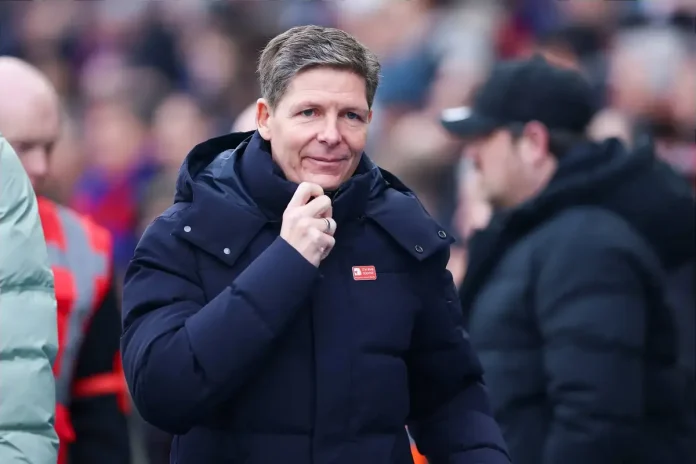
To the eyes of the football world, Oliver Glasner appeared to be a rising prodigy. A year ago, his tenure as manager of Crystal Palace was marked by memorable achievements, with the team lifting the coveted FA Cup trophy following an impressive victory over Manchester City at Wembley. This historic feat not only brought the club its first major trophy but also established Glasner as the most successful manager in its history. His playing philosophy, characterized by bold and progressive football, transformed Palace from a struggling team into an ambitious force in the English football scene.
However, the glory was short-lived. Despite success in the cups, the team finished the previous season in a modest 12th place in the Premier League, a result that, although overshadowed by the trophies, raised discreet alarms about the sustainability of their success. What once seemed like an inevitable rise is now revealing a spiral of uncertainties.
The current season has seen an alarming collapse in the form of Crystal Palace, with only one victory in 15 matches. This disastrous run has not only dragged the team into the lower reaches of the table but has also shattered the aura of invincibility surrounding Glasner. The low point came in the FA Cup, where a humiliating elimination at the hands of Macclesfield, a non-league team, was not just a setback but a blow to the club’s dignity.
The stands at Selhurst Park, once filled with chants of support, now echo with shouts of frustration, including the cry “Glasner Out.” The speed at which the tide has turned underscores the relentless nature of football. Glasner, for his part, did not hesitate to take responsibility for the situation, stating: “At this moment, I simply am not good enough… I am responsible for the whole team.”
Meanwhile, the decline in the quality of play is not the only factor complicating Glasner’s situation. His frustration with the club’s management has become visible and public, which could be even more damaging to his reputation. “I feel we are being completely abandoned,” he lamented in January, following the sale of his captain, Marc Guehi. He also expressed discontent over the departure of Eberechi Eze, questioning how the team could compete without its most influential players.
These comments not only reflect genuine frustration but also reveal a potential problem of adaptation and diplomacy required for a coach at an elite club. Glasner’s honesty, while admirable, may convey the image of a coach who openly confronts management, something that executives at major clubs tend to view with caution.
The crux of the matter is not just Glasner’s struggles this season; it is the combination of disappointing results and a discourse that has distanced him from the club’s management. His trajectory, once marked by a promising ascent, now faces the challenge of rebuilding and reaffirming that past successes were not mere luck, but rather the foundation of a solid future.
Time, which once seemed to be on Glasner’s side, now works against him. What could have been a triumphant ending to his tenure at Palace has turned into a prolonged struggle to regain control. His legacy, although secured by past achievements, now depends on his ability to turn the tide and restore his position in the world of football.
Oliver Glasner may still find redemption. Football often offers second chances to those who persist. However, the road that once seemed to lead to success is now fraught with uncertainties, leaving the coach’s future hanging in the balance.
Discover more from Apito Final
Subscribe to get the latest posts sent to your email.

