


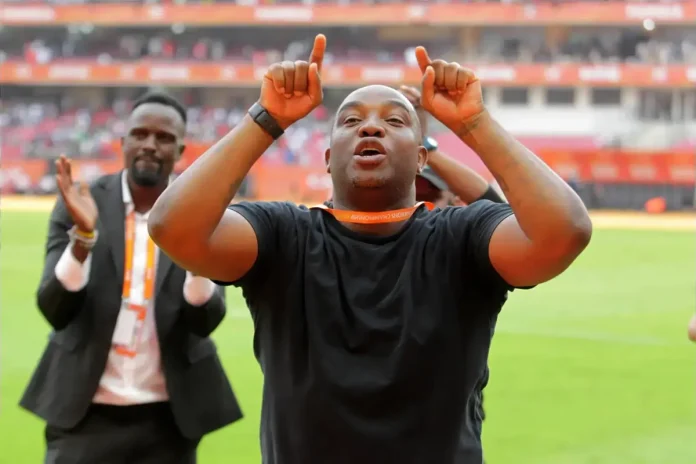
Controversy in the world of football is stirring once again, this time with the prominent figure of José Mourinho at the center of the storm. Former South African forward Benni McCarthy did not hesitate to criticize the statements made by the Benfica coach, accusing him of being “emotional” and of making a serious mistake when referring to the recent incident of racial abuse directed at Brazilian player Vinicius Jr., who plays for Real Madrid.
The incident occurred during a Champions League match, where Vinicius Jr. scored the only goal that secured victory for Real Madrid over Benfica. However, the player’s moment of celebration was interrupted when the match was suspended for 10 minutes after the Brazilian reported being the target of racial abuse from Argentine winger Gianluca Prestianni. UEFA has already launched an investigation into the allegations, which Prestianni vehemently denies.
After the match, Mourinho, who was sent off for protesting against the referee, stated that Vinicius had been “disrespectful” with his celebration, also mentioning the club icon, Eusébio, as an example that Benfica is not a racist club. However, McCarthy, who won the Champions League under Mourinho at Porto in 2004, argues that the Portuguese coach should have approached the situation differently. “The situation, he could have handled better or chosen his words more carefully, but emotions got the better of him,” McCarthy told BBC World Service presenter Isaac Fanin.
The former player added that “what he said was very wrong. We are all human, we all make mistakes. When it comes from someone I know personally and who I know how he feels about our continent and our people, he is the best man any African player could have as a coach. It was an emotional, tough decision, where perhaps he made a choice that was not the right one, and I hope he has the humility to admit the mistake.”
Vinicius Jr., who has been the target of several incidents of racial abuse throughout his career, reacted on social media, stating: “Racists are, above all, cowards.” Benfica, for its part, defended Prestianni, claiming that there is a “defamation campaign” against the Argentine player. If found guilty, Prestianni could face a minimum suspension of 10 matches in European competitions.
The discussion about racism in football is not limited to this incident. Chelsea manager Liam Rosenior stated that there should be a zero-tolerance policy for anyone found guilty of racist behavior in football. “If any player, coach, or official is found guilty of racism, they shouldn’t be in the game. It’s as simple as that,” declared Rosenior, who also highlighted the need for a broader change in society. “It’s a very complex situation when it comes to race or gender. There are many things that need to change in society,” he concluded.
McCarthy agrees that the problem of racism goes far beyond football. “In today’s society, people are not open to talking about it. We still don’t have those conversations,” he said. “There is one race that wants to have this conversation and the other is not ready. In moments of anger, you might let slip a phrase like that, but it’s quick to say you’re not racist while using an underlying racist phrase when you’re upset. For this problem to disappear, both sides and both races need to be willing to discuss these issues.”
The situation remains a hot topic, with the football world being called to take responsibility and act against racism, a scourge that, unfortunately, still persists in the sport.
Discover more from Apito Final
Subscribe to get the latest posts sent to your email.

