


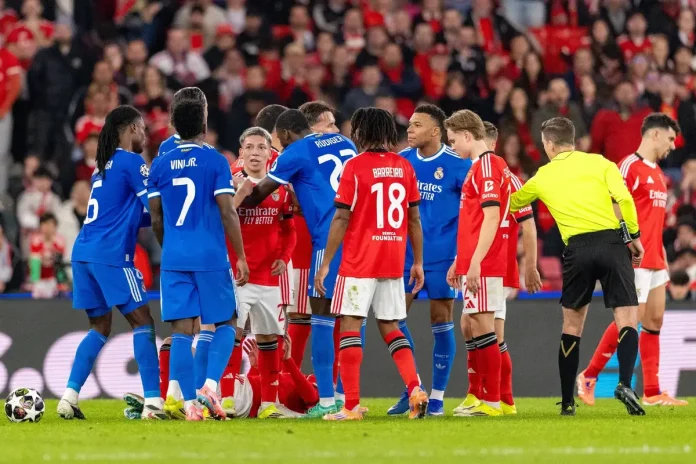
An explosive and tense moment marked the clash between Benfica and Real Madrid, culminating in a drastic 10-minute interruption that left all spectators stunned. The protagonist of this controversial episode was Vinícius Jr., who, after scoring a goal that put Real Madrid ahead on the scoreboard, saw his celebration overshadowed by a racist insult directed at him by Benfica player Prestianni.
The situation escalated quickly after Vinícius’ goal, as he had already received a yellow card earlier for allegedly provoking Benfica fans during his celebration. The atmosphere, which was already boiling, reached its peak when the Brazilian accused Prestianni of directing a racist insult at him, calling him “mono,” an offense that translates to “monkey” in Spanish. The seriousness of the accusation prompted the match referee to immediately halt the game, leaving players and fans in suspense for about 10 minutes.
During the break, Vinícius had the opportunity to speak with Álvaro Arbeloa and José Mourinho, seeking to clarify what really happened on the field. The discussion was not limited to the players on the pitch; Otamendi and Mbappé also became involved in a heated exchange of words, highlighting the tension that permeated the atmosphere. On the benches, the mood was equally charged, with coaches and technical staff fervently debating the incident.
This episode is not only a reflection of the competitive intensity between the two teams but also a bitter reminder that racism remains a persistent problem in sports that needs to be addressed with seriousness and commitment. What happened at the Estádio da Luz should not merely be a point of controversy but rather a call to action for everyone involved in the world of football, from players and coaches to fans and organizations.
The outrage from Vinícius Jr. and the swift response from the game authorities are important steps in the fight against racism in sports. The issue, which has been debated on various other occasions, is once again in the spotlight, raising the urgency for open dialogue and concrete measures to eradicate discriminatory behaviors from the pitches.
This incident is expected to resonate in the coming days, not only in post-match analyses but also in broader discussions about racism and sports. The question that remains is: what more will be needed for the message of respect and equality to become an unquestionable reality in the world of football?
Discover more from Apito Final
Subscribe to get the latest posts sent to your email.

