


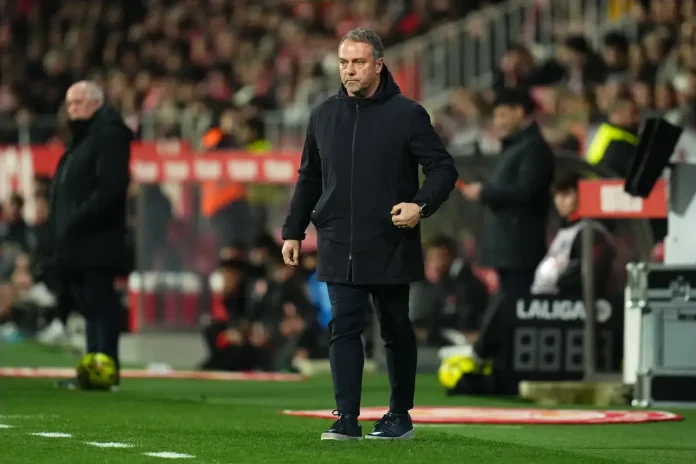
Hansi Flick, the fearless coach, did not hold back in criticizing Barcelona’s humiliating defeat to Girona. With a blunt demeanor, Flick analyzed the chaotic situation of his team, revealing a mix of frustration and hope as he prepared for the next battle. Barcelona’s collapse reached a new low on Monday when the team was torn apart in transition, losing 2-1. This setback was even more painful, coming just four days after a devastating 4-0 defeat to Atlético de Madrid in the Copa del Rey.
“We are not in a good moment, especially in defensive transitions,” Flick shot back, his indignation evident in every word. His refusal to dwell on the refereeing error that led to Girona’s winning goal was clear: “If we had played well, I could criticize the decision,” he quipped. Instead, Flick focused on the urgent need for improvement: “We need to focus on our work and improve ourselves. We are not showing our true potential.”
What is going wrong for Barcelona? Goalkeeper Joan García was direct in his analysis: “We are conceding too many opportunities; we are giving them away too easily.” His frustration was palpable, especially after making several brilliant saves that prevented Girona from scoring even more. “It’s not something to celebrate if I have to make so many saves,” he lamented.
Surprisingly, Barcelona is the team that concedes the fewest shots in La Liga. However, the high quality of the chances they allow their opponents is revealed by the high number of expected goals (xG) they accumulate, placing them 12th in the defensive table according to that metric. This situation is exacerbated by the fact that many of the opponents’ shots come during transitions, when the defense is disorganized, leaving a clear route to goal that García can only partially stop. Only one team in the five major European leagues has allowed more shots in counter-attack situations than the 36 that Barcelona has permitted this season.
The root of this glaring problem lies, ironically, in Barcelona’s greatest strength: their intense pressing. When everyone is in sync, this aggressive approach can be devastating. By pushing the center-backs up to the midfield line and chasing opponents in possession, Barcelona compresses the field, forcing errors that allow for quick attacks. However, this is a delicate balancing act. If the players hesitate even slightly or are out of position, elite professionals in La Liga and the Champions League can easily breach the defense, dubbed the “Flick Line” by rival coaches.
García, who observes everything from pitch level, identified a crucial problem: the “counter-press,” which must act immediately after losing possession. “We press well from a fixed position,” he reflected. “When we lose the ball, we need to cut off plays and commit fouls in the opponent’s midfield. They commit fouls against us.” Flick agreed, pointing out that the issue does not lie in the attack, where Raphinha’s return has already brought some organization, but rather in midfield. “Our positioning, especially in midfield, was not good,” he lamented. “We were too open. We need to calm down. We made too many mistakes.”
However, the imminent return of Barcelona’s best midfielder brought a glimmer of optimism to Flick. The first step in his recovery strategy was a well-deserved break. Intense pressure drains both the mind and body; modern tactics are much more sophisticated than simply advancing without thought. Two days off this week will be welcome.
“We have been lacking a bit in everything,” reflected central defender Pau Cubarsí, expressing the urgency for the necessary self-analysis. “We need to be critical of ourselves.” Now, with pressure mounting and expectations rising, Barcelona’s future is at stake. Will the team be able to regain its form before it’s too late? Time will tell, but one thing is certain: Hansi Flick is not willing to accept any more defeats.
Discover more from Apito Final
Subscribe to get the latest posts sent to your email.

