


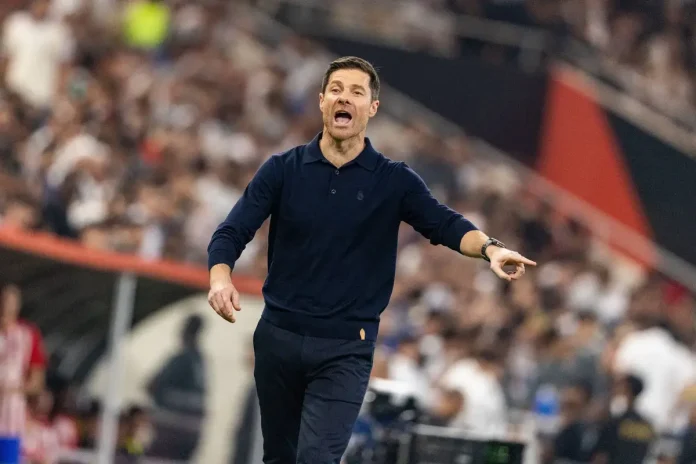
The departure of Xabi Alonso from the helm of Real Madrid is not just another coaching change, but rather a reflection of the crisis that permeates modern football and the club’s structure. From the outset of his brief tenure, Alonso seemed at odds with the grandeur and culture of Real Madrid. While some focused on Kylian Mbappé and his actions that allegedly prevented teammates from paying tribute to Barcelona in the Super Cup, others looked back to Alonso’s first match: a game against Al Hilal in the Club World Cup.
Florentino Pérez, president of Real Madrid, has always aimed to elevate the historical significance of this new tournament, but Alonso could not hide his disinterest in the competition. This lack of enthusiasm did not go unnoticed and quickly became a problem for Pérez, who saw his new coach without any public support, not even a mention in the president’s Christmas messages. This was a clear sign of what was to come.
Alonso was not the first to feel the pressure of stardom at the Bernabéu. The club’s history is filled with coaches who have been crushed by the influence of players and management. A popular saying within the club is that “the coach matters little.” The defeat to Barcelona by 3-2 and the way off-field events overshadowed the team’s performance are just a few examples of the chaos that reigned.
Real Madrid, which always tends to take everything to the extreme, has become the third club in the Super League to part ways with its coach in just 12 days of 2026. The significant difference now is that Alonso’s appointment was supposed to mark a new era for the club, moving away from the individualism of star players and embracing a more system-oriented style of play. Alonso, a club icon, seemed to be the ideal solution, representing a “third way” in the evolving tactics of football.
However, the club’s lack of patience is alarming. How can one expect evolution if changes are abandoned after just a few months and some defeats? “It’s Madrid,” commented a source close to the dressing room. “You lose, you’re out.” An echo of the unchanging reality of the club.
But not all the blame can be attributed to institutional resistance. According to an insider from the dressing room, the problem lay with Alonso himself. “Nobody liked him,” expressed a source, revealing that the coach never managed to establish a connection with the team. His ideas were not being accepted and, right from the start, he lost the dressing room, unable to adapt to certain personalities. However, this dynamic also worked mutually, with Alonso being criticized for straying from his own ideology, leading to a lack of confidence in his leadership.
What remains now is a deep reflection on the future of Real Madrid and its ability to adapt to the demands of contemporary football. Alonso’s departure is not just an unfortunate ending for the coach, but rather a symptom of an organization that urgently needs to reassess its priorities and methods.
Discover more from Apito Final
Subscribe to get the latest posts sent to your email.

