


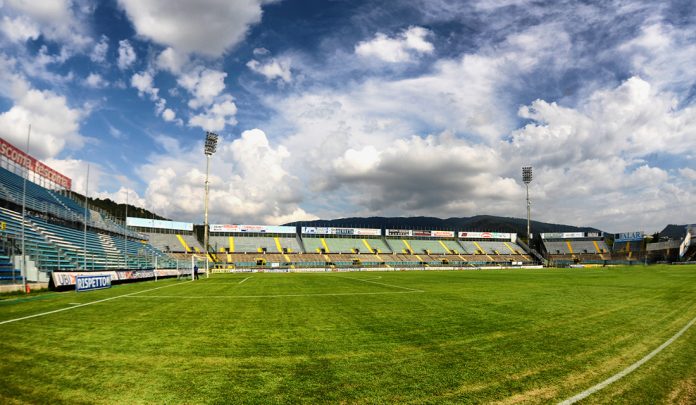
The historic Italian club Brescia, with a trajectory spanning 114 years, has been officially dissolved due to a substantial debt of nearly 20 million euros. The decision, made by the Brescia Court, marks the end of one of the most recognized entities in Italian football, which found itself suffocated by a series of financial problems and the expulsion from professional football.
Brescia’s decline began to accelerate about a year and a half ago, when irregularities in salary payments and contributions were revealed. These investigations led to severe sporting sanctions, including an eight-point penalty and a relegation that further exacerbated the club’s delicate economic situation. The inability to register for Serie C and the loss of the federative license sealed the club’s fate in the landscape of Italian football.
The judges of the court determined that Brescia was in a “clear state of insolvency” and that the solutions presented by owner Massimo Cellino to ensure the club’s continuity were not viable. Attempts at restructuring and the agreements proposed to creditors failed to convince the court, resulting in the club’s condemnation to a definitive disappearance.
This dissolution represents a severe blow to the rich history of Italian football. Brescia has been home to iconic figures such as Roberto Baggio, who had a remarkable performance at the end of his career, and Andrea Pirlo, who came through the club before becoming a global legend. Pep Guardiola also wore the club’s jersey during the times leading up to his revolution in football as a coach. More recently, the club witnessed the emergence of Sandro Tonali, one of the greatest talents in contemporary Italian football.
Following the announcement of the court’s decision, Massimo Cellino expressed his bitterness, stating that “it is simply a punishment” and lamenting the prevalence of bitterness over reason. Cellino also warned of the economic consequences this situation brings for creditors, asserting that “they will lose more than five million euros.” The court’s ruling is considered irreversible, thus closing the last chapter of an institution that, for over a century, has been an integral part of the landscape of Italian football.
Discover more from Apito Final
Subscribe to get the latest posts sent to your email.

