


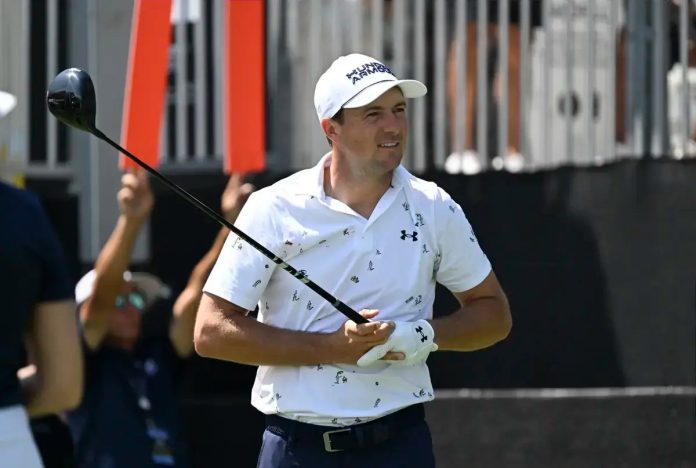
The scandal erupted at the 2026 U.S. Open: Wyndham Clark, fighting for the most important victory of his career, was subjected to insults and boos orchestrated by fans at Shinnecock Hills, many of whom were furious bettors concerned about the potential outcome of the tournament. The atmosphere became so toxic that several spectators were ultimately ejected from the stands, while phrases like “go to the bunker!” echoed with every shot Clark took, broadcast live to millions of viewers.
The incident, which occurred on June 30, marked not only the crowning of the American two-time champion, but also served as a warning of an alarming trend in global golf: the increasing influence of sports betting on fan behavior. Despite Clark being an American player winning on home soil, the crowd displayed unprecedented hostility, more typical of international clashes and historic rivalries. The atmosphere even recalled recent episodes, such as the taunts suffered by the European team at the Ryder Cup at Bethpage Black or the jeers directed at Matt Fitzpatrick at the Players Championship and RBC Heritage.
THE 2026 WORLD CUP COMES ALIVE WITH LEGO
The difference this time is that the protagonist of the criticism was “one of their own.” The animosity may have been exacerbated by Clark's controversial reputation, which had taken a hit the previous year after he damaged lockers at the Oakmont Country Club for failing to make the cut. However, for Jordan Spieth, one of the biggest names in world golf and a three-time major winner, the real problem lies elsewhere: the boom in legalized sports betting.
In statements made before the John Deere Classic, Spieth did not hesitate to point fingers: “I think you had unique circumstances there. But what I want to emphasize is that I believe betting on golf is something that is going to have to be faced soon, because I don’t know to what extent, in the case of Wyndham, it wasn’t very appealing to bet against him on Sunday, in a state where betting is legal, and you could have people there with $100 or even $10,000 invested against him,” said the American, highlighting the direct impact that fans can have on the course of the game.
The uniqueness of golf, according to Spieth, lies precisely in the closeness between players and the public, allowing a simple word, a shout, or a distraction to decisively affect the outcome of a shot. “In golf, it’s complicated because you can really influence the result if you want to. It might not last long, but you can impact a shot. I don’t know of another sport where the fan can influence as much as in golf. So I don’t know to what extent this is different from what it used to be,” Spieth explained, highlighting the growing seriousness of the phenomenon.
The player went even further by recalling that “I have played rounds with colleagues who were not treated well 10 or 15 years ago,” but he emphasized that, in the last five years, the connection to the phenomenon of betting has been much more evident. “It is often seen that it is related to betting. Let's see what happens moving forward,” he concluded.
This scenario is not limited to golf. Other sports, such as American baseball, have felt the pressure from bettors, to the point where the players' association has proposed banning certain bets to avoid threats and harassment. However, the intimacy of golf makes it particularly vulnerable: a moment of distraction caused by a fan can compromise months of preparation and work for a player.
Looking ahead, the debate has been initiated: golf authorities will need to find concrete solutions to curb the impact of betting on fan behavior. Measures such as increased security, awareness campaigns, and possibly restrictions on bettors' access to certain areas of the course may be considered. The risk of the sport losing its essence and fair play is real, and the episode at Shinnecock Hills serves as a warning for the urgent need for intervention.
With major tournaments on the horizon and the phenomenon of betting growing at an unstoppable pace, the integrity of golf is now under threat. The coming weeks will be crucial to determine whether the sport can withstand the pressure from external interests or, conversely, succumb to the fever of gambling and the noise from disgruntled fans. The future of golf, more than ever, is also being played outside the greens — and every stroke may be influenced not only by the players' talent, but by the wallets of the bettors.
NOW YOU CAN FOLLOW THE WORLD CUP WITH ALL THE INFORMATION – HERE
O MUNDIAL 2026 VIVE-SE COM A LEGO
Discover more from Apito Final
Subscribe to get the latest posts sent to your email.

