
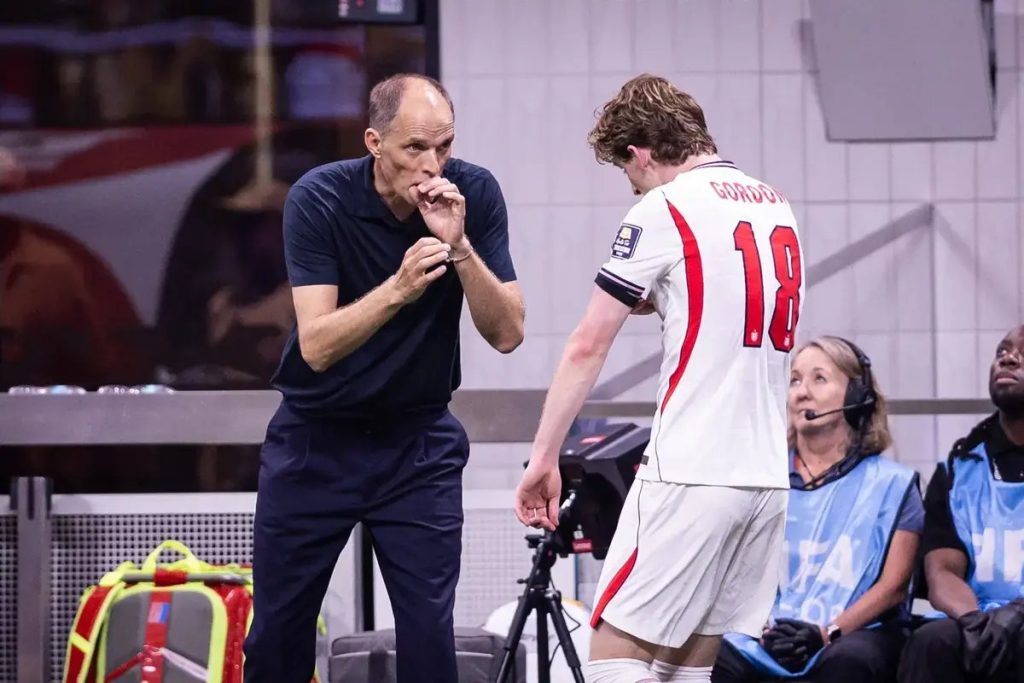
Thomas Tuchel’s England Exposes Old Habits as World Cup Dreams Collapse Against Argentina
Thomas Tuchel’s England stood on the brink of history in Atlanta, only to watch old ghosts return as Argentina condemned them to a painful World Cup semi-final exit. The match was defined not just by Anthony Gordon’s goal or Argentina’s late brilliance, but by a return to a deeply embedded English instinct: “When in doubt, kick it out.” As the clock ticked down and pressure mounted, England retreated, defenders repeatedly clearing their lines rather than seeking control. The phrase, etched into the nation’s footballing psyche, echoed once more as England’s best-laid plans unravelled under the harshest spotlight.
The familiar sight of England’s back line packing the box, defenders and midfielders alike booting the ball to safety, became a microcosm of the nation’s footballing anxieties. Stadium groans greeted every short pass, and the crowd’s nervous shouts of “man on” reflected a deep-seated fear of possession. Despite a squad brimming with technical ability and Premier League pedigree, England defaulted to type, ceding control to an Argentina team that, despite their own defensive frailties—having shipped four goals to Cape Verde and Egypt—seized the initiative.
Tuchel, a tactician who once promised to inject “excitement and hunger to win” into an England “afraid to drop out of the tournament,” found himself unable to exorcise these ingrained fears when it mattered most. The coach, who had previously impressed with bold substitutions and attacking intent against Croatia, DR Congo, and Norway, instead reverted to caution against Argentina. “We needed to get back on the ball otherwise you cannot break the pressure and you cannot get the momentum back,” Tuchel said in a somber post-match press conference, acknowledging the critical role of possession.
The German manager’s verdict was damning: “I think ball possession plays a crucial role. It's maybe not in our DNA like it is in the Spanish DNA or Argentinian or Brazilian DNA to take the ball, control the game and the ball, which is also a big problem.” Yet, Tuchel’s own decisions betrayed a lack of faith in his squad’s technical ability. Players like Kobbie Mainoo, Adam Wharton, and others capable of dictating play were left on the bench or at home, while England finished the match with six defenders on the pitch—an image of capitulation rather than courage.
Despite the Football Association’s massive investment in coaching and player development, Tuchel and his players appeared shackled by the past. Premier League and Champions League winners looked reluctant to trust their own ability, reflecting the anxieties of the fans and the enduring culture of caution in English football. As the Premier League restarts and the echoes of “When in doubt, kick it out” ring from the terraces, Tuchel must now decide whether he has the resolve to challenge these demons in the coming Nations League encounters against Czechia, Croatia, and Spain. His message was clear: the only advice worth following now is his own, if he has the energy to stay the course.
Discover more from Apito Final
Subscribe to get the latest posts sent to your email.