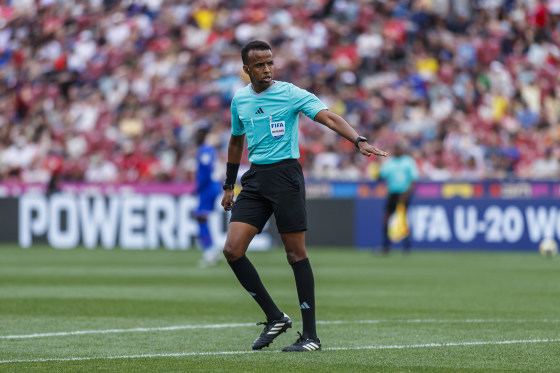
The dream of a Somali referee to make history at the 2026 World Cup was abruptly shattered when U.S. authorities barred his entry due to alleged links to terrorist organizations. Omar Artan, 34, was on the verge of becoming the first referee from his country to officiate at a World Cup, but he was ultimately prevented from entering the United States, despite holding a diplomatic passport and a valid visa for the event.
The incident occurred on Monday at Miami International Airport, where Artan was detained by U.S. immigration authorities. Despite being recently elected African Referee of the Year for 2025 and being included in the select group of 52 referees chosen by FIFA for the World Cup, the official saw his biggest dream crumble after an exhaustive 11-hour interview and several hours of detention. According to official U.S. sources, the decision was made after a “more in-depth inspection” revealed “derogatory information” related to an “association with individuals suspected of belonging to terrorist organizations,” thus rendering him “ineligible for admission to the United States under the Immigration and Nationality Act (INA).”

*The World Cup is experienced with LEGO*
[THE 2026 WORLD CUP IS EXPERIENCED WITH LEGO](https://www.lego.com/pt-pt/categories/football/football-gifts-toys)
This measure is part of the travel restrictions imposed by the Donald Trump administration, which includes Somalia on a list of 12 countries subject to tight controls. A source from the White House was emphatic in justifying the decision: “The Trump administration will not allow any security threats to enter our country. Period.” The impact of this decision goes far beyond the individual case of Artan, once again bringing to the forefront the debate on discrimination, security, and the impact of immigration policies in the realm of international sports.
For FIFA, this episode represents a severe blow, as it finds itself unable to ensure the participation of all referees appointed for the most high-profile event in world football. The absence of Omar Artan raises questions about the true universality of the competition, at a time when the organization has been heavily investing in the inclusion of representatives from all continents, aligning with the global spirit of football. Furthermore, this decision could set a concerning precedent for other sports professionals from countries targeted by restrictions for political or security reasons.
Despite the humiliation and emotional toll, Omar Artan was welcomed as a true hero upon his arrival in Mogadishu, where hundreds of people, including fans, government officials, and representatives of the Somali Football Federation, awaited him at the airport. The referee chose not to answer questions from the media but made sure to thank “all the support from FIFA” throughout the process. In emotional statements, he made a promise to his fellow countrymen: “I promise you that I will be officiating at the next World Cup.” Artan did not hide his dismay but showed resilience and determination to continue fighting for international recognition.
The case of Omar Artan is sure to dominate the debate in the coming weeks, with FIFA and other international sports organizations being pressured to respond to situations that go beyond the mere sporting realm. It remains to be seen whether FIFA will demand formal clarifications from the US government or if it will take measures to support referees and athletes from countries under sanctions or restrictions. For now, Artan’s absence from the 2026 World Cup is seen by many as a sign that politics may, in fact, continue to overshadow sports, even on the grandest stages of the planet.
In the coming days, the Somali Football Federation and FIFA itself are expected to issue official statements regarding the incident. Omar Artan’s immediate future involves continuing to officiate in Africa, but his story is already generating waves of solidarity and outrage within the global football community. There is uncertainty regarding the possibility of other referees or players facing similar obstacles, threatening the integrity and representation of the World Cup itself. The controversy is ignited and promises to rekindle the debate over the boundaries between security, politics, and the universal essence of the beautiful game.
NOW YOU CAN FOLLOW THE WORLD CUP WITH ALL THE INFORMATION – HERE
Discover more from Apito Final
Subscribe to get the latest posts sent to your email.