


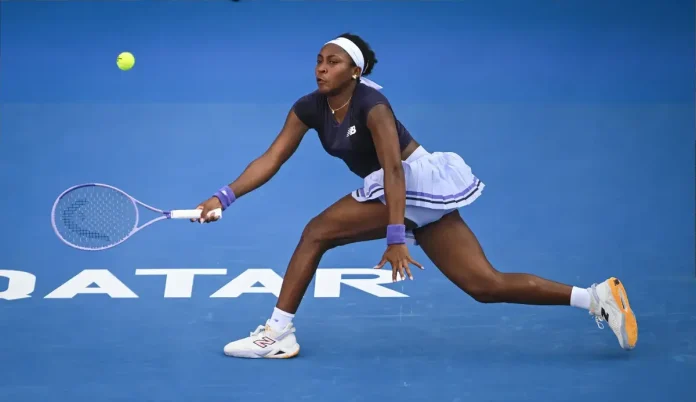
As the Dubai Duty Free Tennis Championships unfold, the tennis world is abuzz with controversy following the high-profile withdrawals of Aryna Sabalenka and Iga Swiatek. The fallout has ignited fierce discussions about potential penalties for players who withdraw from tournaments, and now Coco Gauff has stepped into the fray, defending her fellow athletes against calls for stricter measures.
In a press conference on Sunday, Gauff addressed the pressing issue of player burnout, cautioning that the current schedule could have lasting effects on athletes' careers. “You look at burnout throughout the year. Although maybe it might not affect you now, it will affect you later,” she stated, shedding light on the mental and physical toll that rigorous schedules can impose.
The American tennis star also opened up about her personal experiences with the demanding Middle Eastern swing, revealing, “I feel like for me, this part of the season I have always struggled, I think, just because of the transition and things like that.” Her candid remarks highlight the challenges players face when navigating a packed calendar.
When the topic turned to the controversial proposal of docking ranking points for withdrawals, Gauff did not hold back. “Do I think players should be docked points? Not really. We already have the mandatory. We get zeros on our ranking for everything. For this point in the schedule, I think it’s hard to play all the tournaments now that they’re two weeks. I think the ask of players are becoming more and more and more,” she firmly declared, advocating for a more compassionate approach toward players' health and commitments.
While Gauff acknowledged the frustrations of tournament organizers, she emphasized the need for flexibility in the WTA calendar, akin to the ATP's optional events. “I don’t think it’s fair for players to get docked points. I think, if anything, we should have an optional 1000 like the men do with Monte-Carlo. I think that’s a little bit harsh in my opinion,” she argued, suggesting a path forward that balances competitive integrity with player welfare.
The controversy was sparked by remarks from Dubai tournament director Salah Tahlak, who criticized the last-minute withdrawals of Swiatek and Sabalenka, suggesting that harsher penalties should be implemented. “Iga said she wasn’t mentally ready to compete, while Sabalenka said she has some minor injuries. So I don’t know. I think there should be a harsher punishment on the players [for withdrawing], not just fines, they should be docked ranking points,” he stated, igniting a firestorm of debate.
The scheduling changes this year have compounded the issue, with the Middle East swing starting earlier than usual, creating a tight turnaround for players. Competing in Abu Dhabi, Doha, and Dubai in close succession has proven physically demanding, with limited recovery time.
As Gauff prepares to launch her campaign in Dubai, set to face the winner of Jelena Ostapenko and Anna Kalinskaya in the Round of 32, the discourse surrounding player health continues to gain momentum. Fellow player Victoria Mboko also weighed in, noting the physical demands of the calendar. “I think training plays a big part, the way you train, putting a lot of emphasis on fitness. It is a lot of matches, and the tournaments are really close to each other, so it’s hard to try to manage that,” she explained.
The young Canadian further emphasized the importance of smart scheduling, recovery, and off-court habits in sustaining success over a long season. “I mean, we’re always focused on it, but I think it’s important to also prioritise everything else off court that’s not related to tennis,” she added, underscoring the holistic approach required for athlete longevity.
As the debate regarding ranking-point penalties rages on, the concerns voiced by Gauff, Mboko, and others illustrate a growing awareness among players regarding the intense demands of the modern tennis schedule. With many athletes, including Swiatek and Sabalenka, openly discussing the physical strain of the tour, this issue transcends individual tournaments, shining a bright light on the need for systemic change in the sport.
As the tennis community grapples with these challenges, the future of player health and well-being remains a critical topic that demands immediate attention and action.
Discover more from Apito Final
Subscribe to get the latest posts sent to your email.

