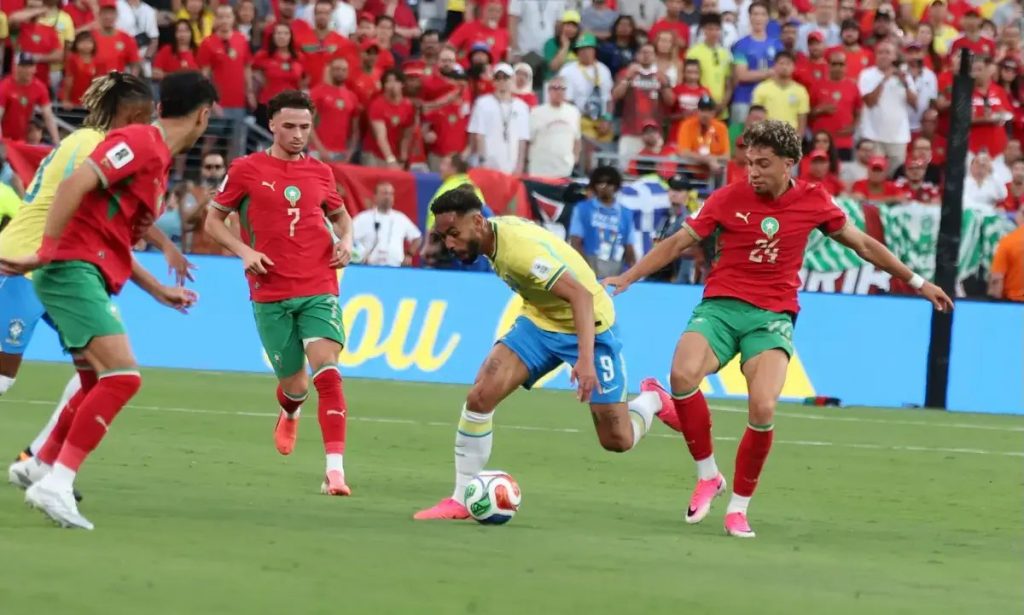
The debut of Brazil in the 2026 World Cup was marked by an explosive draw against Morocco, in a match where the five-time world champions did everything possible to avoid “humiliation” and confirmed all the critics’ fears: the golden past of the ‘escrete’ is turning into a true curse. The Seleção Canarinha, now led by Italian Carlo Ancelotti, continues to evoke passion and controversy, but revealed serious difficulties against a technically evolved and tactically superior Moroccan team during large periods of the match.
The clash took place in North America, the host of the 2026 World Cup, and ended in a 1-1 draw after 90 intense minutes of high technical quality, especially from the Moroccan side. Brazil, which once entered the field as the absolute favorite, found itself in trouble due to the organization and fluidity of the North Africans. The press from the brother country quickly classified the performance as “gray” and unpromising, emphasizing that the team only escaped “humiliation” by mere luck and some defensive effectiveness at crucial moments.
The World Cup is experienced with LEGO.
I’m sorry, but it seems there is no text provided for translation. Please provide the content you would like me to translate.
This result is not innocent at all: four years after being eliminated in the quarter-finals of the 2022 World Cup, under the leadership of Brazilian coach Tite, Brazil stumbles again right at the start, this time under the guidance of a foreign coach. The choice of Carlo Ancelotti to lead the national team was a punch to the gut of Brazilian football nationalism. The Italian coach, renowned for his European titles but inexperienced in national team football, now faces tremendous internal pressure and constant scrutiny from the more conservative sectors of Brazilian football, who continue to view anything from abroad with suspicion.
The context is clear: African football is no longer the poor relative of previous decades, and Morocco proved it in 2022 by reaching the World Cup semi-finals. Brazil, on the other hand, refuses to accept that its model, based on individual talent and flair, needs to be reinvented in the face of increasingly competitive and globalized opponents. The gradual withdrawal of Brazilian players and coaches from the major European stages has also left the national team less prepared for high-level clashes, at a time when almost all top African, European, and even Asian athletes are competing in the best leagues on the Old Continent.
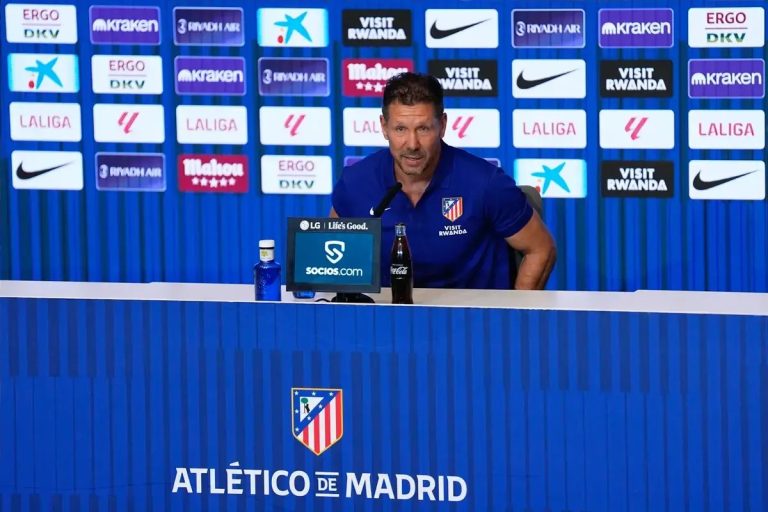
Critical voices were quick to be heard. During the press conference following the match, Ancelotti was confronted with the wave of discontent: “We know that Brazil is a team with an extraordinary history, but we have to adapt to modern football. Morocco demonstrated this on the pitch. I believe in work and evolution, but we need time,” said the Italian coach, in an attempt to calm tensions and gain leeway to implement his ideas. Historical figures from Brazilian football rushed to comment on television and social media, questioning whether a foreigner was indeed the right solution for the rebirth of the national team.
The controversy is palpable and the atmosphere surrounding the national team is tense. The specter of a heavy defeat against Germany in 2014, the infamous 1-7 at the Mineirão, still looms over everyone’s heads. It is worth remembering that, at the time, many called for a revolution and external leadership. Now, with Ancelotti at the helm, the heightened nationalism is just waiting for a greater slip to revive the old refrain: “We didn’t need anyone from outside to become five-time world champions,” some say, forgetting that football has evolved and that the old dogmas no longer suffice to win.
For Brazil, the 2026 World Cup could be a turning point. If Ancelotti can unite the squad and impose a truly competitive style of play, it may pave the way for a new era. Otherwise, internal pressure could become unbearable, and the country of football will once again plunge into nostalgia, unable to accept its new reality. The next match will be crucial to determine whether the ‘escrete’ is ready to awaken from its slumber or if it will continue to sleep… with the enemy beside it.
For historical curiosity, the 2026 World Cup will take place in North America, where Eusébio, the legendary “Black Panther,” shone in his final years as a professional, spreading magic in Mexico, the United States, and Canada. Perhaps that is the example of reinvention that Brazil needs to follow to once again enchant the world.
NOW YOU CAN FOLLOW THE WORLD CUP WITH ALL THE INFORMATION – HERE
Discover more from Apito Final
Subscribe to get the latest posts sent to your email.