Andy Roddick does not hold back criticism and points the finger at the exhausting scheduling of professional tennis, revealing one of the key factors behind Jannik Sinner’s surprising defeat at the French Open. The former world number one, known for his frankness, has reignited the debate about the exhaustion caused by the Masters 1000 tournaments held over two weeks, something he believes severely impacts players’ performance.
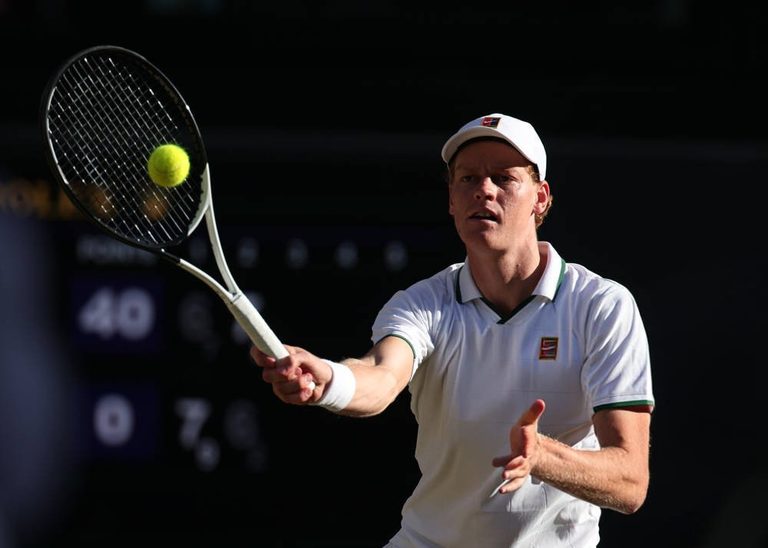
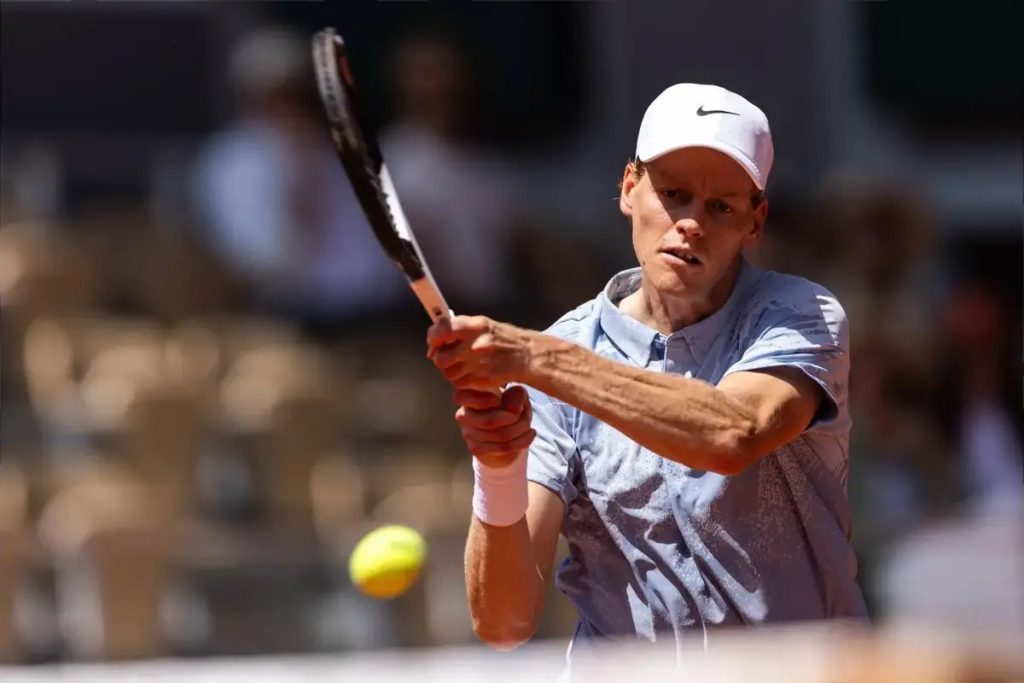
Sinner, 24, arrived at Roland Garros as the top favorite after an impressive clay-court season, where he won the Masters in Monte Carlo, Madrid, and Rome. However, what seemed to be a smooth path to the third round turned into a true sporting tragedy. He was leading Juan Manuel Cerundolo 6-3, 6-2, and 5-1 when a sudden physical crisis struck him down. The Italian admitted to feeling “dizzy” and “nauseous,” never recovering from the collapse, which allowed the Argentine to stage a historic comeback to win 3-6, 2-6, 7-5, 6-1, 6-1.
Sinner attributed his defeat to an illness, rejecting the notion that the intense heat was the main culprit. However, British players Tim Henman and now Andy Roddick suggest that the young Italian should have conserved his efforts, notably by avoiding participation in preparation events too close to the Grand Slam. Roddick was emphatic on the show “Served”: “I hate tournaments two weeks out that are not Grand Slams. If you play Indian Wells and Miami, that takes up an entire month. If you win both, as Sinner did, great, you go to Monte Carlo. But there isn’t enough time between Miami and Monte Carlo for an adequate physical training block to handle five sets, potentially seven times in 14 days.”
The former American tennis player emphasizes that the overload of matches and travel hinders ideal physical preparation, which is essential for facing long and exhausting encounters. “When you play three sets in the Masters, it’s different. Look at what happened with Sinner – and it was obviously related to the heat, but his best physical performance was last year, at the same tournament, when he came from a suspension and had only played one tournament before,” he added.
Roddick also highlighted Cerundolo’s merit, who knew how to take advantage of the adverse conditions to stage one of the tournament’s greatest comebacks, but reiterated that the concern is not about Sinner’s level of play, but rather his physical capacity. “I’m not worried about his game, but when is he going to build the foundation to play for five hours?” he questioned, recalling that the Italian has never won a match lasting more than four hours, despite the clash against Cerundolo lasting three hours and 36 minutes.
The discussion about the format of the Masters 1000 is gaining new momentum. Currently, only the Monte Carlo tournament is held in a shorter format, over the course of a week, while the others extend over two weeks, increasing the physical demands on the athletes and creating risks of early burnout. The possibility of reducing the duration of these events implies accepting a potential decrease in prize money, a matter that divides opinions on the circuit.
This controversy arises at a time when tennis is grappling with the balance between performance, players’ physical health, and commercial interests. Sinner’s unexpected defeat at the French Open serves as a warning of the urgent need to rethink a calendar that may be sacrificing promising talents in the name of spectacle and profit. Roddick, with his unique experience, is once again a crucial voice in pushing for changes that benefit the future of the sport.
This article first appeared on [Apito Final](https://apitofinal.pt/).
Discover more from Apito Final
Subscribe to get the latest posts sent to your email.