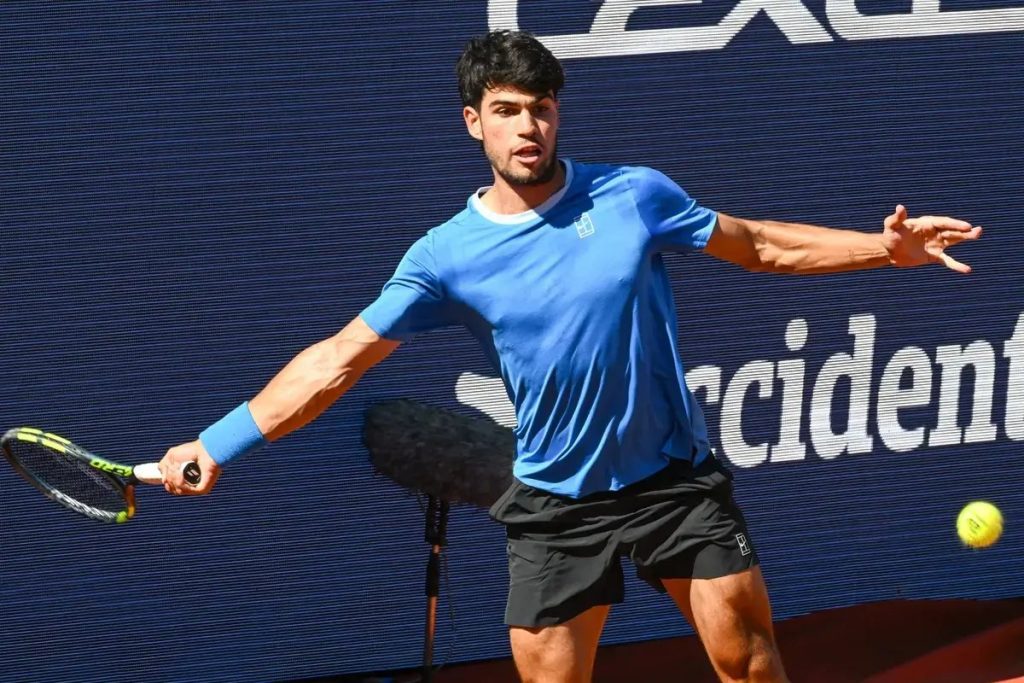
Carlos Alcaraz under fire: former top 20 player takes aim at young prodigy after new serious injury
The young tennis prodigy Carlos Alcaraz has once again fallen victim to the demanding marathon of the ATP calendar, sparking a heated debate about the true causes of the injuries plaguing the sport’s biggest stars. After injuring his wrist, which forced him to withdraw from the Madrid Masters and jeopardized his title defense at Roland Garros, Alcaraz faced sharp criticism from a former top 20 player who did not hold back in his remarks.
Benoit Paire, who shone on the ATP circuit for years, did not hesitate to point fingers at the choices made by the Spaniard and his peers. In an exclusive interview with the platform Tennis365 and the e-Roland Garros series, Paire made it clear that the problem does not lie within the calendar itself, but rather in how players manage it, particularly due to their insistence on accumulating matches in highly lucrative exhibition tournaments.
“Making money is important,” Paire stated, “when I finish my career, I need to have money, so for me, the tennis calendar is good.” For the Frenchman, complaints about the length of the calendar are a false issue created by the players themselves who, “if they want to stop, can stop playing exhibitions. They play exhibitions because they want to earn more money, not because the calendar is too long.”
Paire went further, lamenting the reduction of ATP 250 tournaments, which he considers essential for providing growth opportunities for young talents: “I feel sad when they cut some ATP 250s because they are important for young players to have the chance to compete.”
Paire’s criticism is further amplified by the echoes of other former players, such as British player Greg Rusedski. In his popular podcast, Rusedski directly questioned Alcaraz’s choices, who has been accumulating exhibition matches in various parts of the world, including China, Saudi Arabia, and the United States, practically eliminating any period of rest between seasons.
“Alcaraz has been playing too much tennis,” Rusedski analyzed. “At the end of last season, he practically had no ‘off-season’. He played many exhibitions in America, was in Korea before the Australian Open, and then in Doha. He has been on a real continuous marathon, from the end of the year until now.”
Rusedski warned of the dangers of such a packed schedule: “When you play too much, you end up feeling a bit saturated, bored, and it becomes difficult to be constantly on the road, week after week.”
This debate sheds light on the pressure and choices that top players face in an era where money, fame, and the need to solidify ranking positions seem to collide with physical health and career longevity.
Carlos Alcaraz, currently one of the biggest prospects in world tennis, seems to be at the center of this controversy: his desire to capitalize on fame and financial opportunities may be costing him dearly, with an injury that is already threatening his main goal of the season – defending his title at Roland Garros.
Tennis fans and experts are now closely monitoring the recovery of the Spaniard and how he, along with other emerging talents, will manage the balance between competing at the highest level and preserving their bodies for the battles that truly matter in the Grand Slams.
In the long term, the question remains: will the best players in the world be able to find a sustainable path in an increasingly demanding calendar, or will they continue to pay the high price of immediate success? The answer could define the future of professional tennis.
For more analysis and updates on the world of tennis, stay tuned for news and opinions from experts. The season is far from over, and the health of its biggest icons is now in the spotlight.
This article first appeared on Apito Final.
Discover more from Apito Final
Subscribe to get the latest posts sent to your email.