


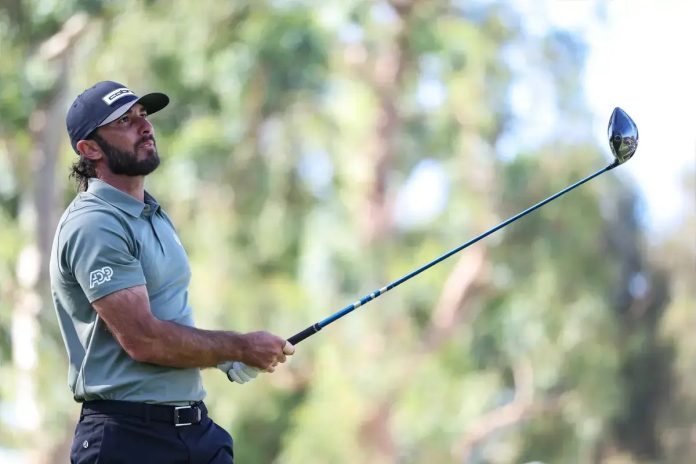
Golf is an unforgiving sport, and few can describe the emotional rollercoaster of the PGA Tour like Max Homa, a six-time winner on the circuit. The American has been in a winless drought for over two years, but in recent months he has shown signs of wanting to regain his former form. In candid and intense remarks during the RBC Heritage, Homa revealed the brutal psychological weight of feeling his game slowly fade away, in a silent battle against decline.
“We all have that fear of losing our touch, and we end up feeling it before the results plummet. It feels like a slow bleed,” Homa confessed, describing that fateful moment when confidence and form begin to slip away, but without an immediate collapse. The player further explained that despite the difficulties, he knew that recovery was on the way: “Last fall, I already felt that things were improving. In May of last year, I realized that I would be able to find a solution. I don’t know if I will win again; that’s a mystery… But I knew that what I experienced between January and April, when I was playing terribly, couldn’t last forever. It was a phase with no light at the end of the tunnel, and in May I felt that I had gotten past the worst.”
The 2025 season has been a true nightmare for Homa. It started with a modest 26th place at the Sentry, followed by a withdrawal at the Farmers Insurance Open. He finished 53rd at the AT&T Pebble Beach and then accumulated five consecutive missed cuts, a dark period between January and April. Even after a 12th place at the Masters, problems persisted at the RBC Heritage, where he fell to 70th position. However, May brought some hope, with a 30th place at the Truist Championship and a 5th place at the John Deere Classic, as well as three top 20 finishes in September and October, showing that recovery was happening, albeit slowly.
But for Homa, frustration has not been negative. “The hardest part is tying your worth so much to the final result. This season, especially in practice, I’ve been playing really well. There were practice rounds that were incredible and fun, and at home, my game has been strong. It’s hard not to get caught up in the rankings, the cuts made or missed, the tenths, twenties, thirties positions. It’s frustrating, but it’s that kind of frustration that motivates you,” the player explained, highlighting the fine line that separates success from failure on the PGA Tour.
The tiny details make all the difference for Homa: three crucial putts, missed shots near the green, a wrong swing that destroys the entire dynamics of the game. It is in these details that the future of a season is played out. And the American knows he needs to mirror what stars like Scottie Scheffler or Rory McIlroy do: “They can deliver solid results even when things aren’t going well. I haven’t been able to do that consistently yet, but I’ve been getting closer lately. You’re not going to play four perfect rounds of golf, so the challenge is to control what you can. At home, I know my game is good, that’s clear.”
But what has changed in his game for this new phase? Homa revealed that he has returned to training with Mark Blackburn, a coach he knows well and with whom he has excellent communication: “I started working with him again in October and we’ve done a lot of work in the preseason. He is very in tune with what makes me work, and our communication is fantastic. It was great to see a positive result last week, especially for him, because he has done an incredible job that I haven’t been able to show in the last few months. It was like getting the band back together.”
With a fresh 9th place finish at the Masters, Homa feels that his game has been more solid in recent months, with some minor adjustments while maintaining his style. The recent result has given him a boost of confidence, but the real question is whether he can sustain this level at the RBC Heritage and beyond. The answer will only come with time, but one thing is certain: Max Homa is determined not to let the “slow bleed” consume his career.
This is a crucial moment for Homa, a player who knows that the psychological battle in golf is as tough as the technical one. Whether for sports fans or those following the drama of an athlete’s career, Max Homa’s story is a powerful reminder of the invisible cost of failure and the resilience needed to shine again at the top of the PGA Tour.
This article first appeared on Apito Final.
Discover more from Apito Final
Subscribe to get the latest posts sent to your email.

