


Growing dissatisfaction with the Premier League is reaching new heights, revealing an organization that seems more interested in protecting its own interests than in ensuring fair treatment for all clubs. Criticism continues to mount as it becomes evident that the disparity in treatment between wealthy clubs and less fortunate ones is glaring. While Manchester City is accused of financial crimes without significant consequences, Everton faces the harsh reality of a points deduction, while Chelsea is handed a laughable fine. This disparity is undeniable and causes widespread discontent among fans.
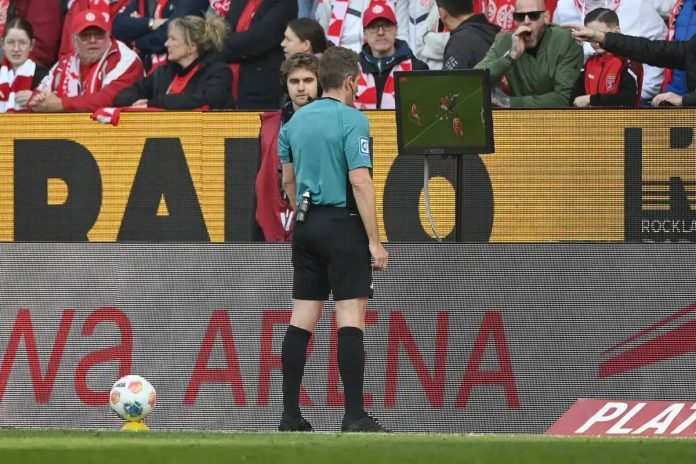
The Premier League, the richest league in the world, should be the dominant force in European competitions. But if you are one of the 30 richest clubs on the planet and cannot win one of the lesser competitions, what is the real advantage of being in that elite group? The situation worsens with the sale of clubs to nation-states and owners who let their teams sink into debt, using them as mere banks. The adoption of VAR, widely criticized and ineffective, only exacerbates the divisions between fans and league management.
Everton fans, for example, no longer hide their frustration by booing the Premier League anthem and VAR itself, which, instead of improving officiating, seems to have made everything even more confusing. Expectations and reality do not align, and the economy promoted by the league has turned the product of football into something that many feel is a disappointment, even after paying exorbitant prices to attend matches.
The league has created an environment where only a handful of teams, probably four or five, dominate the competition, while the rest struggle to secure a mid-table position. Even for clubs that can spend astronomical sums, like Aston Villa, which has invested 640 million euros over the last five years, the fight for glory is intense and disproportionate.
Since 1969, I have closely followed football and have never seen such vocal discontent regarding the style of play. Fans now react with disdain to plays such as corners, where 15 players crowd into the penalty area. This sense of helplessness was even more evident in European competitions, where English clubs failed to meet expectations.
The blame, however, does not rest solely on the players; it is the structure that shapes and influences their performance that is at stake. The economic imbalance of the league has devalued the importance of cup competitions, which, until the decisive phase, are seen as irrelevant. Why should the big clubs care about these competitions when the profits lie elsewhere? Nevertheless, as holders of the largest capital, they continue to dominate.
A clear example of this was the League Cup final, which proved to be a soulless match, where many fans felt they were watching a clash between “frauds and boring teams.” A game that, according to a Sky commentator, was less significant than a Premier League encounter between Tottenham, demonstrating the loss of prestige of the tournament.
These opinions are not controversial. Even those who criticize me as a nostalgic yearning for better times cannot ignore that the quality of current football is lacking. There are fans of the Championship who fear promotion, as the struggle to survive in such a dysfunctional league brings no satisfaction. The financial chaos of the Premier League creates a spiral of despair.
Although there are other leagues that may offer more enjoyable football, their financial dynamics are often contaminated by the stratagems of the Premier League, leading clubs to risk everything in hopes of promotion, even if it means paying exorbitant wages.
It is alarming that executives of the Premier League may not understand the depth of discontent regarding their “product.” Football is not a normal business; people continue to watch even when the quality is questionable. For 90 minutes, many manage to overlook the flaws, but the truth is that the presence of fans should not be confused with approval of what is being offered.
It is telling that, this season, the enjoyment of fans in north London often comes from Tottenham’s suffering, rather than celebrating Arsenal’s success. Watching a wealthy club struggle is a distorted form of satisfaction.
If next season follows this pattern, we can expect changes to VAR that will eventually become so superficial that the league may eliminate it without admitting it. Innovations may be introduced to keep viewers engaged, but without altering the model that guarantees profits. Changing the system so that the system does not change is the norm, at least in the short term.
As Ernest Hemingway said, bankruptcy happens gradually and then suddenly. The patience of fans is not infinite, and the time for change may be closer than the Premier League realizes.
This article first appeared in Apito Final.
Discover more from Apito Final
Subscribe to get the latest posts sent to your email.

