


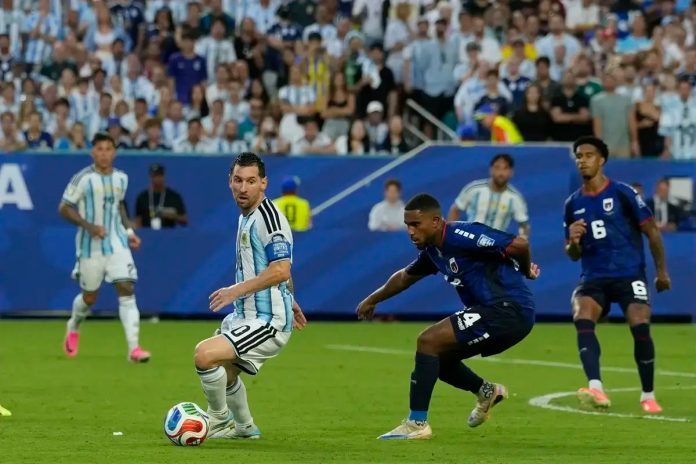
Cape Verde, one of the smallest nations ever to compete in the World Cup, has defied all odds and secured a historic place in the knockout stage, fueling the dreams of a people accustomed to fighting for the impossible. In a feat that few would have dared to predict, the Cape Verdean national team overcame the statistical 1% chance of advancing from the group stage, becoming a national sensation and source of pride, as fans prepare for a breathtaking showdown against the powerful Argentina.
The team from Cape Verde, composed mostly of players unknown to the general public, has won the hearts of fans spread across the ten islands of the archipelago and throughout the diaspora. The unprecedented qualification was confirmed just a few months after the country celebrated the 50th anniversary of its independence, gained in 1975, in a symbolism that has not gone unnoticed by Cape Verdeans. Josslyn, a renowned singer and songwriter and a symbol of national identity, recalls how, as a child, she watched the World Cup on television and wondered: “Why isn’t Cape Verde there?” At the time, the scenario seemed unattainable. “I grew up thinking it was so difficult,” Josslyn confessed in a recent interview, before emphasizing: “But it’s not impossible.”

THE 2026 WORLD CUP IS EXPERIENCED WITH LEGO
The improbable has become reality and, as the confrontation with Argentina approaches, the boldest dreams of a nation are taking shape. Josslyn, between studio sessions, does not hide his enthusiasm: “I truly believe in everything. After what those guys did, I believe that victory is possible,” he declared, reflecting the collective sentiment of hope that permeates the archipelago.
For Augusto Gugas, former Minister of Culture and Creative Industries of Cape Verde, the significance of this qualification transcends sports. “Many people told us that we were a country that would not survive. We have only 50 years of independence. We have worked hard, and today we are a country with a very strong economy,” says Gugas, highlighting the role of football and culture in the country’s international affirmation. Cape Verde, with an economy heavily based on tourism, has invested in promoting sports, music, and the arts as engines of unity and national pride. “We have been an example for Africa and the world of how to be resilient without significant natural resources. Our people have succeeded in the economy, in sports, and in many other areas,” he adds.
The bet is now beginning to bear visible fruit. In 2025, Cabo Verde welcomed 1.25 million tourists, and participation in the World Cup is expected to further boost this number, believes Gugas: “We believe that the World Cup will bring us many more tourists and much more interest from people who want to know our country.” The success is not limited to men’s football. The national team has become a regular presence at the FIBA Basketball World Cup, while the women’s team will make its debut at the Africa Cup of Nations at the end of July. “Our government has invested a lot in the team, in the games, in their preparation, in giving them rest, and in creating direct flights from African countries, so that they have more recovery time,” highlights the former minister.
However, the unprecedented presence at the men’s football World Cup has a special significance and even mobilizes the powerful Cabo Verdean diaspora, particularly in the United States. Marvin Resende, a luso-Cabo Verdean born in Brockton, Massachusetts, but with deep ties to the archipelago, shares in the collective pride: “We always knew that, whether through football or another means, we would get there.” For many Cabo Verdeans scattered around the world, seeing their flag among the best teams on the planet is a moment of affirmation, emotion, and recognition.
The next step promises to be breathtaking: facing Argentina, the reigning world champions, in the round of 16. The bar has never been set so high, but the belief is unshakeable. If they manage to overcome this hurdle, Cape Verde will not only extend its sporting fairy tale but also reinforce the image of a resilient, united nation capable of surprising the world. Regardless of the outcome, the feeling is already one of victory. As Josslyn summarizes, “we have already won.” The pride, international visibility, and economic and social impact of this achievement will last long after the final whistle. The world is finally discovering Cape Verde.
NOW YOU CAN FOLLOW THE WORLD CUP WITH ALL THE INFORMATION – HERE
Discover more from Apito Final
Subscribe to get the latest posts sent to your email.

