


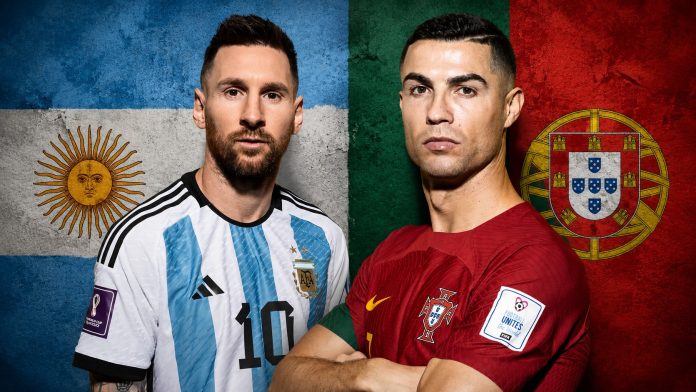
The near-total dependence of Portugal on Cristiano Ronaldo and Argentina on Lionel Messi is reaching historic levels, even at a time when both have surpassed 35 years of age and are preparing for what could be the last World Cup of their careers. At 41 and 39 years old, respectively, Ronaldo and Messi continue to be much more than symbols: they are the absolute center of their national teams' strategies, with statistics that embarrass many younger players and leave fans and analysts in shock. Never has a “golden generation” been so marked, to the point of exhaustion, by the influence of two figures who challenge the limits of time and football logic.
Cristiano Ronaldo, the unquestionable leader of the Portuguese national team, carries a squad that, despite the talent distributed throughout, still glaringly depends on his finishing ability. According to recent data from Opta, Ronaldo is responsible for an impressive 56% of Portugal's expected goals (xG) in this World Cup, being the only player in the tournament to surpass the 50% mark. Specifically, the captain has already accumulated 2.2 xG, scored two goals, and taken 13 shots in 270 minutes of play – an average of 0.17 xG per attempt. The shot map also reveals a trend: virtually all of the forward's opportunities arise in the central corridor, between the six-yard box and the penalty spot, making the Portuguese attacking pattern predictable.
On the Argentine side, the dependence on Messi is less focused on finishing and more on creativity. The number 10 is responsible for 45% of the expected goals (xG) of the world champions, but he stands out prominently in the xG+xA (expected goals plus expected assists) ranking, contributing to 42% of the team's offensive production. Lionel Scaloni, the Argentine coach, has built a system where Messi is the brain, accelerator, and executor. The plays almost invariably go through his feet, making him the epicenter of all the Albiceleste's offensive maneuvers.
The significance of this reality goes far beyond statistics. The future of both national teams is, worryingly, tied to the performance of two legends who no longer possess the physical freshness of their earlier years. The inability of Portugal and Argentina to create robust alternative solutions raises questions about what will happen when Ronaldo and Messi inevitably become unavailable. For now, the aspirations for the World Cup title continue to depend almost exclusively on the ability of both to maintain levels of excellence in a context where physical and mental fatigue is increasingly evident.
Roberto Martínez, the national coach, recently acknowledged: “Cristiano is a unique player, not only for what he represents but for what he can still give to the team. We know that a good part of our offensive process goes through him, but we must know how to diversify so we do not become predictable.” This statement was made after the last group match, during a press conference, and reflects the growing awareness that the plan A may not be enough to win the coveted trophy.
Messi, for his part, does not hide the responsibility he feels on the field: “I know my teammates look to me in key moments. I always try to give my best, but Argentina has to be more than just one player,” said the Argentine forward before the knockout stage began. These words make it clear that there is also an acknowledgment of the danger of excessive dependence on one player from the South American side.
As the decisive matches approach, the pressure on both captains grows. Every opponent has already realized that stopping Ronaldo or Messi is half the battle in limiting the threat posed by their respective national teams. Tactical predictability can prove fatal against organized teams capable of neutralizing the main references. It remains to be seen whether both Portugal and Argentina can reinvent themselves in time or if they will continue to live—and eventually die—by the brilliance of two of the greatest names in world football.
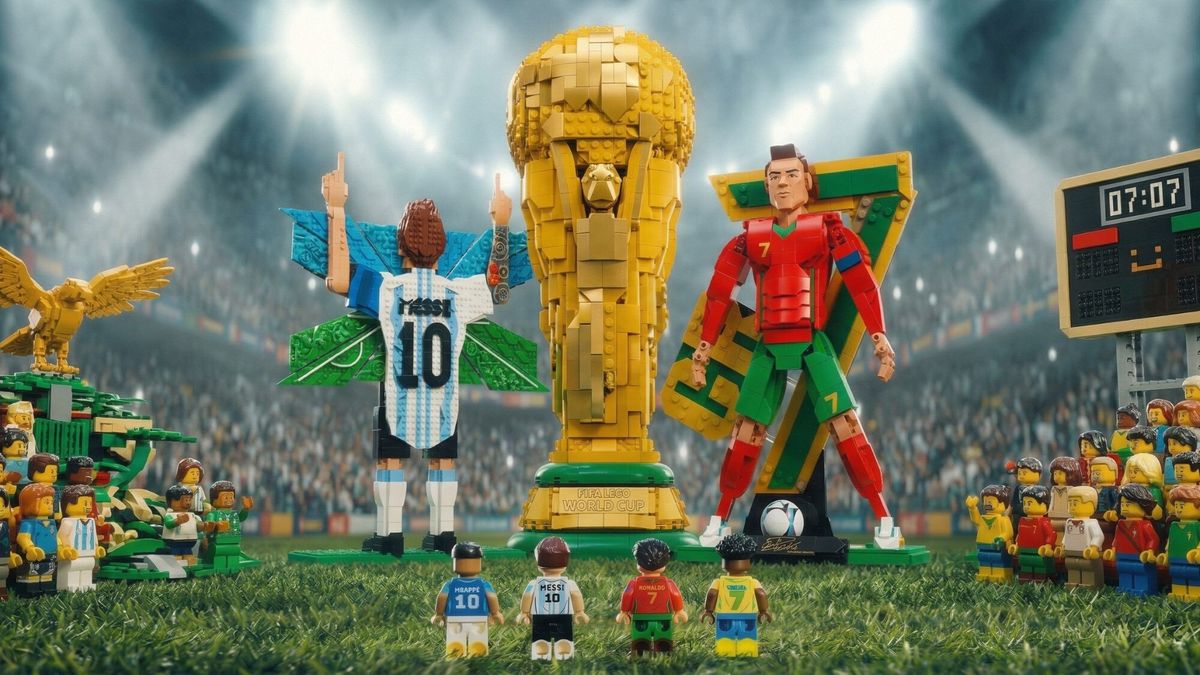
O MUNDIAL 2026 VIVE-SE COM A LEGO
In the immediate future, Portugal and Argentina advance to the round of 16 with the hope of still being able to leverage the aura and experience of their leaders. But the specter of an end of an era is increasingly present, and the question arises: are these teams preparing for the future or merely postponing the inevitable? The 2026 World Cup could indeed be the last chapter of an unparalleled era—and all eyes will once again be on Cristiano Ronaldo and Lionel Messi.
AGORA PODE ACOMPANHAR O MUNDIAL DE FUTEBOL COM TODA INFORMAÇÃO – AQUI
Discover more from Apito Final
Subscribe to get the latest posts sent to your email.

