


The international football calendar has reached absolutely insane levels, leaving the world’s top stars on the brink of physical exhaustion. Just when it was thought that the summer of 2025 could finally be synonymous with rest for the stars, FIFA decided to fill the calendar with an expanded Club World Cup, pushing dozens of players into an unprecedented marathon of high-level matches, with no room to breathe.
The numbers are staggering: 74 players currently participating in the World Cup recently took part in the Club World Cup in the United States. Many of them come from three consecutive years without a proper break, sacrificing vacations and recovery for an insatiable schedule. According to a detailed analysis of the minutes played by players from the ten highest-ranked teams in the FIFA rankings, there are teams arriving at the main international competition already worn out.
THE 2026 WORLD CUP COMES ALIVE WITH LEGO
France leads the list of the most overworked squads: the team managed by Didier Deschamps has played an impressive 1,341 matches – a total of 98,895 minutes on the field, more than any other national team. Maxence Lacroix, a defender for Crystal Palace, is the most utilized French player, with 58 starts and 5,009 minutes played, despite not being considered a first-choice player. Meanwhile, Michael Olise, a forward for Bayern Munich and former Palace player, has made 65 appearances, mostly as a substitute, totaling 4,942 minutes. It is worth noting that 11 French players participated in the Club World Cup, matching Portugal and only behind Germany, which sent 12 representatives to the North American tournament.
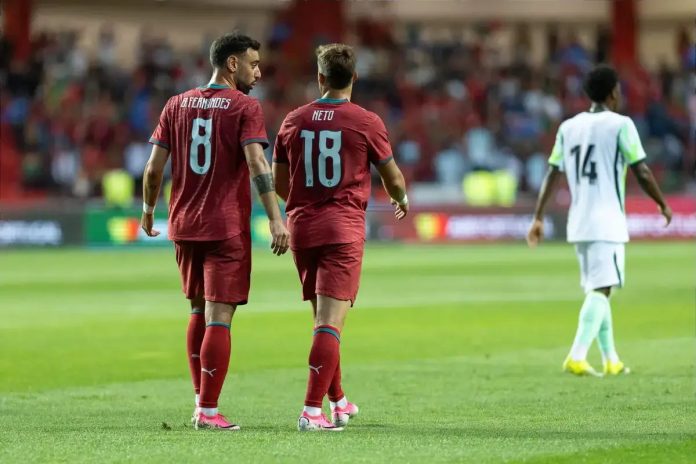
Portugal, led by Roberto Martínez, ranks just behind, with 1,299 matches and 96,405 minutes accumulated. If Bruno Fernandes and Diogo Dalot had participated in more cup matches for Manchester United – which missed out on European competitions and was eliminated early from English cups – the Portuguese numbers could even challenge the French lead. Vitinha, a midfielder for PSG, was the most utilized, featuring in 66 matches, boosted by his presence in the Club World Cup final and the Champions League victory. Cristiano Ronaldo, nearing 40 years old, remains irreplaceable: he started in all 44 matches played by Al Nassr and Portugal.
England rounds out the podium of the most fatigued national teams. Thomas Tuchel’s squad totals 1,304 encounters, although they have fewer starting matches (1,051) than Portugal. Captain Harry Kane, about to turn 33, raises concerns among fans and the coaching staff: he has played 63 games for Bayern Munich, questioning his physical freshness for the World Cup. Morgan Rogers, however, is the most utilized player, with 64 matches and 5,037 minutes split between Aston Villa and the English national team. Notably, England boasts seven players with over 50 starting matches, more than any other national team.
Germany, with Bayern’s central defender Jonathan Tah leading in minutes played (4,923), and Brazil, where Léo Pereira (Flamengo) has reached an impressive 5,559 minutes, are also among the most burdened. In the case of Brazil, Vinicius Junior leads in appearances, having played 67 matches this season. Interestingly, Brazil has only three players with more than 50 starts, which could allow for better management of fatigue in adverse weather conditions.
The reigning champions, Argentina, present a more balanced scenario. Only four players have surpassed 50 starts, with José Manuel López (Palmeiras) standing out, having played an incredible 76 matches (59 as a starter) and 5,174 minutes, nearly matching Enzo Fernández (Chelsea), who has 5,173 minutes in 65 matches. Lionel Messi, the living legend who will soon turn 39, enters the World Cup with 51 matches played, only three of which were as a substitute.
The importance of these numbers goes beyond statistics: accumulated fatigue could be the decisive factor in the fight for the trophy. Overloaded teams risk injuries, drops in performance, and early eliminations. The players themselves do not hide their discomfort. After the Club World Cup final, Vitinha was straightforward: “I feel that my body is asking for rest, but there is no time to stop.” The Portuguese international emphasized that “this pace is not sustainable for anyone.” Harry Kane, during preparations for the World Cup, also admitted: “We have reached our physical and mental limit. I just hope we don’t pay the price in the crucial moments.”
With the start of the World Cup, all eyes are now on the physical management capabilities of the coaches and the response of the most utilized players. Teams with greater squad depth may benefit from effective rotation, while the favorites carry the burden of endless seasons in their legs. The debate over the international calendar is more heated than ever: how long will the world’s best players withstand this true competitive massacre? This year’s World Cup may very well be decided not by talent, but by the physical freshness of those who can survive until the end.
[NOW YOU CAN FOLLOW](https://apitofinal.pt/nacional/roberto-martinez-satisfeito-apos-vitoria-de-portugal-ante-a-nigeria/) THE WORLD CUP WITH ALL THE INFORMATION – [HERE](https://mundialfutebol.com/)
Discover more from Apito Final
Subscribe to get the latest posts sent to your email.

