


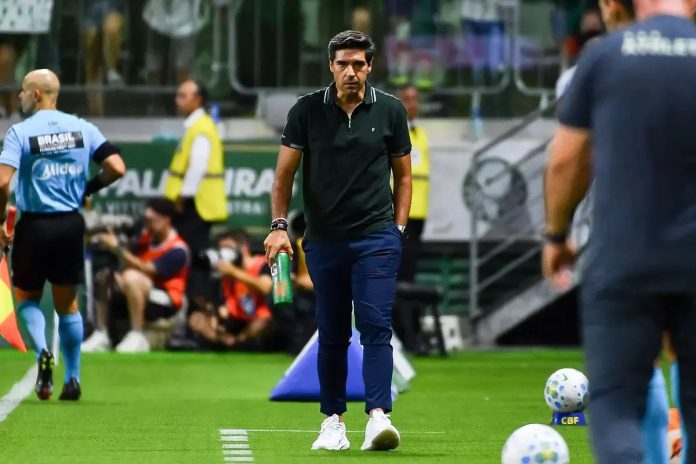
Abel Ferreira, the Portuguese coach who has shown unwavering determination at the helm of Palmeiras, has once again made his voice heard following his team’s recent 1-0 victory over Mirassol in the sixth round of the Brazilian Championship. However, the joy of victory did not overshadow the pointed criticisms Ferreira directed at the management of the Brazilian football calendar, which he considers unsustainable and detrimental to the players.
“You can bring in Messi, Ronaldo, the best in the world. I’m not just talking about Palmeiras, but for the good of Brazilian football. Palmeiras reached the final of the São Paulo championship, while other teams had the opportunity to rest and recover injured players,” Ferreira stated, in remarks that resonate with the concerns of many fans and experts in the sport.
The coach did not hesitate to highlight the disparity in competition conditions, revealing that Mirassol played only three matches in 30 days, while Palmeiras faced a total of eight, including two under adverse field conditions. “The Brazilian grass is slow compared to the European one, and this creates an inequality that affects our performance,” he emphasized.
Ferreira did not hold back criticism of the management of the calendar, which he believes does not provide the minimum conditions for teams to compete fairly. “After a victory or winning a title, we don’t have time to celebrate. Two days later, we are facing a team that had 11 days to prepare. In the second half against São Paulo, Palmeiras’s performance dropped, and today we had to fight hard to win,” he lamented.
Following a bitter 2-1 defeat against Vasco da Gama the previous week, Palmeiras secured their third victory at the start of this Brasileirão, with a decisive goal from Argentine Flaco López in the 26th minute. With this result, Abel Ferreira’s team occupies second place in the table, just three points behind leaders São Paulo.
Abel Ferreira’s words resonate as a warning about the urgent need to rethink the management of the calendar in Brazilian football, a problem that affects not only Palmeiras but the sport as a whole. The pressure on players is immense, and the impact on on-field performance is undeniable. The future of Brazilian football may very well depend on a more careful and respectful approach towards athletes and their limitations.
Discover more from Apito Final
Subscribe to get the latest posts sent to your email.

