


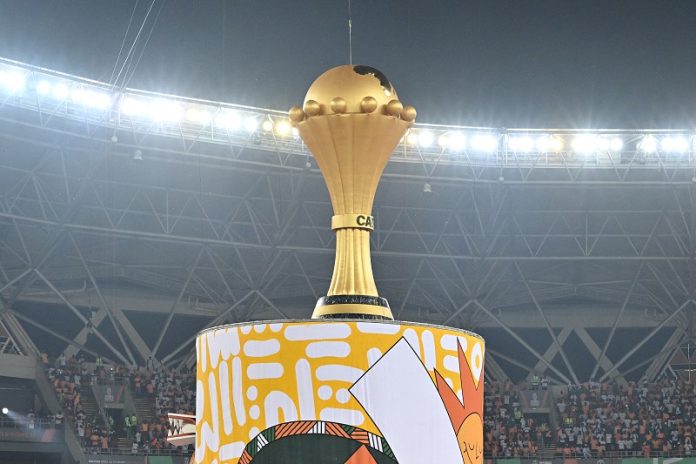
A recent controversy surrounding the awarding of the 2025 Africa Cup of Nations (AFCON) to Morocco has caused a stir in the football world. The Senegalese Football Federation (FSF) has not remained silent and has decided to take the matter to the Court of Arbitration for Sport (CAS), challenging the Confederation of African Football’s (CAF) decision to declare Morocco the winner. FSF President Abdoulaye Fall, accompanied by a team of seven lawyers, made strong statements during a press conference in Paris, prior to the friendly match between Senegal and Peru.
Fall did not hold back in criticizing how CAF conducted the process. According to him, the hearing was marked by a series of irregularities, where the Senegalese were forced to wait without any information, only to be informed by Moroccan representatives that the hearing had concluded. “It was absurd. This is how rights were violated. An assault on the rights of the defense, on football, on sports discipline,” Fall stated, warning that such a situation could lead to the next World Cup winner being decided in lawyers’ offices instead of on the field.
The president of the FSF made it clear that there are no specific accusations against Morocco, but emphasized that there are sufficient grounds to request an international criminal investigation. Serge Vittoz, one of the lawyers present, reinforced that if a request for expedited proceedings is accepted, a verdict on the awarding of the CAN could be reached in just two months. “There is still no talk of corruption. What our opponents want is a poisoned medal. We will seek the causes of this poison; it seems rotten to us, and we call it penal,” said Vittoz, highlighting the FSF’s firm determination to contest the administrative outcome.
Pierre Olivier Sur, another lawyer from the FSF, also expressed confidence: “Morocco was not named champion. They won 3-0 [on paper], but they are not the CAN winners. The Federation and its lawyers fear nothing.” With these statements, the FSF positions itself not only as a defender of sports justice but also as an entity that refuses to accept decisions it deems unjust.
As Senegal prepares to display the CAN trophy on the field, expectations surrounding the outcome of this legal battle are growing. The question arises: if the football world allows decisions like this to prevail, what future can be envisioned for the integrity of the sport?
This article first appeared on Apito Final.
Discover more from Apito Final
Subscribe to get the latest posts sent to your email.

