


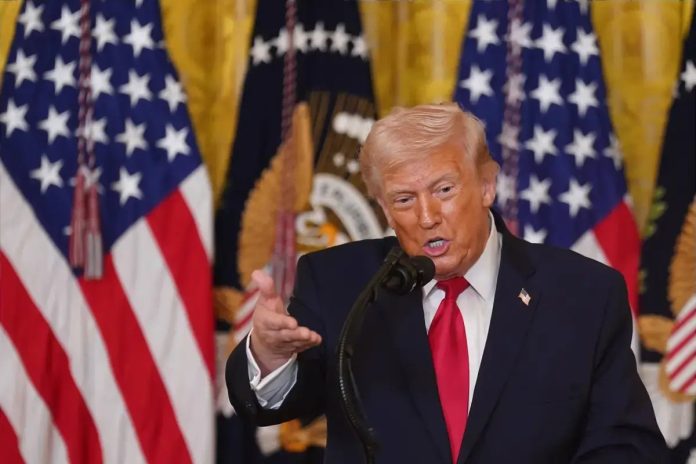
In a moment of intense controversy and geopolitical tension, former United States President Donald Trump made impactful statements regarding Iran’s participation in the upcoming World Cup. The mogul, known for his blunt opinions, asserted that the Persian nation should not take part in the tournament due to concerns for the “life and safety” of its players. This claim sparked a heated debate about the political and social implications of sports in such a volatile global landscape.
“If you look at the situation, it’s clear that Iran should not be competing in a sporting event like the World Cup,” Trump said in a recent interview. “The safety of the athletes is paramount, and what’s happening in Iran raises serious questions about their safety. We’re not just talking about football; we’re talking about people’s lives.”
Trump’s words do not arise in a vacuum. The political climate in Iran, marked by mass protests against the regime and the violent repression of dissent, casts a shadow over the country’s participation in international competitions. The long-standing tension between Iran and the United States further complicates the nation’s involvement in high-profile sporting events.
The former president did not shy away from addressing the impact that Iran’s presence in the tournament could have, not only for the athletes but also for the image of the event itself. “The world is watching. We cannot allow a regime that disrespects human rights to present itself as if it were normal. The World Cup should be a symbol of unity and peace, and that cannot include a country that ignores these fundamental principles,” he added.
Trump’s statements quickly spread across social media, generating diverse reactions among football fans, activists, and political commentators. While some support his view that the safety of players should be prioritized, others argue that sport should be a platform for peace and diplomacy, not a reflection of political tensions.
Iran’s participation in the 2026 World Cup, which will be held in the United States, Canada, and Mexico, is now shrouded in uncertainty. With the growing movement for social justice and human rights, Trump’s assertion may serve as a catalyst for a broader debate on how nations should be evaluated regarding their participation in international sporting events.
With the world’s attention focused on this issue, the situation continues to evolve. The upcoming World Cup promises to be a stage not only for football but also for discussions on themes that transcend sport. Meanwhile, Trump’s statement resonates, reminding everyone that amidst the competition, there are much larger issues at play.
Discover more from Apito Final
Subscribe to get the latest posts sent to your email.

