
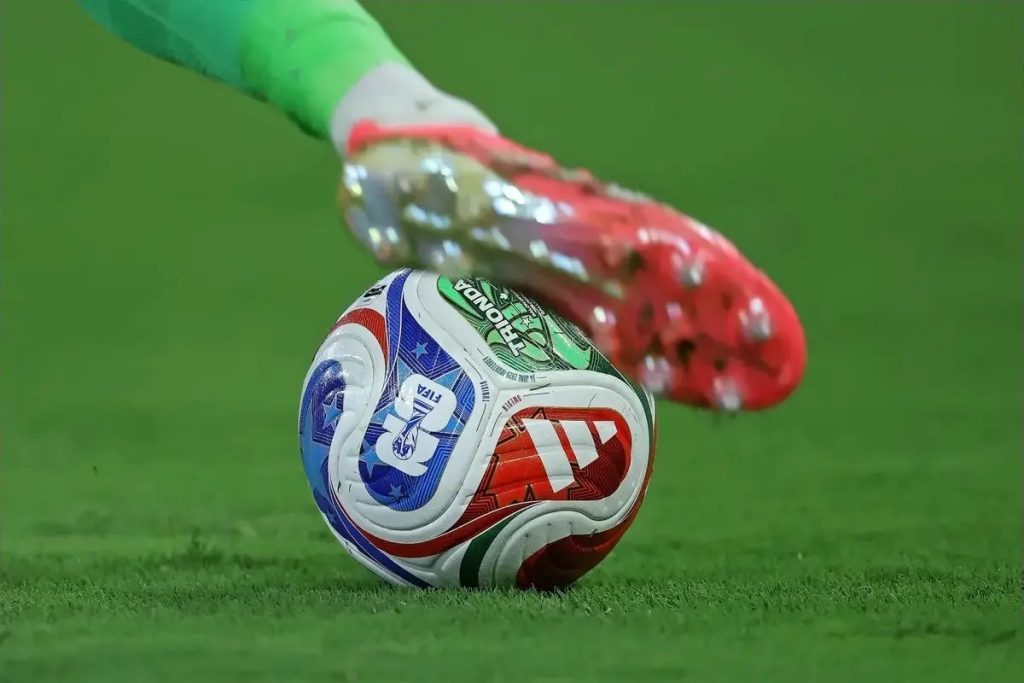
A FIFA has broken its silence regarding the disallowed goal for Croatia in the match against Portugal in the Round of 16 of the 2026 World Cup, clarifying the doubts that sparked controversy on social media. Pierluigi Collina, chairman of FIFA's Referees Committee, explained in an interview with the Italian newspaper La Gazzetta dello Sport that the decision made by the team led by Norwegian referee Espen Eskas was correct, despite the almost imperceptible touch with the head of Croatian player Igor Matanovic before the play.
The controversial incident occurred in the 90'+13 minute, with Portugal leading 2-1, and resulted in the disallowance of the goal scored by Gvardiol. Collina detailed that the TRIONDA technology used in the World Cup does not detect contacts with hair, which influenced the analysis of the play. “The graph was also clear here. There is a peak when it touches the head of the Croatian forward, followed by a flat line, and another peak when it touches the back of the Portuguese defender. Since the system does not detect contacts with hair, the peak is determined by the contact with the head,” stated the 66-year-old former international referee.
In an official statement, FIFA reinforced that the 'Connected Ball Technology', integrated into the official TRIONDA ball, confirmed Matanovic's touch in the play that preceded the goal, legitimizing the referee's decision to call offside and disallow the goal. The IMU sensors embedded in the ball can detect any touch, no matter how slight, and transmit this data to viewers in the form of a visual graph, allowing referees for a more accurate and quicker analysis.
Pierluigi Collina also defended the impact of technology on football, rejecting criticisms that claim it “kills” the emotion of the game. “It's a historical lie. There are a few seconds of waiting for the offside rule to be confirmed, but the player celebrates when they score. And if the goal is validated, there is a second celebration; if it is disallowed, it is the opposing team that celebrates. I think it is much more appropriate for the emotion to be based on a correct decision, rather than on an episode meant to be discussed for weeks or decades.”
The introduction of a 500Hz motion sensor chip in the ball for the 2026 World Cup represents a technological revolution, sending real-time information to video assistance systems, namely VAR and AVAR. This innovation allows for a detailed and accurate assessment of crucial plays, such as offside and touches on the ball, elevating the level of fairness in decisions. FIFA's clarification on this specific play reinforces confidence in technology and officiating, a topic that will remain central in discussions throughout the tournament.
O MUNDIAL 2026 VIVE-SE COM A LEGO
AGORA PODE ACOMPANHAR O MUNDIAL DE FUTEBOL COM TODA INFORMAÇÃO – AQUI
Discover more from Apito Final
Subscribe to get the latest posts sent to your email.