


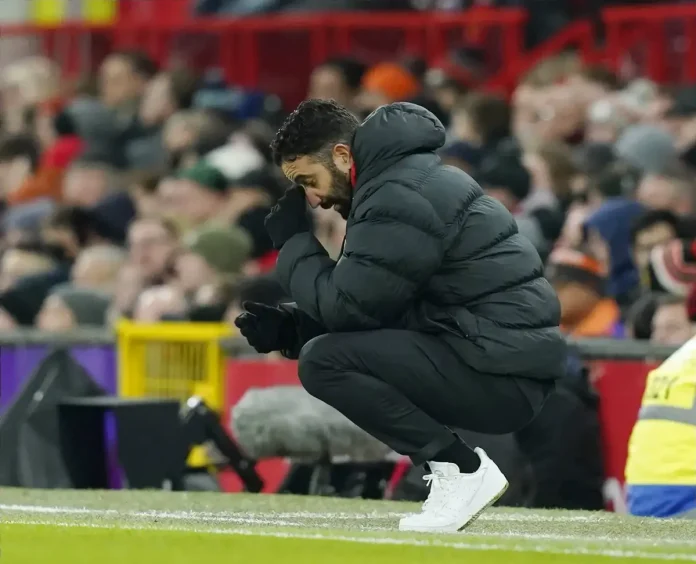
The resignation of Ruben Amorim from Manchester United is not just another chapter in the club’s tumultuous history, but rather a reflection of poorly made decisions and ineffective management that have become routine since Sir Alex Ferguson’s departure. After 14 months at the helm, the confirmation of his exit left fans questioning what really went wrong during the Portuguese manager’s tenure.
From the outset of his journey at Old Trafford, the hope was palpable. Amorim, known for his hard work and integrity, seemed like the right choice to revitalize a team that had lost its way over time. However, as the months went by, it became evident that he never truly felt comfortable in the role he was entrusted with. The mounting pressure and disappointing results made his dismissal inevitable.
Club officials were eager to give Amorim a full season to assess his performance, a decision influenced not only by the high cost of his dismissal, which amounts to £12 million, but also by the chronic instability that frequent managerial changes bring. Since Ferguson’s exit in 2013, Manchester United has seen ten managers come and go, but the results under Amorim’s leadership were not enough to ensure his continued presence.
Despite an investment of over £200 million in attacking talent during the summer and a full pre-season to implement his philosophy, the results never lived up to expectations. Although some statistics indicated an improvement in the team’s performance, the truth is that the results on the pitch were unacceptable. The general consensus among analysts is clear: Amorim, despite being an honest and hardworking person, could no longer remain in charge of the team.
The figure of Bruno Fernandes emerges as one of the critical points in the analysis of the Amorim era. The midfielder, who has become a symbol of the team since his arrival, had the opportunity to leave the club in the summer, with an offer that could have brought £100 million to United. The sale of the player could have been the solution to fill the gaps in midfield, but Amorim chose to keep him in his squad, a decision that proved disastrous. The insistence on using Fernandes as one of the two central midfielders harmed the team’s dynamics, particularly regarding Kobbie Mainoo, who saw his opportunities reduced. For many fans, this stubbornness was one of the main factors that led to Amorim’s downfall.
Furthermore, the instability in the club’s management, exacerbated by hesitation regarding Erik ten Hag, further complicated Amorim’s situation. The Dutchman was on the verge of leaving after winning the FA Cup, but the board’s indecision in finding a worthy replacement resulted in the continuation of a tense environment that Amorim had to face from day one.
In summary, Ruben Amorim’s departure from Manchester United is not just a matter of results; it reflects a collapsing structure that fails to find a clear direction. His dismissal marks yet another lament in the recent history of the club and raises questions about the future of the team in search of a new leader capable of restoring Manchester United’s greatness.
Discover more from Apito Final
Subscribe to get the latest posts sent to your email.

