


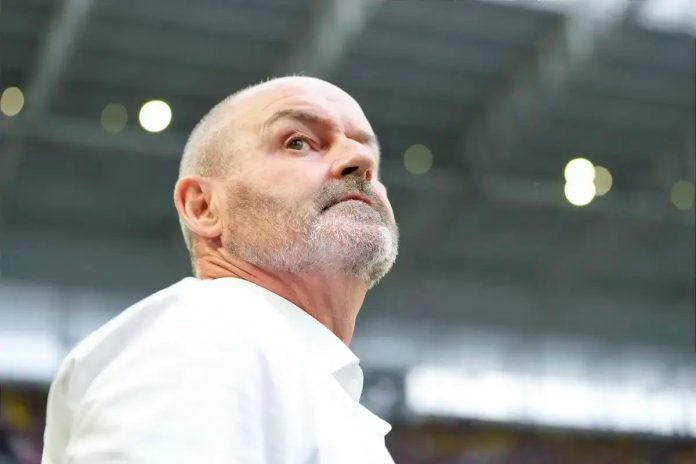
Steve Clarke’s departure from the managerial position of the Scotland national team has caught everyone off guard and promises to leave an indelible mark on the history of Scottish football. The coach, who led the team to the World Cup after decades of absence from major competitions, assured that the decision to resign was surprisingly “easy” and, in a defiant tone, stated that his players will enter into the legend of national sport.
Clarke officially announced his resignation this week, shortly after the confirmation that Scotland was mathematically eliminated from the knockout stage of the World Cup. The Scottish team, placed in Group C, started off well with a 1-0 victory against Haiti, but subsequent defeats against the Brazilian powerhouse and again against Haiti led to an exit much earlier than fans had hoped. Despite the setback, Clarke departs with the undeniable merit of having ended Scotland’s long wait on the big stage, leading the team to a World Cup and rekindling the hope of a football-loving nation.
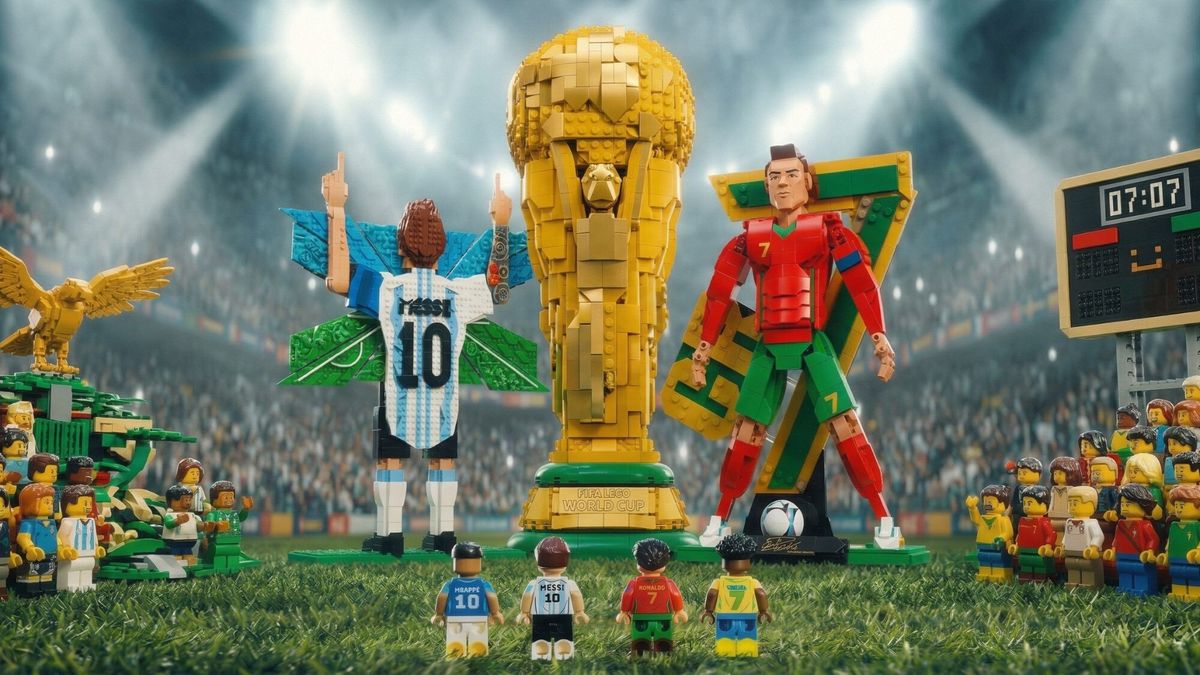
THE 2026 WORLD CUP IS EXPERIENCED WITH LEGO
The impact of this departure is not limited to the present. Clarke restored identity and ambition to the Scottish national team, becoming a central figure in the country’s football renaissance. Qualification for the World Cup was seen as an extraordinary achievement, especially after years marked by disappointments. This farewell thus marks the end of a cycle filled with ups and downs, but also with memorable moments that will remain, as he himself stated, “etched in the Scottish collective memory for generations.” For Scotland, it represents a turning point: will it be the beginning of a new cycle or a return to the mediocrity of past decades?
In statements following the confirmation of his departure, Clarke did not hesitate. “In some respects, it was easy because I already had in my mind what I wanted to achieve as a coach. I had already fulfilled all my objectives,” he said, revealing an unusual calmness during these moments of transition. The coach acknowledged the offensive limitations of the team but emphasized the commitment of his players: “We showed a lot of character and played good football. We lacked quality in the final third of the pitch, but perhaps I can say that, throughout the seven years, we were always chasing that quality – and I hope my successor can find it.” Clarke also took the opportunity to reinforce the legacy he leaves behind: “We will become part of Scottish folklore as we move forward. People will continue to talk about these games, these moments, until the next century.” Regarding the future of this group of players, he was emphatic: “Everyone says this group is finished. It is not finished, because they can all reach Euro 2028.”
Now, the Scottish squad is preparing to start a new chapter under a yet-to-be-announced coach. The next official commitments, set for the autumn, will be against North Macedonia, Slovenia, and Switzerland, as part of the Nations League. This cycle of matches will be crucial in assessing the group’s response capacity after the departure of its charismatic leader and in determining whether Scotland can maintain the competitive standard achieved in recent years.
The challenge ahead is enormous: not only finding a successor worthy of Steve Clarke but also continuing the sporting project and consolidating Scotland’s presence among the elite of European football. Any misstep could jeopardize the progress made and reignite the criticism and pessimism that have long plagued Scottish football. For now, we must await the federation’s decisions and the immediate impact of the changes, at a time when the entire country demands quick answers and short-term results. The bar is set higher than ever, and the pressure is at its maximum: Scotland cannot afford to waste the trust and passion capital that Steve Clarke helped to restore.
NOW YOU CAN FOLLOW THE WORLD CUP WITH ALL THE INFORMATION – HERE
Discover more from Apito Final
Subscribe to get the latest posts sent to your email.

