The passion for football is fueled by stories of overcoming adversity and triumph, especially when it comes to the UEFA Champions League. The competition, which traditionally favors the giants of European football, often sees lesser-known teams challenging the odds and leaving their indelible mark on the tournament’s history. Recently, the epic journey of Bodo/Glimt, a modest Norwegian team, defeating giants like Manchester City, Atlético de Madrid, and Inter Milan, has reignited the fervor for these underdogs that make us believe in the magic of football.
**Original Statements from Debrief:**
Dominic Matteo at San Siro. Just saying that is enough. Villarreal, now a household name in the Champions League, had a memorable run to the semi-finals in 2006 that had everyone consulting their atlases. A small town near Valencia made its mark on the European map thanks to Manuel Pellegrini’s men, who eliminated Rangers and Inter Milan on away goals. Their narrow 1-0 defeat to Arsenal over two legs was marked by a penalty saved by Jens Lehmann from Juan Roman Riquelme at El Madrigal. Breathtaking.
The decline of Eastern European football has become evident, resulting in the absence of standout teams and intimidating trips for the giants of the Champions League. Dynamo Kyiv was the last gasp from the East in 1999. At that time, the finals featured Manchester United, Bayern Munich, and Dynamo, all pursuing trebles, at a time when that was an almost unknown achievement. Under the influential Valeriy Lobanovskyi, Dynamo boasted young talents like Andriy Shevchenko and Sergiy Rebrov, and they really could have gone far. They accumulated four points against Premier League champions Arsenal in the group stage, before eliminating the holders Real Madrid in the quarter-finals. Kyiv even had a two-goal lead over Bayern in the first leg of the semi-finals, but drew 3-3 in the thrilling first leg in the Ukrainian capital. A narrow 1-0 defeat in the second leg ended their dream. That season was undoubtedly the peak of European football.
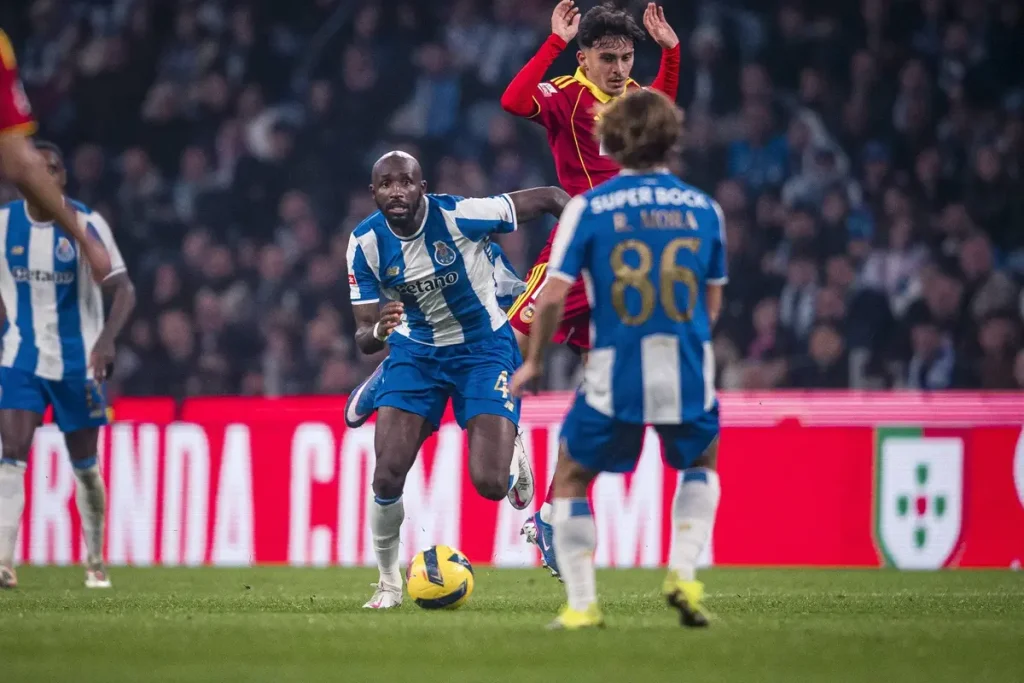
Yes, Porto winning the Champions League in 2004 should place them higher than seventh place. José Mourinho’s famous slip at Old Trafford was worth the price of admission, a moment of pure joy before we knew of his cunning. However, Porto did not play to soothe souls; the semi-final lineup (including Chelsea pre-José and two more teams on this list) was quite accessible for the holders of the UEFA Cup. Nevertheless, names like Deco, Ricardo Carvalho, Maniche, and Vítor Baía made up a temperamental and skilled team that achieved something unlikely to be repeated. A question for the next pub quiz: where was that year’s final played? Gelsenkirchen. The past is indeed a different country.
Cypriot teams rarely reach the semi-finals of the Champions League in an era dominated by big brands and major business, but APOEL managed to crash the party in 2012. They topped a group with Zenit St. Petersburg, Porto, and Shakhtar Donetsk, accumulating two wins and six goals in six matches. They were not at the level of Johan Cruyff’s Ajax, but the tension in a thrilling round of 16 clash against Lyon was resolved on penalties, with APOEL winning 4-3, causing scenes of euphoria in Nicosia. Unfortunately, Mourinho’s Real Madrid dispatched them with a ruthless 8-2 in the quarter-finals, much to the relief of UEFA executives and sponsors.
Fernando Morientes, Dado Prso, and Ludovic Giuly were stars of a Monaco team that, in 2004, showcased immense talent. They humiliated Deportivo with an 8-3 victory, eliminated the Galácticos of Real Madrid in the quarter-finals, and overcame a complacent Chelsea in the semi-finals. However, everything fell apart in the final, where they lost 3-0 to Porto. The 2017 team, filled with stars like Mbappé and Falcao, was also quite impressive. But the 2004 vintage of Monaco had a special touch, capable of turning water into superior quality wine.
Ranking Deportivo La Coruña above both finalists of 2004 may seem like an arbitrary decision, but the La Liga team was known as ‘Super Depor’ for a reason. Located in A Coruña, a coastal city in the far northwest of Spain, Deportivo became one of the European pillars in the early 2000s. With strikers like Diego Tristan and Juan Carlos Valerón, and Football Manager hero Jorge Andrade leading the defense, they managed to recover from a humiliating defeat against Monaco to reach the knockout stage, where they eliminated Juventus, setting up a clash with holders AC Milan. Although they were caught off guard with a 4-1 defeat at San Siro, Deportivo starred in one of the most memorable nights in European football history. Walter Pandiani, Valerón, and Albert Luque turned the game around before halftime, with a goal from Fran sealing the victory and raising the euphoria at Riazor. “Our opponents were running at full speed all night,” recalled Andrea Pirlo, “and what impressed me the most was how they kept running into halftime. For every player, without exception.”
Porto eliminated them in a highly contested semifinal, but the memories remain. Borussia Dortmund, which had won the German championship twice in a row, faced financial difficulties and ended up in the last pot of seeds in 2012-13. A group featuring Real Madrid, Manchester City, and Ajax looked promising, until it was remembered that their coach was Jürgen Klopp. The Germans advanced steadily in the competition, although a controversy marked their victory in the quarter-finals against Málaga, a topic to avoid during their next holiday on the Costa del Sol. Robert Lewandowski scored four goals to dispatch Real Madrid in the first leg of the semi-finals at a vibrant Westfalenstadion. However, Bayern Munich ultimately won a high-quality final at Wembley, and Klopp’s team began to crumble.
And now, we return to the present day, where the story of Bodo/Glimt stands out as an example
Discover more from Apito Final
Subscribe to get the latest posts sent to your email.