


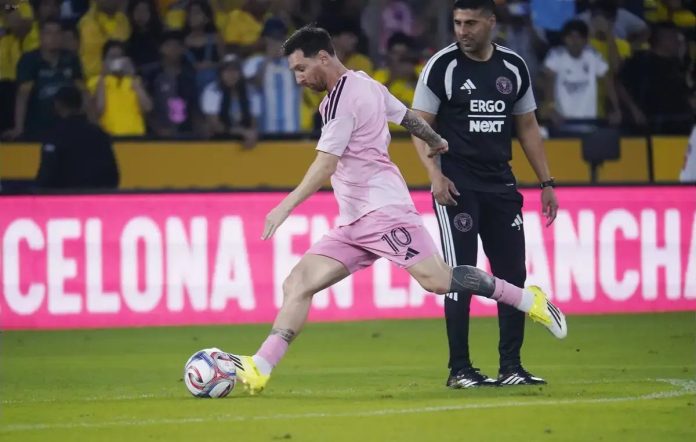
Lionel Messi, the undisputed star of world football, has not stepped onto the pitch at Camp Nou since 2021, when he tearfully bid farewell to the club that crowned him as one of the greatest players of all time. Although he made a brief visit to the stadium under the cover of night, his felt absence does not diminish his overwhelming influence on FC Barcelona, which remains significant. This month, Messi is once again in the spotlight, not for a triumphant return, but for the tumultuous electoral battle involving the leaders of the Catalan club.
The elections on March 15 have proven to be fertile ground for power struggles, particularly between current president Joan Laporta and former player and coach Xavi Hernández. Laporta, who oversaw Messi’s departure to Paris Saint-Germain in 2021, faces fierce criticism from Xavi, who has not hesitated to expose the shortcomings of the current management regarding the Argentine icon.
Laporta, who positions himself as the favorite to reclaim the presidency, is attempting to downplay the situation, claiming that La Liga’s strict financial regulations were the main obstacle to Messi’s return, who had planned to come back to Barcelona after a year of adjustment in Paris and a historic World Cup victory. “In 2023, we prepared the contract and sent it to Jorge Messi,” Laporta stated during a public debate. However, Messi’s version contrasts with Laporta’s. The Argentine, in previous statements, revealed that he did not want to endure the pressure of potential player sales or salary cuts, which led him to choose Miami over a return to his former home.
Xavi, on the other hand, did not hold back in criticizing Laporta, stating that the president’s narrative is not true. “Leo was signed,” he asserted in La Vanguardia. Xavi revealed that since January 2023, after winning the World Cup, he had been in contact with Messi and that the desire to return was mutual. “We made the preparations, everything was aligned, and from a footballing perspective, it seemed like a perfect solution,” he added. According to Xavi, the situation changed when Laporta began negotiating directly with Messi’s father, Jorge, ultimately dismantling what appeared to be a secure agreement.
Xavi’s statements reveal a deep division within the club. He hinted that Laporta not only failed to secure Messi’s return but that his management may be leading the club towards a radical shift towards a model of a public limited company, a concept that raises concerns among fans about preserving FC Barcelona’s identity as a club truly owned by its members.
As the power struggle continues, Barcelona’s future appears uncertain. The possibility of a drastic change in its management structures and club philosophy is a reality that looms large. Fans, who have already suffered the loss of Messi, now face the prospect of a Barcelona that may no longer be the same. With Laporta and Xavi on opposite sides of the barricade, the battle for the presidency promises to not only influence the club’s immediate future but also shape its identity in the years to come.
Discover more from Apito Final
Subscribe to get the latest posts sent to your email.

