


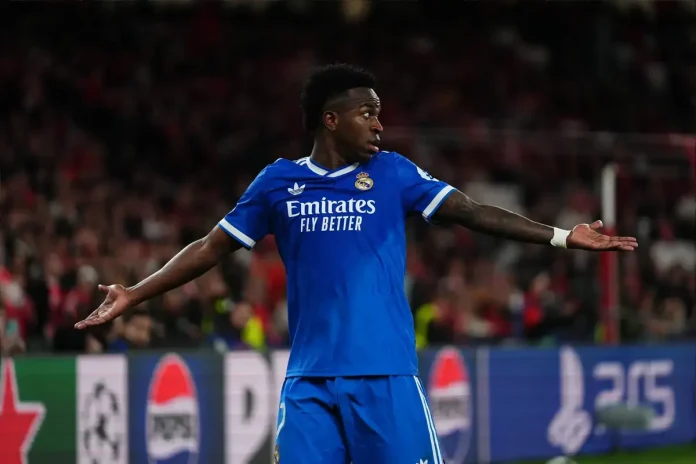
In the heart of European football, a new chapter of indignation and resistance unfolds as Vinicius Jr, the star of Real Madrid, faces an ongoing battle against the racism that haunts the sport. The Brazilian player, who has been shining on Spanish pitches for eight years, was once again the target of racial abuse, this time during the Champions League clash against Benfica, which was interrupted for ten minutes while he denounced the discrimination. This unfortunate episode marks the 20th time Vinicius claims to have been subjected to racial abuse.
Renowned Spanish football expert Guillem Balague was present at the Estádio da Luz and shared his analysis of the situation. “Football should be celebrating a masterpiece tonight – Vinicius scored such an extraordinary goal that it deserved to dominate all the headlines,” Balague stated. “However, once again, the sport has been dragged into the same repugnant swamp of racism, denials, excuses, and a staggering lack of understanding from those who should know better.”
The recent allegations involve Gianluca Prestianni, the Argentine midfielder of Benfica, who allegedly made racist insults towards Vinicius shortly after his spectacular goal. Although Prestianni has denied the accusations, the solidarity from Vinicius’s team, particularly from Kylian Mbappe, is notable. Mbappe revealed to the press that he heard a racist term being used several times, underscoring the seriousness of the situation.
After the match, José Mourinho, the manager of Benfica, made controversial statements that sparked further controversy. “These talents can do beautiful things, but unfortunately, he was not happy just for scoring that impressive goal,” he told Amazon Prime Video Sport. Mourinho suggested that Vinicius should have celebrated in a more respectful manner and argued that Benfica could not be a racist club, as its greatest player, Eusébio, was black. Such comments not only reveal a lack of sensitivity but also perpetuate a harmful cycle of victim-blaming.
The narrative surrounding Vinicius is complex and reveals a persistent dilemma: “Yes, they insult him, but he should behave better.” This discourse reveals a culture that not only tolerates but also defends racism while blaming the victim for their reactivity. Vinicius’s behavior, when he confronts the stands, is often seen as arrogant, but it is a reaction to a hostile environment he has faced throughout his career.
American sociologist Eduardo Bonilla-Silva describes this dynamic as “racism without racists,” where cultural structures do not directly insult but hold the affected person responsible for their reaction. By becoming a global symbol of resistance against discrimination, Vinicius is fighting for changes in the policies and actions of sports authorities.
The hostility Vinicius faces is palpable, with a history that includes insults in stadiums across Spain and testimonies in court after a black doll dressed in his jersey was hung from a bridge. The player’s struggle is not only for himself but for all those who have suffered from racism in sports. Through his activism, Vinicius is pressuring authorities to tighten their protocols, as football’s response to racism remains insufficient.
What is truly at stake is the urgent need for a cultural change within sports, which can no longer ignore the racial abuses occurring in its own arenas. Vinicius’s fight is, therefore, a battle not only for justice for himself but for a necessary transformation that can finally eradicate racism from football.
Discover more from Apito Final
Subscribe to get the latest posts sent to your email.

