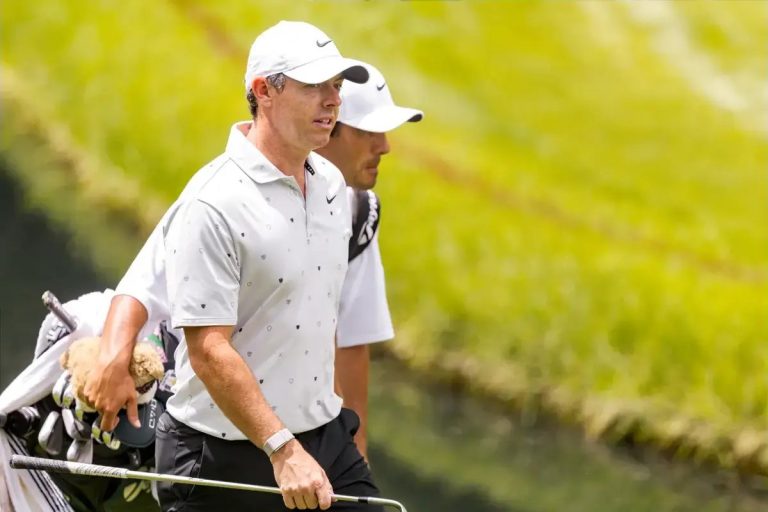
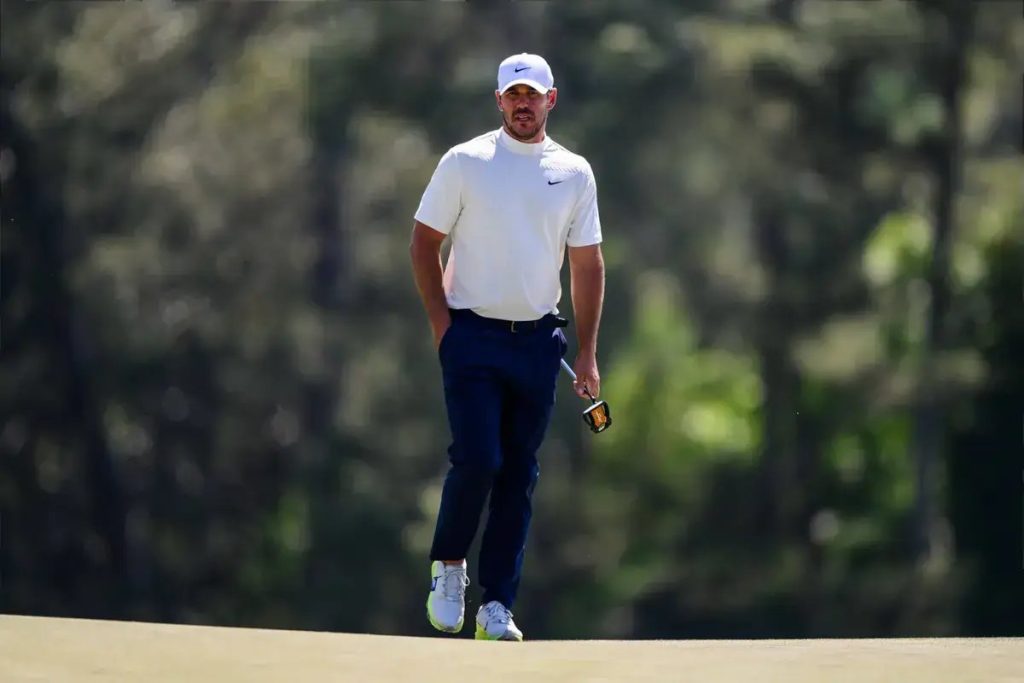
Brooks Koepka returned to the PGA Tour in 2023 after three years competing in the controversial LIV Golf league, but what seemed to be an expensive comeback — with headlines talking about a loss of up to 90 million dollars — hides a much more complex and intriguing reality about the PGA Tour’s retirement system. The secret lies in the recent introduction of “equity grants,” a mechanism that promises to revolutionize how top golfers secure their financial future, but also brings a landscape filled with uncertainties and risks. Get ready to discover how this financial move could transform or ruin the careers of golf stars in the coming decades.
The penalty imposed on Koepka was clear and intentional: he lost the right to receive five years of “equity grants,” a type of equity participation that the PGA Tour began distributing to a select group of top players. Although the potential value of these future rights is impressive — estimated at 51 to 63 million dollars — the immediate real impact is much smaller and depends on various factors such as the financial performance of the PGA Tour, the ability to sell these shares, and time. In practice, using present value calculations, Koepka may be giving up something that is currently worth about 9.3 million, a value that can only be redeemed starting at age 50, which is quite far in the future.
A veteran golf agent, loyal to the PGA Tour, explained to Debrief that this penalty has more of a symbolic effect than a financial one. “It’s not about the actual value of the equity grants, but rather the message it conveys,” he said, emphasizing that Koepka also lost a speculative bonus from the FedEx Cup of up to $23 million — an amount that would only be guaranteed in the event of victory — and a $5 million donation to charity, which will not significantly impact his already substantial fortune, estimated at over $44 million earned on the PGA Tour and more than $100 million paid by LIV Golf.
The equity grants are a bold new development in the landscape of professional golf. It represents a form of private investment in the league itself, something uncommon in sports, which traditionally relies on pension models or more conventional savings plans. PGA Tour Enterprises estimates an annual return of 10 to 12%, aligned with the average performance of the Standard & Poor’s 500 index, but experts warn that this is a conservative figure for private investments, which are typically more volatile and risky. In fact, most private equity funds lose value or show modest gains, and only a handful of investments generate extraordinary profits.
Furthermore, the market for selling or even mortgaging these rights is still to be defined, as the equity grants only begin vesting in July 2028. Frank Marzano, a financial advisor to many PGA Tour players, confirms the uncertainty: “We do not assign value to the equity grants in retirement plans because there is still not enough information to assess the benefits. There are restrictions and vesting requirements that limit access.” Therefore, for millionaire players like Koepka, the current loss is minimal, especially when compared to the tax benefits and donations that benefit institutions linked to the PGA Tour itself.
Apart from this new layer of investment, the PGA Tour maintains a solid retirement system, but it is far from a traditional pension. According to Jay Madara, former CFO of the PGA Tour, it is a defined contribution plan, very similar to a U.S. 401(k), where the funds belong to the players and are managed by independent institutions like Schwab. This means that any former player can withdraw the accumulated money, even if they are competing in another league, such as LIV Golf.
This plan consists of four components: the overall plan, the plan based on cuts made during the season, the FedEx Cup plan, and now the equity grants plan. The cuts plan, for example, pays around $5,000 for each cut made, a benefit that is more relevant for average players than for the top players who earn millions per tournament. In 2025, players like Beau Hossler, who finished the season in 104th place, received about $105,000 from the cuts plan, an amount that represents a significant portion of his career, unlike stars like Scottie Scheffler, who, with 20 cuts, accumulated only $100,000, a nearly symbolic amount compared to his million-dollar earnings.
For players who maintain an average career of ten years on the PGA Tour, a hypothetical study shows that they can accumulate around $750,000 in their retirement accounts, an amount that could grow to $2.5 million after 25 years without further contributions, assuming a realistic return rate of 7%.
The big question looming is the future of equity grants. These are expected to be the most valuable and volatile asset in the players’ portfolios, with the potential to either build fortunes or leave investors in the lurch. Mason Champion, a financial consultant at Morgan Stanley, warns: “Equity grants can significantly increase net worth, but liquidity is a serious issue. Established players may take the risk, but for younger players, these assets represent a large part of their wealth and carry the risk of illiquidity.” Without a defined secondary market, many players are already beginning to question whether this benefit will truly be advantageous.
This scenario reveals that, despite the glamour and the millions involved, the financial future of golfers depends as much on their performance on the course as on the PGA Tour’s ability to maintain its market value and attract sponsors, media, and fans. As times change and financial markets become more complicated, players must approach their retirement strategies with the same discipline and rigor they apply to their swings. In the end, this is a lesson for all investors: taking high risks can bring great rewards, but also consequences that are difficult to manage.
The financial revolution in the PGA Tour is beginning, and the next few years will be crucial in determining who will emerge victorious both on and off the course. Will Brooks Koepka and other golf giants be able to turn these “bonus years” into lasting legacies, or are they playing a dangerous game with their future? The answer is on the way, and it promises to shake the foundations of professional golf forever.
This article first appeared on Apito Final.
Discover more from Apito Final
Subscribe to get the latest posts sent to your email.