

Scandal at Augusta National: Kai Trump in the eye of the storm after accusations of breaking the sacred Masters rules
Every year, in April, the Augusta National enforces its rules with an iron fist, reminding the world that there are no exceptions: mobile phones are banned, no appeals, no exceptions. But in 2024, the tradition was challenged by none other than the President’s granddaughter, Kai Trump, whose name became involved in a controversy that shook the golf world.
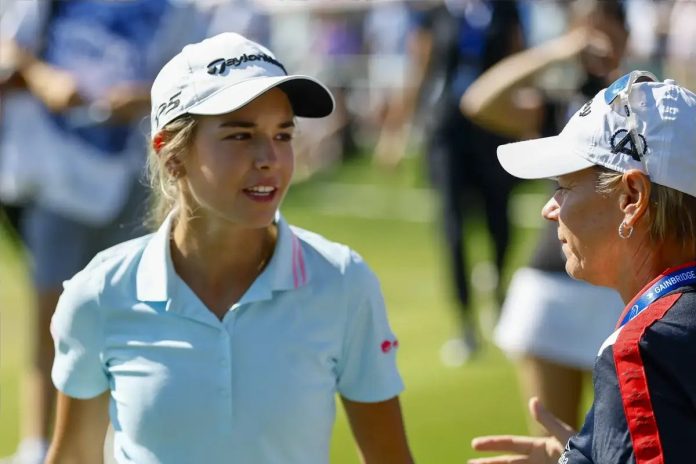
Kai Trump, a promising university golfer, soon to join the University of Miami team, was present during the Masters training week and shared several photos of the event on social media, describing the venue as “a very special place”. One of the images, however, raised suspicions: it appeared to show Kai taking a selfie, something prohibited at Augusta National. The reaction was immediate and harsh: fans and golf purists accused her of disrespecting one of the tournament’s strictest rules and even called for her permanent ban from the grounds.
In response to the storm, Kai Trump used Instagram to clarify the situation. In a video preparing for the day (“GRWM reel”), she firmly stated that she did not take her mobile phone to Augusta National. “I’m glad phones aren’t allowed, because it makes the experience much more special,” she explained. “Actually, I took my Sony camera; it was with that I took all the photos.” This statement had already been reinforced in the comments of her post, where she insisted: “The photos were taken with my Sony camera.”
However, the criticism did not stop. “She’s clearly taking a selfie. No one takes selfies with a normal camera, it’s a phone. Ban her!” wrote an outraged internet user. Yet, the controversy hides nuances: Masters rules prohibit cameras on tournament days (Thursday to Sunday), but allow photographs with cameras during training days (Monday to Wednesday), provided the lens does not exceed 20 centimetres. In other words, Kai was within the rules when using a camera for personal photos during training week.
Furthermore, the timeline of events clears up any doubts: Bryson DeChambeau, who appears in one of the photos with Kai, was holding a beer and dressed casually, clearly outside the official tournament hours. This relaxed environment during training week reinforces the credibility of Kai Trump’s version.
To emphasise the strictness of the rules, on the same day, the former Open champion of 1989, Mark Calcavecchia, was expelled from Augusta National for using a mobile phone on the premises. Calcavecchia, who has been a vice-champion of the Masters and is an honorary invitee, did not deny the incident and simply said: “I have nothing negative to say about Augusta National Golf Club and the Masters.” This expulsion is a clear warning: there are no privileges, not even for golf legends.
This is just another example of Augusta National’s strict discipline: coaches have been dismissed for wearing shorts, spectators expelled for using mobile phones, and even commentators on Golf Channel, like Charlie Rymer, were banned in 2011. The Masters makes no distinctions — everyone is required to follow the rules to the letter.
Kai Trump, amidst the controversy, remains calm and focused. “When you step onto the course, it really gives you chills,” she admitted. “It was very special to be there and support the players.” The young woman also acknowledged some tiredness during the visit but assured that it did not diminish the experience. Her trip to Augusta National comes during an intense period: she is finishing secondary school, has already committed to the University of Miami women’s golf team for the class of 2026, and is recovering from a wrist surgery.
This media storm around Kai Trump reveals how Augusta National maintains its aura of exclusivity and discipline, even in the face of family members of the club’s high-ranking officials. The granddaughter of the President proved that, even with the weight of her surname, no one is above the rules in the temple of world golf. And for purists, this controversy only reinforces the idea that at the Masters, tradition is sacred — and for everyone, without exceptions.
This article first appeared on Apito Final.

