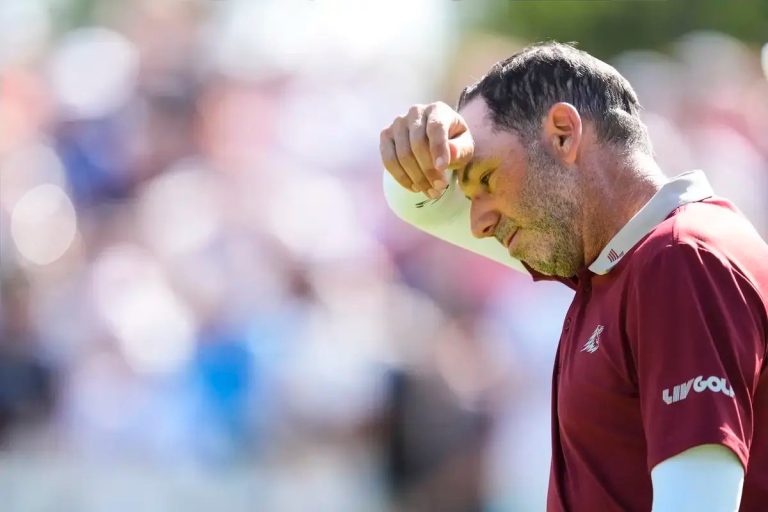

The revolution in women’s golf is underway, and leading the charge is the brilliant Lydia Ko. The New Zealand player, one of the most prominent stars on the LPGA, has made bold statements that are shaking up the circuit. Following the appointment of Craig Kessler as LPGA commissioner, the KPMG Women’s PGA Championship saw a record prize pool of $12 million, but Ko is not satisfied with just high numbers. Her message is clear: it’s time for players to prove their worth before demanding even higher salaries.
“Sometimes, we can get carried away with what we play, but there may be nothing to play for if our organization is not fundamentally strong,” Ko stated, reflecting on the “challenges” that arose after an intense meeting with Kessler. Her vision extends beyond prize money: “I would love for the prize for winning to be like the CME every week. But sometimes, we need to think: what do we bring to the community? It’s much more complex than just the prize value. If no one comes to watch us play at a certain event, it would be strange to have a $1.5 million prize… so, what can we bring to the community, what can we offer our partners? All those things need to be aligned. It doesn’t make sense if one thing drastically outweighs the other.”
The numbers speak for themselves: in 2024, Scottie Scheffler earned over $29.2 million in official prize money, while LPGA star Nelly Korda brought in only about $4.4 million. Even the $4 million check from the CME, the largest on the women’s tour, barely compares to the earnings of a mid-tier player on the PGA Tour. With this, Ko is not only criticizing the pay disparity; she argues that closing this gap requires more than just money. The reality of the LPGA is that consistency in viewership and engagement is still lacking, overly reliant on the star power of its players.
The viewership numbers for the KPMG Women’s PGA Championship finals, which attracted 428,000 spectators, dropped nearly 50% compared to NBC’s broadcast. However, events like the AIG Women’s Open 2025, which reached a record 47,000 fans over five days, show that there is potential. The difference between these extremes is critical: sponsors seek predictability, broadcasters value audience stability, and prize money only increases when both are reliable.
However, the reliability, as Ko envisioned, did not materialize. The logistical fiasco that marked the early moments of the 2024 Solheim Cup, where spectators were stranded due to transportation failures, left a trail of discontent. The same occurred at the 2025 Chevron Championship, where confusion over access frustrated fans. Unfortunately, the start of the 2026 LPGA season also revealed planning shortcomings that remain unresolved. Ko urged her fellow players to strive to ensure that the experience offered to fans is top-notch.
“Everyone needs to put the ‘I’ behind them and put the Tour first,” said LPGA legend Dottie Pepper on the Golf Channel. Acknowledging Nelly Korda as the face of the tour, Pepper pointed out that “people want to see her play.” While Korda has expressed expectations for greater investments in golf, Ko believes it may be time to shift the perspective, as demonstrated by the Tournament of Champions.
The start of the 2026 LPGA season has not been easy, with a storm interrupting the tournament, reducing it from 72 to 54 holes. Nelly Korda took the title, but the situation frustrated players who were left without the opportunity to compete in the final round. After the event, Ko expressed her disappointment: “I’m devastated that we’re not playing tomorrow. The forecast for tomorrow isn’t great, but it’s better than today!”
Craig Kessler, in response to the growing criticism, acknowledged the failure in management: “The reason for this is that you asked about the four pillars; trust is number one, two, three, and four. I felt I hadn’t done a good job of earning and respecting the importance of that trust. It was brutal. Two weeks in a row, with a stomach ache, unable to sleep at night, because I take this very seriously, and I made a mistake.”
On the other hand, Kessler is not shying away from responsibility, which may give Ko reasons for hope. The future of women’s golf depends not only on the stars but also on a solid organization engaged with the public. Ko’s words resonate as a call to action, not just for the players but for the entire LPGA structure: it is time to demonstrate the true value of women’s golf before demanding more.
Discover more from Apito Final
Subscribe to get the latest posts sent to your email.