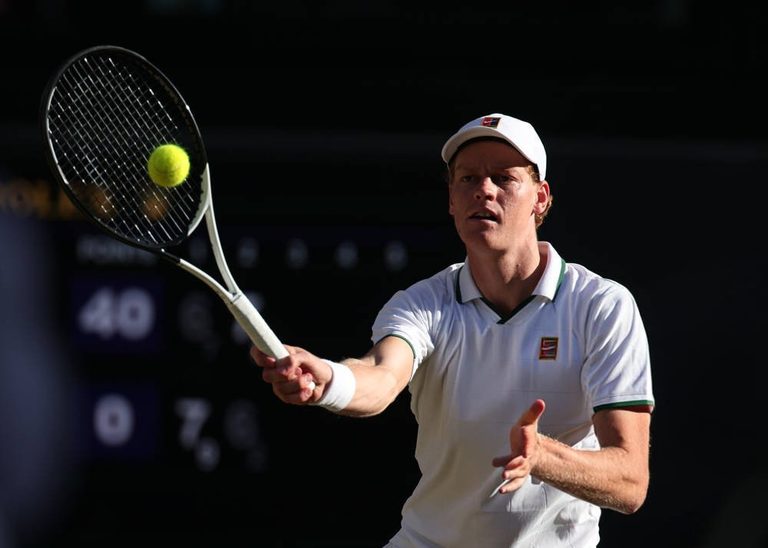
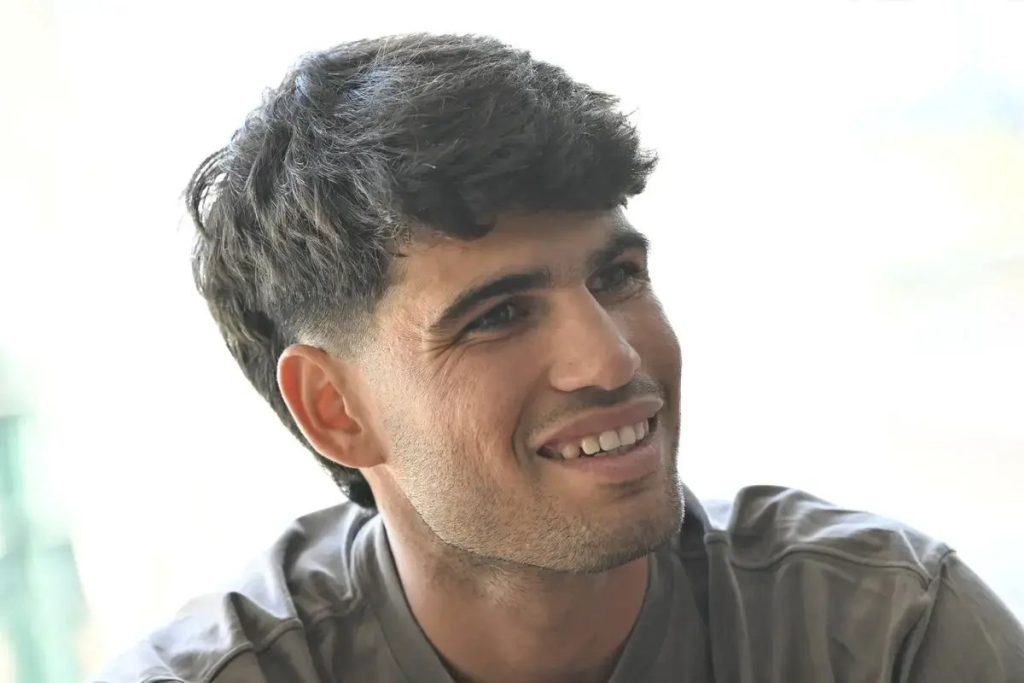
Carlos Alcaraz, the Spanish tennis prodigy, is facing a silent and brutal battle against a wrist injury that has kept him off the courts since April, during the Barcelona Open. This same injury not only dashed his dreams at the French Open but continues to cast a shadow of uncertainty over his participation at Wimbledon. Meanwhile, the 22-year-old has watched helplessly as his rival Jannik Sinner claimed glory at the Madrid Open, stealing the spotlight from him. However, this struggle for a return to clay is not just about strokes or trophies; it is a raw confession about the overwhelming pressure, sacrifices, and regrets that consume him from within.
What weighs on the heart of Carlos Alcaraz?
Unlike a typical young Spaniard, who at 22 divides his time between studies, work, and social life, Alcaraz’s reality is diametrically opposed. Despite the fame and global recognition, the tennis player reveals in an exclusive interview with Vanity Fair in Spanish a deep longing for a more normal life: “Sometimes I wish I had more moments for myself, to do things that a 22-year-old boy does.”
This statement, behind the smile and success, carries the weight of the sacrifices that elite athletes rarely expose. Among them, the infernal schedule that has long been criticized stands out. In October 2025, Alcaraz was already warning about the excess of mandatory tournaments and the physical and mental impact of this frantic pace: “The calendar is too tight. They have to do something. There are too many tournaments, one after another.”
Despite these complaints, the Spaniard has not escaped contradiction: he participated in several exhibition events, such as the Six Kings Slam in Saudi Arabia, which earned him criticism for not living up to his own words. However, opportunities to truly disconnect from tennis have been almost nonexistent, with tournaments, media commitments, sponsorships, and recovery taking up his time.
Nonetheless, in sporting terms, his career is already historic. In 2026, he started the season impressively, winning two consecutive tournaments and completing his career Grand Slam, becoming the youngest male player to achieve this feat, surpassing Don Budge, who accomplished it in 1938 just before turning 23. Even with regrets about the life he hasn’t lived, Alcaraz expresses gratitude: “I know I am living the life I have always dreamed of.”
Mental health under constant attack
Tennis has become an endless cycle for Alcaraz. Since the beginning of the year, he has rarely spent more than a few weeks at home in Murcia, amidst exhausting travels that took him from South Korea to the Australian Open, passing through Bahrain and Qatar, and onto the Masters 1000 in the United States. The frenetic pace shows no signs of letting up.
When he returns home, he tries to make the most of his time with family, friends, and even karting sessions, but even those get quickly swallowed up by the weight of professional tennis. At Christmas, it seemed he had found a balance: he trained at his childhood club, surrounded by loved ones, and felt mentally and physically connected. That serenity was reflected in his performance at the Australian Open.
But the calm was short-lived. The defeat in the third round of the Miami Open against Sebastian Korda erupted into a public crisis. Visibly frustrated and exhausted, Alcaraz shouted in the middle of the match: “I can’t take it anymore! It’s non-stop! I want to go home! I can’t take it anymore!” A venting that revealed the extent of the mental exhaustion that plagues him.
Now, away from the courts, Alcaraz admits he urgently needs time for himself and to take care of his mental health. “There were times when I didn’t stop to rest, and that led to playing poorly, to injuries… It didn’t end well.” For him, mental recovery is as important, if not more so, than physical care: “There are people obsessed with body aesthetics, but for me, taking care of the mind is just as important.”
The relentless pressure of the tennis world
Early success brought suffocating attention. Every defeat, every personal decision is scrutinized. The loss in Miami generated criticism, including from renowned coach Patrick Mouratoglou, who questioned Alcaraz’s motivation: “He already has seven Grand Slams, he’s won many Masters 1000, it seems he’s not that interested.”
Furthermore, his free time has become a subject of controversy. While tennis legends like Federer, Nadal, or Ruud find a relaxing escape in golf, Alcaraz has faced criticism for showcasing impressive golf swings, with former players suggesting that it undermines his commitment to tennis. Jacopo Lo Monaco was clear: “He needs to understand that at this level, sacrifices must be made.”
This constant pressure, combined with an already overloaded schedule—Alcaraz played the most matches in the 2025 season—makes his mental battle even tougher. “Today we have to be very careful with what we say and do, but at the end of the day, we are human,” he confessed. “It’s stressful to always think about what to do, where to be, at what moment. We have good days and bad days; sometimes we wake up without wanting to do anything, but we have to show up, and sometimes we don’t react as we should.”
With his return to the courts expected only after the French Open and without a confirmed date, this interview reveals a calmer, more reflective, and vulnerable Carlos Alcaraz, willing to speak openly about the shadows that fame, pressure, and relentless expectations cast upon him.
Alcaraz’s struggle goes beyond tennis: it is a race against time, against pressure, and for mental balance, at a time when the sports world still hesitates to acknowledge that champions can also break inside.
This article first appeared on Apito Final.
Discover more from Apito Final
Subscribe to get the latest posts sent to your email.