The growing concern over extreme heat conditions at tennis tournaments has reached a new level with the start of the 2026 Australian Open, where record temperatures exceeded 40 degrees Celsius. This alarming situation not only activated the tournament’s extreme heat policy but also reignited a critical debate about the health and well-being of athletes in the face of ongoing climate change. Pressure is mounting on organizers to implement stricter measures to protect players and the public.
The Australian Open’s extreme heat policies were established in 1998 after lengthy discussions with various athletes. The current version, introduced in 2019, uses a scale of 1 to 5 that takes into account the physiological differences between adults, wheelchair athletes, and juniors. This scale assesses four crucial climatic factors: air temperature, radiant heat, humidity, and wind speed, all of which influence a player’s ability to dissipate heat. The approach of the ATP and WTA to deal with extreme heat has evolved significantly over the years, but it still raises questions about the adequacy and effectiveness of the current rules.
After a wave of criticism in 2015, organizers raised the temperature threshold from 35 to 40 degrees Celsius, allowing the games to continue under conditions that many consider dangerous. Although this change was seen as a victory, experts warn that this policy may not be sufficient, especially when humidity conditions are taken into account, which can create an even more extreme heat scenario.
The history of heat-related problems at the Australian Open is alarming. In 2014, the tournament was marked by a series of heat-related incidents, with players and even spectators suffering from fainting and other serious issues. The competition was forced to deal with temperatures exceeding 41 degrees Celsius for several days, leading to a record number of withdrawals. Players like Andy Murray and Frank Dancevic expressed serious concerns about safety, while others, like Roger Federer, argued that the games should continue even under these extreme conditions.
With the implementation of new policies during the 2026 Australian Open, organizers have shown greater awareness. Game interruptions occurred immediately on the outer courts as soon as the temperature exceeded the established limits. Additionally, wheelchair events had a delayed start to accommodate the different physiological needs of the athletes. Andy Lapthorne, a prominent quad player, emphasized the importance of this consideration, stating that some players are unable to sweat due to spinal cord injuries.
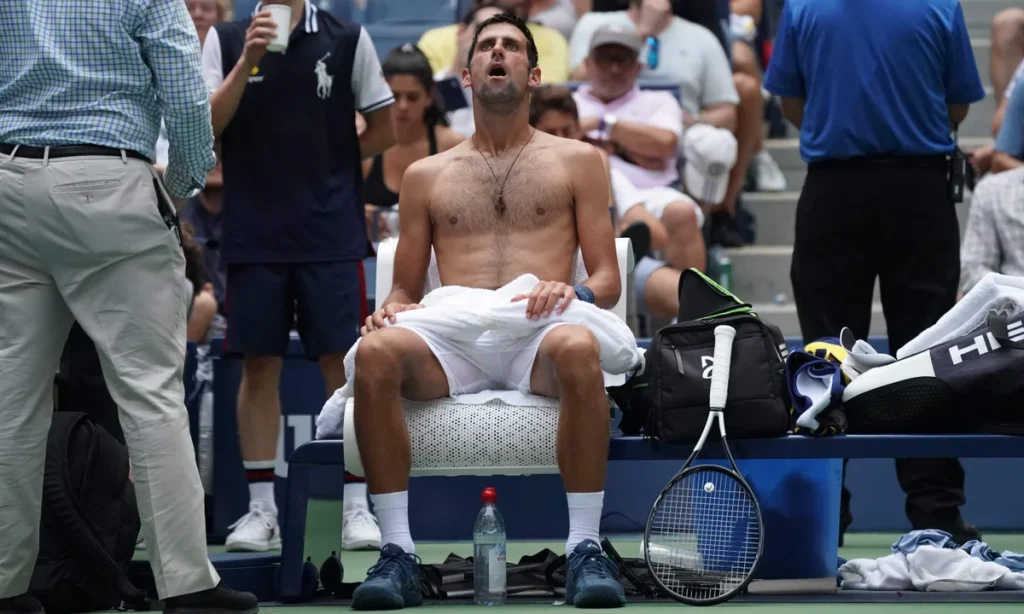
The situation is not limited to the Australian Open. Other tournaments, such as the US Open and the French Open, are also facing similar challenges regarding extreme heat. At the 2023 US Open, for example, Daniil Medvedev and Andrey Rublev encountered exhausting conditions that raised concerns about player safety, with Medvedev stating that “a player could die” due to the suffocating heat. The criticism is not confined to the athletes; commentators and health experts have also expressed concerns about the risks associated with physical exertion in extreme temperatures.
In response to previous incidents, the ATP introduced a new heat policy starting in 2026, which establishes strict rules for professional men’s events, allowing for cooling breaks and suspensions of play when temperatures reach dangerous levels. On the other hand, the WTA has had policies in place since 1992, leading the way in heat-related safety.
The situation demands a deeper analysis and a proactive approach. The possibility of adjusting the tennis calendar to avoid the hottest months, promoting the merger of the ATP and WTA tours, and considering a reduction in the number of sets are some of the suggested solutions. However, resistance to significant changes, particularly in terms of broadcasting rights and contracts, may hinder the implementation of measures that ensure the safety of players and the public.
As the climate continues to warm, the tennis community must act swiftly to ensure that the health and safety of everyone involved are prioritized. The hope is that we do not have to wait for a tragedy before strict and effective policies are adopted to address this increasingly pressing issue in the world of sport.
Discover more from Apito Final
Subscribe to get the latest posts sent to your email.