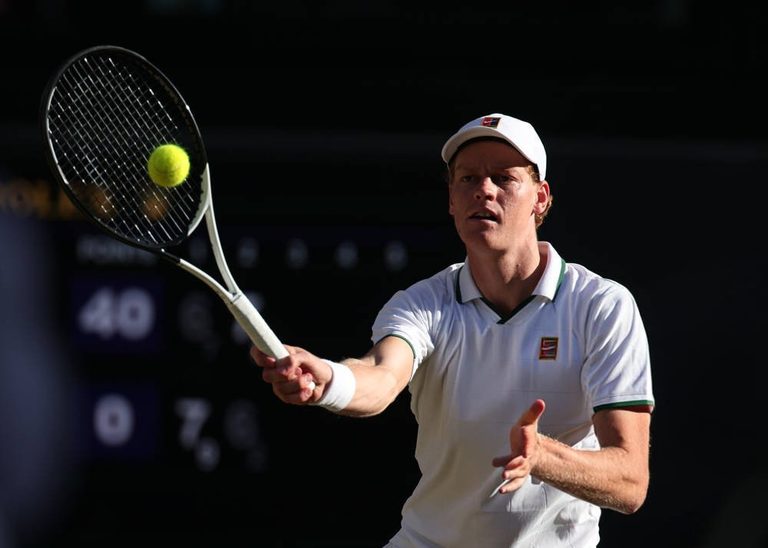
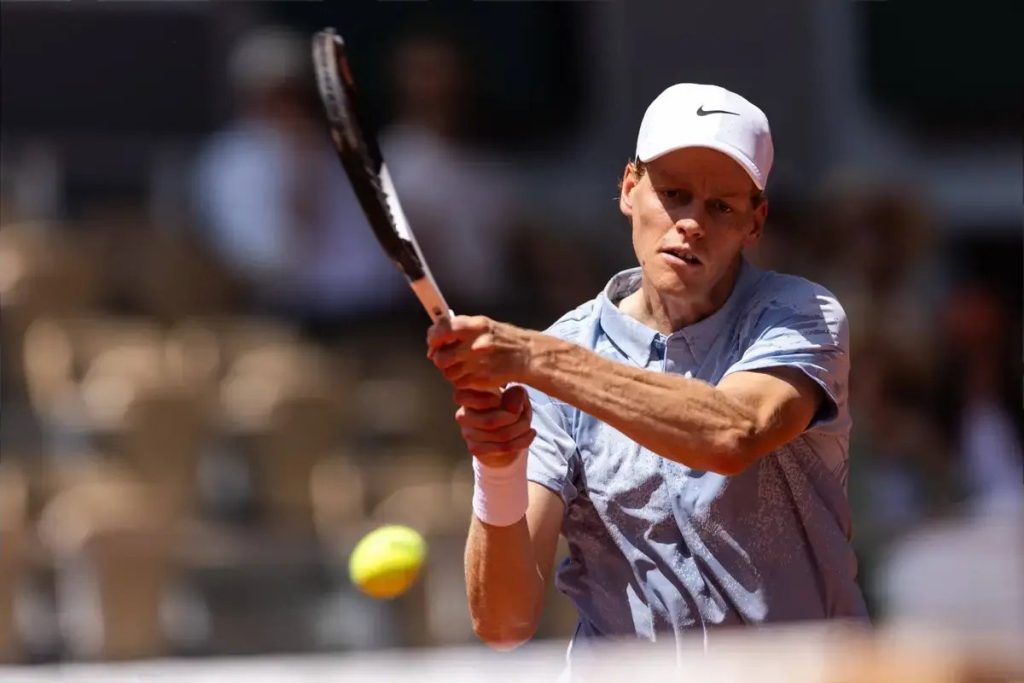
The unexpected elimination of Jannik Sinner in the second round of the French Open continues to send ripples through the tennis world, with surprising theories emerging about the reasons behind the world number one’s fall. Greg Rusedski, former British number one, has put forward a hypothesis that could change the perception of the physical problems that have been afflicting the young Italian: a persistent virus may be undermining his energy, especially in conditions of intense heat.
Sinner was on the verge of overcoming Juan Manuel Cerundolo at Roland Garros, until he was brought down by an apparent heat-related collapse, finishing the match with a defeat of 3-6, 2-6, 7-5, 6-1, 6-1. The Italian, a clear favorite to win the French title after a dominant series of victories in the tournaments leading up to the second Grand Slam of 2026, saw his ambitions dashed in circumstances that raise many questions.
This is not a new issue for Sinner. Last year, he withdrew from the Shanghai Masters due to cramps and faced similar physical difficulties in the semi-finals of the Rome Masters against Daniil Medvedev last month. Now, Rusedski suggests that Sinner may still be recovering from a virus contracted in Australia, which left him weakened during his semi-final defeat against Novak Djokovic in Melbourne.
“Basically, it’s heat exhaustion, or perhaps he is still suffering from the effects of the virus he had in Australia,” Rusedski explained on his podcast, set to be released this Monday. “Many people say that Sinner has a mental weakness. That is absurd. He does not let himself be discouraged when he is leading two sets to love and 5-1 against an opponent who is easily surpassing him. I heard that he had a virus in Australia that limited him, and these viruses can linger in the body. When you win easily, you can manage your effort, but the heat in Paris was fatal. That is the only explanation that makes sense to me.”
Rusedski recalls that viruses can take time to leave the system and cites the recent example of Emma Raducanu, who also faced prolonged physical difficulties. “Sinner himself said he felt unwell on the morning of the match. Only he and his team know the truth. They have a fantastic team that will analyze everything, from the agent to the coach. They will find a solution to this problem.”
The former British number one also highlights the smart strategy of keeping the true cause a secret, avoiding giving any advantage to opponents: “They don’t want to reveal the problem exactly, which is good coaching because it generates speculation. And that’s part of the game.”
To illustrate the situation, Rusedski drew a parallel between Sinner and Novak Djokovic, who also faced physical issues early in his career before a radical change in diet, notably the elimination of gluten, which revolutionized his performance. “Djokovic had a reputation for giving up, for not fighting until the end, but then he went gluten-free and everything changed. He went on to win 24 majors. Looking at the numbers, at 24 years old, Federer had four Slams, Nadal six, Djokovic four. Sinner is now at four, and Alcaraz at seven, one ahead due to injury. This comparison shows that Sinner and Alcaraz are at the level of the greats.”
Rusedski concludes with a message of confidence in the future of the young Italian: “Anyone who thinks this defeat will shake Sinner in the long term should forget it. He will come back stronger and better.”
Sinner’s fall at Roland Garros is a shock, but the explanations that are starting to emerge confirm that the Italian’s talent and resilience remain intact. The tennis world is paying attention, as the battle for supremacy among the young stars promises to be even more intense in the coming times.
This article first appeared on Apito Final.
Discover more from Apito Final
Subscribe to get the latest posts sent to your email.