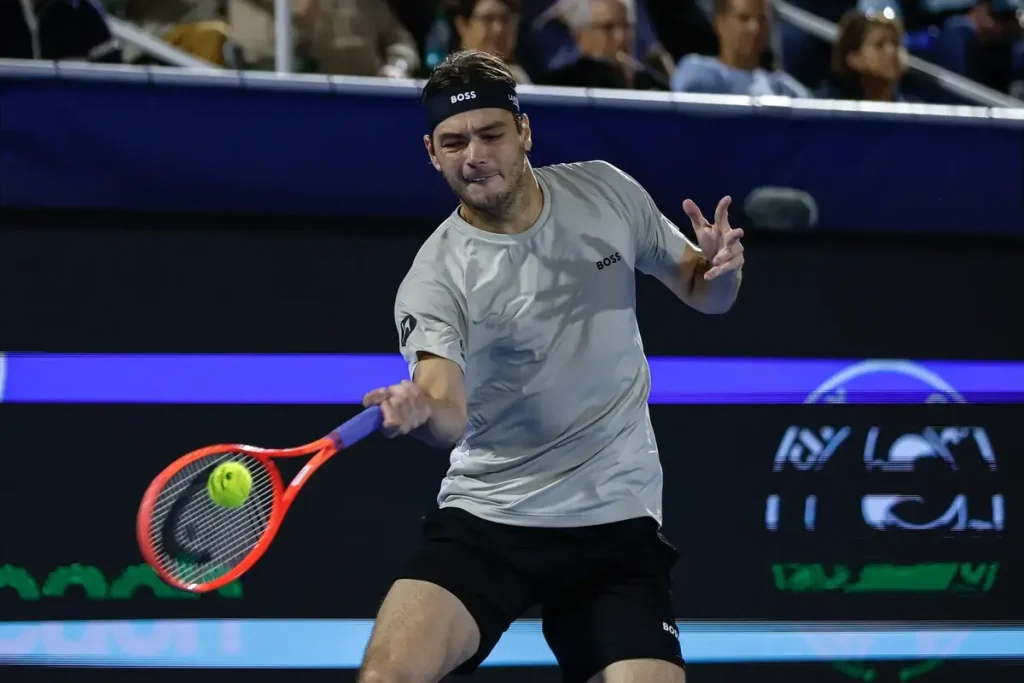
During a recent live stream on Twitch, while playing World of Warcraft, Taylor Fritz decided to open up about how match scheduling works at the highest level of tennis. Surprisingly, the American tennis player stated that superstars like Carlos Alcaraz, Jannik Sinner, and Novak Djokovic dominate the hierarchy. What should have been a clarification about the reality of the circuit quickly turned into controversy, and Fritz did not hesitate to respond to the criticism directly.
After a fan shared a clip of his statements on platform X, Fritz clarified that he was not complaining, but rather explaining a system that many are unaware of. He wrote: “I don’t know why you’re acting like I’m complaining about this? I was asked how these things work by a fan during my stream and I answered appropriately.” His intention was merely to inform, not to protest against a system that, according to him, is fair.
Fritz did not stop there. With a firm stance, he said: “The best and most decorated players usually have more power in decisions about when to play, as is fair, since they have earned that right.” He emphasized that his streams are for the fans who support him, not a platform for venting.
In response to what he considered a misinterpretation of his words, he shot back: “If people want to twist and turn what I say into undeserved hate, then maybe it’s not worth it.” The frustration was evident, but he maintained a resolute stance, even while reposting a message from a fan that quoted his words in a provocative manner. This message was eventually deleted, but it demonstrated his willingness to defend himself.
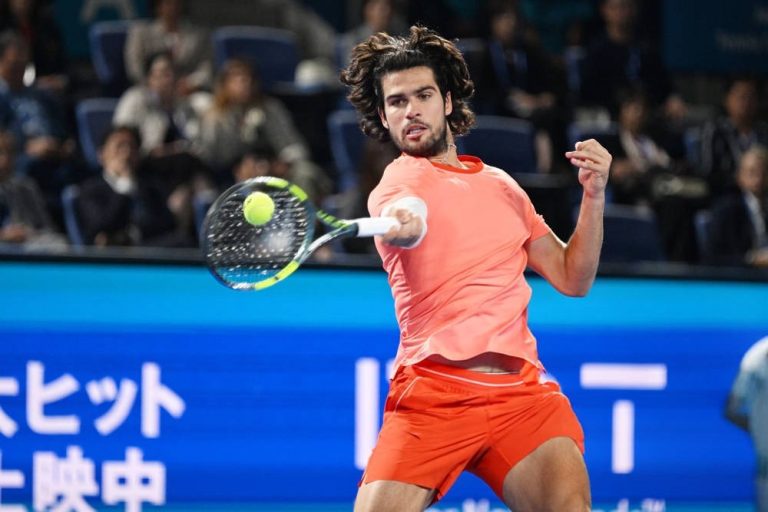
The controversy arose because the timing of matches is crucial in tennis. The time of day can affect recovery and rhythm, impacting athletes’ performance. During his livestream, Fritz explained the scheduling dynamics, stating: “Especially the higher-ranked players. It’s a matter of priorities.” He openly acknowledged the influence of the big names: “At the end of the day, Carlos, Jannik, and Novak, if they play, will get the times they want.”
Fritz further detailed how the draw influences decisions. “You are separated in the draw. Carlos and Jannik will be split. So, one day Carlos will choose, the next day Jannik will choose.” He humbly positioned himself, admitting that his priority is lower than that of the giants on the circuit. “I probably occupy priority number three on the day I play,” he said. “Three or four people will have priority one day over the top eight.”
His acceptance of the reality of the circuit is notable. “If I play against one of those big guys, forget it. What I want doesn’t matter. If I play against Novak and he wants to play at night, it’ll be at night,” he explained. He acknowledges the lack of influence he has, but without resentment.
Concerns about scheduling are not new. Players have already voiced their frustration about the unfairness of extreme timings, which hinder recovery. Tennis player Anna Kalinskaya expressed her frustration at the Cincinnati Open after a match that had her returning home at 2:40 AM, only to find out that her next match was scheduled for 11 AM. Her indignation was clear: “How can they expect athletes to perform at their best under such conditions?”
Recently, Emma Raducanu also criticized the difficult timings at the Australian Open, pointing out that the schedule made preparation challenging. “It’s really tough,” she admitted. “I wish I had more time to adjust, but I’m trying to make the best of what I’ve been given.”
Now, with Fritz’s statements, the discussion about match scheduling gains new momentum. He raised a concern that many in the men’s circuit share: the disproportionate influence of elite players on match timings. It remains to be seen whether competitive balance and player well-being will carry more weight in future decisions. The controversy is sparked, and the echoes of his words still resonate among fans and fellow professionals.
Discover more from Apito Final
Subscribe to get the latest posts sent to your email.