


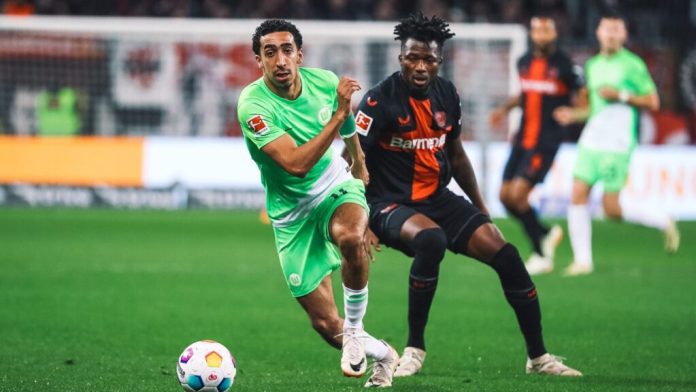
Wolfsburg on the brink: 30 years in the Bundesliga at risk amid unprecedented crisis
The Bundesliga’s sleeping giant, Wolfsburg, is on the verge of a historic collapse that threatens to end three uninterrupted decades in the elite of German football. The club, under the control of Volkswagen and national champions in 2009, is now experiencing a deep crisis, with an alarming record of 68 goals conceded and only 21 points from 27 matches, sitting in second-to-last place in the table. With just seven matches remaining, they must avoid the first relegation since 1997, a scenario that could plunge the team into a true nightmare.
The Bundesliga is preparing to witness yet another dramatic fall of a traditional club. Following the traumatic experiences of Hamburg, Schalke 04, and Hertha Berlin, it is now Wolfsburg that faces the precipice. The historic “Wolves” are not only in direct relegation territory, but they also face a titanic struggle to at least secure a playoff for survival against the third-placed team in the second division—a situation already experienced in 2016/17 and 2017/18, but this time it seems even more critical.
This alarming scenario stands in stark contrast to the club’s recent past, which seemed to have overcome difficult times thanks to relatively stable seasons. However, the shadow of the legendary Félix Magath’s team looms like a distant ghost: that squad, featuring the lethal duo of Dzeko and Grafite, which secured Wolfsburg’s only German title in 2009, now feels like a distant and unattainable memory. The illusion of stability quickly crumbles, exposing the structural fragility of a club that believed itself to be solid.
The crisis at Wolfsburg is not limited to the pitch. Discontent with the club’s top officials is growing, and technical instability has been a constant throughout the season. The team started the championship under the management of Paul Simonis, who was quickly replaced by Daniel Bauer in an attempt to turn things around. Without success, the club turned to Dieter Hecking, an experienced figure who previously led the “Wolves” from 2012 to 2016, winning the DFB-Pokal and the Supercup in 2015. However, this gamble did not yield immediate results, with Hecking managing to secure only one point in two matches, insufficient to calm the unrest and ensure hope.
In addition to sporting difficulties, Wolfsburg faces the stigma of being a team financially supported by a giant in the automotive sector, Volkswagen, which fuels the controversy surrounding the 50+1 rule of the Bundesliga, designed to ensure majority control of clubs by their members. This factor has isolated the “Wolves” in the German football landscape, generating distrust and resentment that, combined with poor results, threaten to break the resistance that has kept the club in the elite for 30 consecutive years.
The clock is ticking and Wolfsburg now faces an almost impossible mission: to withstand the pressure, regain form, and secure their place in the Bundesliga. The fall of the “Wolves” would not only be a sporting defeat but a symbol of the collapse of a model that seemed unshakeable. The future of the club hangs by a thread — and German football watches, mercilessly, the unfolding of this drama that could forever redefine the history of Wolfsburg.
This article first appeared on Apito Final.
Discover more from Apito Final
Subscribe to get the latest posts sent to your email.

