Extreme heat is turning the start of Wimbledon into a true test of endurance, and even the greatest talents in world tennis are not escaping the consequences of the heatwave sweeping through London. Temperatures reached 33°C at the National Tennis Centre in Roehampton, forcing the suspension of qualifying matches due to the overheating of the electronic line calling system — an almost unthinkable scenario at one of the sport’s most traditional venues.
On Wednesday, the qualifying session was abruptly interrupted around 12:15 PM when the officiating equipment stopped functioning due to the sweltering heat. Despite the efforts of the technicians, who managed to restore power and resume the matches later, the Met Office’s warning remains: even higher temperatures are expected in the coming days, significantly affecting not only the athletes but also the general population. In light of this unusual situation, Coco Gauff and Naomi Osaka, two of the biggest stars on the women’s circuit, stepped up and directly addressed the challenges of competing under these extreme conditions.

*The World Cup is experienced with LEGO*
[THE 2026 WORLD CUP IS EXPERIENCED WITH LEGO](https://www.lego.com/pt-pt/categories/football/football-gifts-toys)
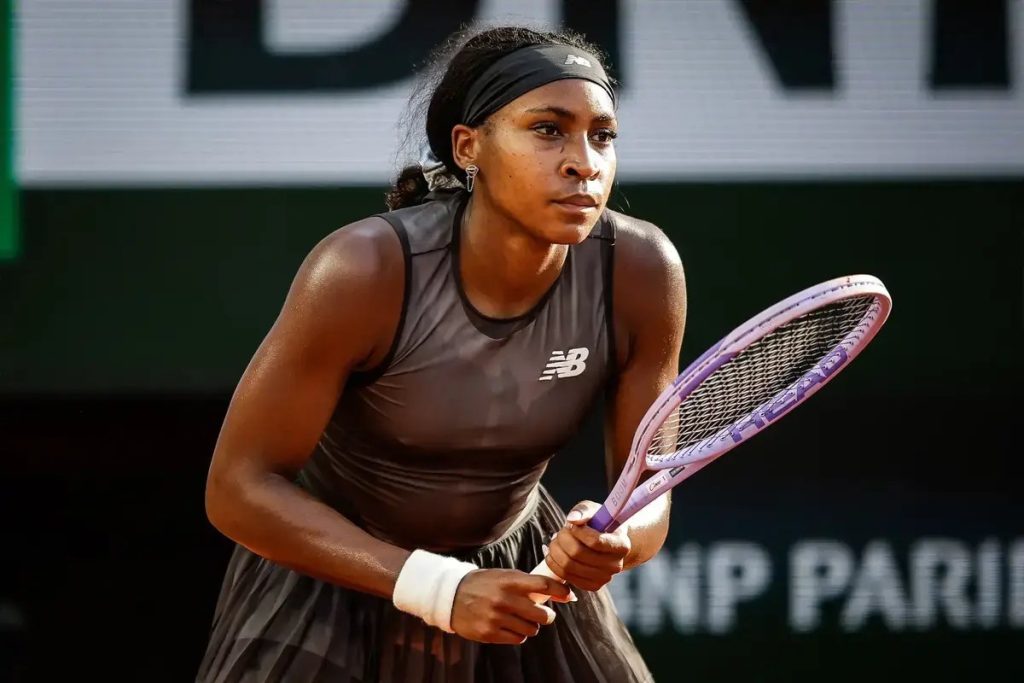
While for many athletes the British heat represents an unexpected challenge, for Coco Gauff, a native of Florida, the situation is almost routine. “Playing in these conditions isn’t that bad because I’m from Florida, but just existing in this heat is difficult because air conditioning isn’t everywhere,” Gauff admitted, highlighting the contrast between the comfort on the courts and the difficulties of daily life in London—hotels, transportation, interviews, and a city ill-prepared for this kind of summer. Naomi Osaka goes even further, revealing a certain fondness for the extreme weather: “Honestly, I handle the heat well. Aside from the interviews and things like that, I love the heat. I even prefer it. It was hot in Paris a few weeks ago and I enjoyed that too. So, I actually want it to be hot,” confessed the Japanese player. These statements were made during the press conferences leading up to Wimbledon, revealing different ways of coping with the weather phenomenon that threatens to mark this year’s edition.
The competitive backdrop of the two players could not be more contrasting. Coco Gauff arrives at Wimbledon in an uncomfortable phase of her grass season. Following an early exit at the Berlin Open against Paula Badosa, Gauff has recorded three consecutive losses in singles on grass since last year, showing frustration with the surface and a sharp decline in her first serve percentage throughout the sets. Even in doubles, alongside Jessica Pegula, she did not progress beyond the quarter-finals. Despite her dominance on other surfaces, grass remains a tough obstacle for the young American, whose best performance at Wimbledon consists of three appearances in the round of 16. With the main draw starting on June 29 and no further preparation matches, Gauff is seeking a fresh start after a first-round exit in 2023.
On the opposite end, Naomi Osaka chose not to compete in the Berlin tournament, opting instead to prepare in Bad Homburg — a decision that seems to have paid off immediately. She convincingly defeated Magdalena Frech and Elise Mertens, reaching her first quarter-final on grass since ‘s-Hertogenbosch two years ago. Against Mertens, Osaka impressed with seven aces, winning 86% of her first serve points and committing only eight unforced errors. This performance marks a turning point for an athlete who has always struggled on grass, but who now appears to be finally adapting to the more unpredictable surface of the circuit.
The evolution of the Japanese player is even more remarkable considering her recent journey on clay, where she reached the fourth round of Roland Garros for the first time, matching the achievement of Shinobu Asagoe in 2004 for Japanese women’s tennis. Osaka lost to world number one Aryna Sabalenka, but the upward trend is evident. After her victory over Mertens, Osaka spoke openly about her complicated relationship with grass: “When I was younger, in my first season on grass, I got injured. I slipped, and that scared me quite a bit. I became apprehensive about moving on grass,” she explained, emphasizing how that hesitation has followed her over the years. “I’m learning to like grass, just like I did with clay. Everyone says I have a lot of potential on this surface, and I’ve been hearing that for years. I’m just trying to adapt,” she added.
The preparation in Bad Homburg brought clear signs of progress, with Osaka highlighting the improvement in her movement: “Coming from clay, it’s very different. I’m giving my body time to adjust to the surface,” she said. Today, she faces Ekaterina Alexandrova in the quarter-finals, and a potential run to the final could provide her with the grass experience that has been lacking in previous seasons. She arrives at Wimbledon more confident and physically fit than in previous years, with the heat being the least of her worries.
The heatwave in London is set to remain a decisive factor — not only in the unfolding of the matches but also in the preparation and recovery of the athletes. It remains to be seen whether Coco Gauff can overcome her grass court struggles and if Naomi Osaka will confirm her resurgence on this surface. One thing is certain: this Wimbledon is far from being just another tournament — it is a test of fire that could redefine careers and surprise even the most seasoned players.
NOW YOU CAN FOLLOW THE WORLD CUP WITH ALL THE INFORMATION – HERE
Discover more from Apito Final
Subscribe to get the latest posts sent to your email.