


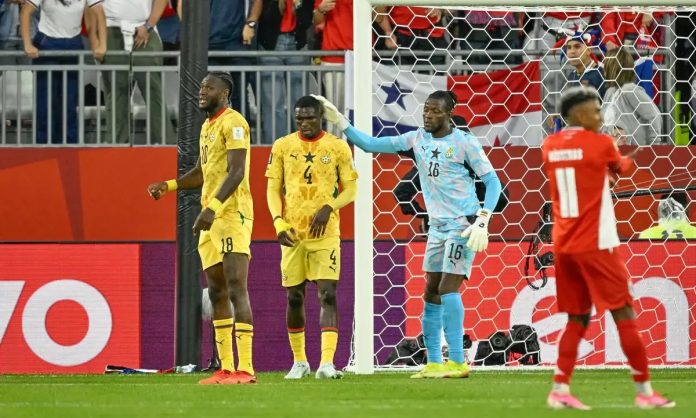
FIFA has completely revolutionized the way group stage tables are ordered in the World Cup by introducing a new tiebreaker criterion that could turn the competition upside down and transform the strategic approach of national teams. For the first time in the history of the World Cup, head-to-head results will be the primary tiebreaker between teams that finish with the same points, relegating the traditional goal difference to a secondary position.
This change will take effect at the 2026 World Cup in the United States, Canada, and Mexico, and promises to have an immediate and potentially explosive impact on the final matches of the group stage. Until now, since 1970, goal difference has been the preferred criterion by FIFA to separate teams tied on points, valuing the total results of the group. Prior to that, until 1966, the goal ratio was used, dividing the goals scored by the goals conceded. With this change, FIFA finally aligns itself with UEFA, which has long prioritized head-to-head performance among teams, considering it fairer and less susceptible to distortions caused by atypical results, such as Germany’s famous 7-1 victory over Curaçao.
*The World Cup is experienced with LEGO*
[THE 2026 WORLD CUP IS EXPERIENCED WITH LEGO](https://www.lego.com/pt-pt/categories/football/football-gifts-toys)
The logic of FIFA is clear: “Assessing the direct performance between two teams is fairer, as it eliminates the impact of abnormal results,” explained sources close to the organization, emphasizing that this way it prevents a team from benefiting from a crushing victory against a weaker opponent to surpass direct rivals. However, many argue that goal difference remains a more accurate indicator of performance consistency throughout the group stage.
This new approach to tiebreakers has already been successfully tested at the last Club World Cup, when Flamengo finished ahead of Chelsea in Group D, thanks to the direct confrontation, despite having the same number of points. Now, with the arrival at the biggest stage of world football, the consequences could be even more dramatic.
One of the most immediate effects is that it will be much easier for a team to secure not only qualification but also first place in the group right after the second matchday, something that was rare with the previous system. Previously, a team needed to be four points ahead of the second-placed team after two games to mathematically ensure the top spot in the group, which only happened if the other two matches ended in draws. Now, it is enough to be three points ahead and have defeated the direct opponent to guarantee first place, making the final matchday, in many cases, irrelevant for the leaders.
The case of Mexico perfectly illustrates this new reality. After winning the first two matches and accumulating six points, the Mexican national team can no longer be surpassed by South Korea, which has three points, because Mexico has already defeated them in their direct encounter. With the Czech Republic and South Africa tied with one point each, Mexico knows that it will face a third-placed team in the Round of 16, at home, in Mexico City. This creates a scenario where Mexico can rest key players and manage the squad against the Czech Republic, indirectly benefiting the latter in a potential fight for qualification among the best third-placed teams.
The advantage of securing early qualification extends to several groups. For example, in the battle for the top spot in Group C, Scotland can secure first place if they defeat Morocco and Brazil does not beat Haiti. In Group D, the United States only need to win against Australia and for Turkey not to win against Paraguay to guarantee the top position. Germany, in Group E, will seal qualification if they beat Ivory Coast and Ecuador does not triumph over Curaçao. The same applies to Sweden in Group F, provided they defeat the Netherlands and Japan does not beat Tunisia; or to Argentina in Group J, if they overcome Austria and Jordan does not win against Algeria.
This dynamic could revolutionize squad management, as teams that secure qualification early may choose to rotate players in the final matchday, altering competitive balance and benefiting opponents still fighting for qualification. The pressure on coaches increases, necessitating a much more sophisticated strategic reading, where each match between direct contenders carries decisive weight.
With FIFA’s new criteria, excitement and controversy are set to increase, as the fate of teams can be decided much earlier, and final matches may lose intensity or, conversely, become genuine early finals. It remains to be seen whether this bet on sporting justice will be well received by fans and the participants themselves, or if it will end up generating new controversies and endless debates. For now, what is certain is that the 2026 World Cup has already begun to be played… off the pitch, in the rules that can determine a champion.
NOW YOU CAN FOLLOW THE WORLD CUP WITH ALL THE INFORMATION – HERE
Discover more from Apito Final
Subscribe to get the latest posts sent to your email.

