


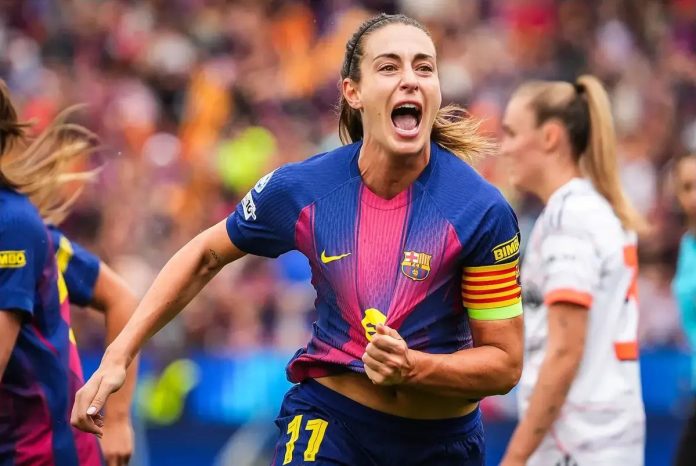
In the UEFA Women’s Champions League, Bayern Munich saw their European dreams fade away in a night of adrenaline, emotion, and sheer frustration. The German team fell in the quarter-finals against the powerful Barcelona, who once again proved why they are an almost unbeatable force in women’s football, winning 4-2 in the decisive match and 5-3 on aggregate. This clash was more than just a game: it was an intense psychological battle where Bayern, despite their Herculean effort, could not erase the mental dominance of the Catalans.
Bayern did not just lose the match: they lost the palpable feeling, until the last minute, that qualification for the final was possible. There were moments when the German team showed courage, tactical organization, and the ability to seriously trouble Barcelona. Linda Dallmann’s equalizer reignited hopes, and the tireless Pernille Harder fought until the very last second, with Bayern throwing everything on the pitch in search of a turning point. But, as so often happens, Barcelona has the talent to extinguish any flicker of hope with brutal speed.
The challenge was led by José Barcala, whose team took to the field without fear, even when trailing on aggregate. Bayern pressed aggressively, advancing in numbers and attempting to destabilize Barcelona’s ball distribution. This strategy was effective for a while. Salma Paralluelo scored early for the Catalans, but Dallmann responded almost immediately, momentarily silencing the crowd and making the stadium buzz with the prospect of a comeback. For a brief moment, Barcelona seemed vulnerable, human.
But star Alexia Putellas quickly restored the azulgrana lead before halftime, bringing back emotional control of the game. From that point on, Bayern remained technically in the game, but lost psychological dominance – a crucial factor that differentiates the best European teams. The second half saw Barcelona’s pressure grow to nearly suffocating levels. Ewa Pajor scored the third goal for the Spaniards, with Putellas sealing the tie with another goal. Even with Harder pulling one back at the end, the feeling was clear: Bayern was chasing a result more with heart than with head.
Physically and tactically, the difference between the teams was not overwhelming. What separated the two teams was the calmness and emotional intelligence of Barcelona. Whenever Bayern seemed to gain any momentum, Barcelona relentlessly controlled the game, slowing the pace and maintaining the lead with a silent authority. This relentless control is what makes the Catalans such a difficult team to beat on big European nights.
For Bayern, this defeat is a double blow. The team has grown under Barcala’s guidance, showing a maturity and domestic strength that it previously lacked. Players like Harder, Dallmann, and Glódís Viggósdóttir are establishing themselves as stars who deserve to be on this stage. However, Barcelona remains the ultimate obstacle, the test that consistently challenges Bayern’s ambitions.
At the end of the match, the emotions were mixed: there was sadness, yes, but never shame. Bayern did not crumble or falter under pressure. They simply faced a team that knows, like no other, how to manage and dominate these decisive nights. The UEFA Women’s Champions League once again became the stage for an epic duel where Bayern’s frustration mingles with respect for Barcelona’s mastery – a European giant that continues to reign with an iron fist.
This article first appeared on Apito Final.
Discover more from Apito Final
Subscribe to get the latest posts sent to your email.

