


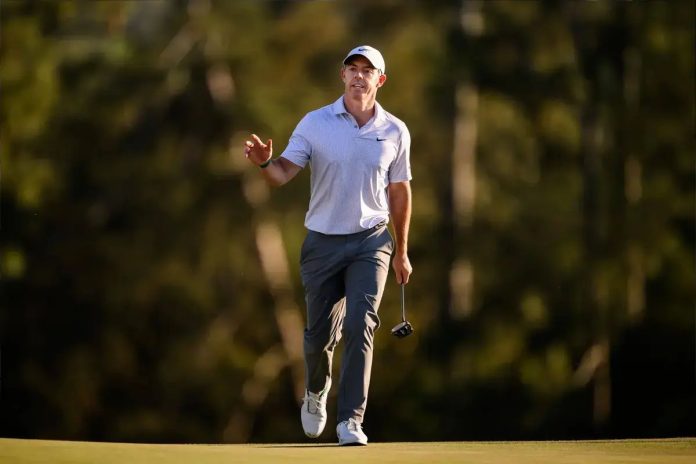
Rory McIlroy makes history in Augusta: historic lead and a steel mind to dominate the Masters
Never before in the history of the Masters has anyone led by six strokes at the end of 36 holes at Augusta National. Not even legends like Jack Nicklaus or Tiger Woods achieved such a feat. Rory McIlroy, the reigning champion, not only broke this record but did so emphatically, finishing the second round with a total of 132 strokes — the lowest ever recorded by a defending Masters champion, surpassing the previous mark by three strokes.
This overwhelming dominance, however, brings with it a significant psychological weight. The crowd in the stands grows louder, the pressure to maintain the lead intensifies, and the giant scoreboards seem to shout the Northern Irishman’s name with every step. But McIlroy revealed at the end of the day that his strategy is simple: pretend that none of it matters.
“I just want to play two good rounds again. This course has characteristics that allow for incredible runs – eagles, applause echoing throughout the forest. Over the next two days, my focus is really on myself. It’s hard to ignore the big scores, but I know I have an advantage; I don’t need to constantly look at them. Staying in my own world is the best I can do,” McIlroy stated with the composure of someone who knows what is at stake.
This mentality is crucial. At Augusta, the atmosphere can be treacherous: at any moment, an eagle on the iconic 13th can ignite the crowd and change the course of the competition. The course is known for turning comfortable leads into fierce battles in the blink of an eye. Rory, however, has learned these lessons in the past.
The numbers do not lie. Since 1936, only Harry Cooper has failed to convert a lead of five or more strokes at the end of 36 holes into victory at the Masters. This year, his closest pursuers, Sam Burns and Patrick Reed, are six strokes behind, at six under par, leaving McIlroy isolated in a position never seen before. Players like Jordan Spieth, Floyd, Nicklaus, and Keiser have led by five strokes and triumphed – but a six-stroke lead is unprecedented.
The way he built this advantage is also impressive. Six birdies in seven holes, including a masterful chip from the trees on the 17th, opened up the gap. Now, the key to securing the title lies in his mental strength.
While McIlroy stays focused, other golf giants face the challenges of Augusta. Bryson DeChambeau, who played in the final group last year, saw his campaign crumble with a triple bogey on the 18th and ultimately missed the cut. This is the brutal unpredictability of Augusta: some find their rhythm, while others cannot withstand the pressure.
McIlroy is not just fighting to maintain his lead — he is trying to enter an exclusive club of the greatest in Masters history. Winning in consecutive years is an achievement reserved for three legends: Jack Nicklaus (1965-66), Nick Faldo (1989-90), and Tiger Woods (2001-02). The Northern Irishman is just a weekend away from joining these immortal names.
The weight of his career is present, but something has changed for McIlroy. After achieving the career Grand Slam last year, he feels lighter than ever before at Augusta. “This season has been liberating, I feel more relaxed than ever,” he confessed. Now, it remains to be seen whether his calm will hold up in the face of the storm of expectations and pressure.
There are only two rounds left in the 2026 Masters. Rory McIlroy’s lead is the largest ever at this point in the tournament. With a focused mind and shielded against distractions, he is ready to write another chapter of glory at Augusta — or to show that even the greatest can succumb to pressure.
Follow every stroke of this epic battle and see if Rory McIlroy can turn the historic lead into a legendary victory. The Masters has never been so unpredictable — and so fascinating.
This article first appeared on Apito Final.
Discover more from Apito Final
Subscribe to get the latest posts sent to your email.

