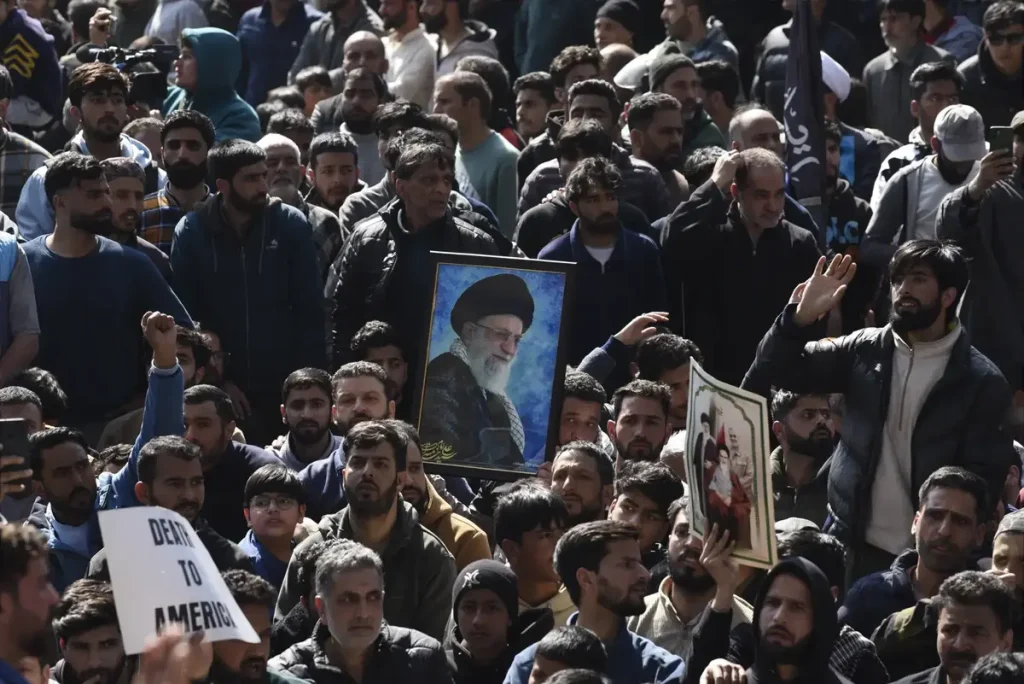
The Islamic Republic of Iran is going through a period of great turmoil with the confirmation of the death of Ali Khamenei, the supreme leader who governed the country for an impressive 36 years. At the age of 86, Khamenei left behind a complex legacy, and his death, announced by Iranian state television, has triggered a wave of national mourning. To mark his passing, the government declared a 40-day mourning period and seven public holidays, a decision that reflects the deep reverence many Iranians still hold for him.
During the broadcast, state television displayed a black banner as a sign of mourning, interspersed with archival footage of the ayatollah, evoking memories of a leader who shaped Iranian politics and society. A presenter from the network did not hesitate to state that, despite his death, “the path and mission of the supreme leader will not be lost or forgotten; on the contrary, they will be pursued with even more vigor and zeal.” This statement underscores the regime’s attempt to galvanize popular support and maintain the continuity of its ideology.
Although the cause of Khamenei’s death has not been disclosed, rumors and speculation are running rampant. The situation becomes even tenser with the mention of attacks attributed to Israel and the United States, which reportedly occurred shortly before his death, visibly complicating the atmosphere of uncertainty. Booms and explosions were heard in Tehran shortly after the announcement, intensifying the sense of crisis in the country.
The leaders of Israel and the United States, in turn, wasted no time in commenting on the event. The U.S. President, Donald Trump, referred to the death of Khamenei as an “opportunity” for the Iranian people, stating that “this is the greatest opportunity for the Iranian people to reclaim their country.” His words, which can be seen as provocative, reveal the geopolitical tension that characterizes the relationship between the West and Iran.
On the other hand, the Revolutionary Guards, the military elite of the regime, quickly responded vehemently. In an official statement, they promised “severe punishment” for those responsible for Khamenei’s death, accusing the governments of the United States and Israel of “criminal and terrorist acts.” The bellicose rhetoric shows that, even in the pain of loss, the regime is determined to maintain its firm stance against external adversaries.
With the death of Ali Khamenei, Iran faces an uncertain future. Internal and external tensions may escalate as the country navigates a period of mourning, but also potential political instability. What is clear is that Khamenei’s figure, despite now being absent, will continue to influence the Iranian landscape as his supporters and opponents prepare for the consequences of his death.
Discover more from Apito Final
Subscribe to get the latest posts sent to your email.