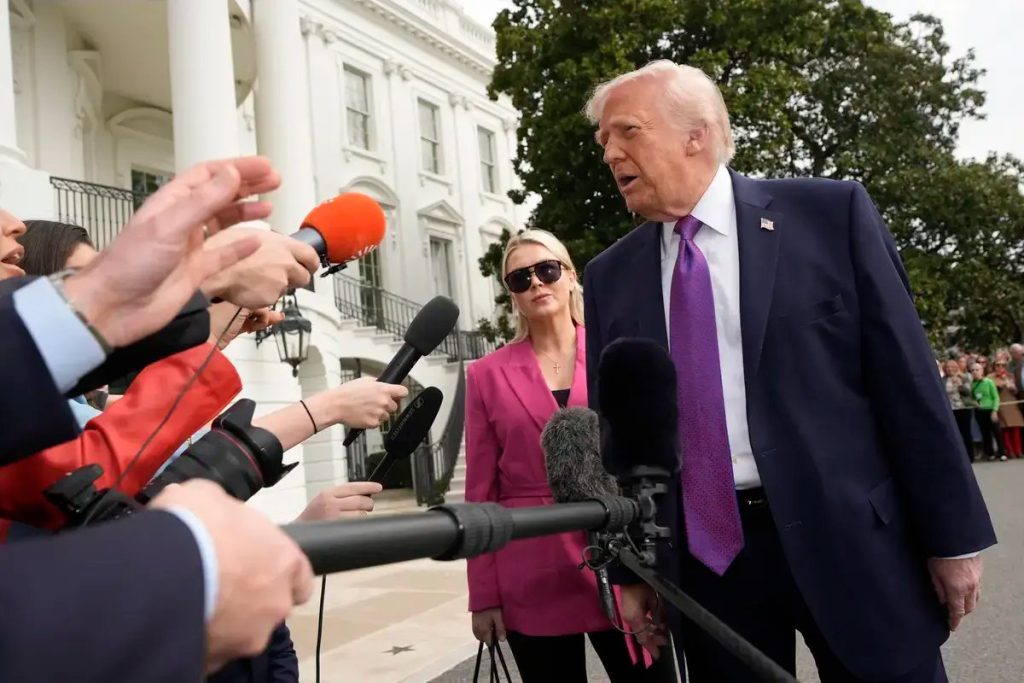
The world is in turmoil over the latest statements from former President Donald Trump, who claims that the war is won but warns that “we don’t want to leave early.” These words, spoken in a context of rising international tension and increasing oil prices, have not gone unnoticed and have sparked a wave of reactions.
Trump, known for his provocative statements and his ability to manipulate narratives, appears to be trying to reaffirm his strong stance on national security issues. At a time when oil prices are rising once again, his message may be seen as an attempt to consolidate his image as a leader unafraid to confront global challenges. By asserting that the war is won, Trump not only seeks to reinforce his support base but also positions himself as an authority figure on matters that directly affect the economy and global stability.
His statements have been met with skepticism and concern by many analysts and political commentators. The idea that one can “win” a war is complex and often reflects more political rhetoric than the reality on the ground. War, in its many forms, is a sensitive subject, and the notion of victory is frequently subjective. Furthermore, the insistence on not leaving “early” raises questions about the human and financial costs of prolonging conflicts that many would like to see resolved.
The rise in oil prices, which is already impacting global economies, adds a new layer of urgency to this discussion. Consumers are feeling the pressure at the fuel pumps, and countries dependent on oil imports are facing a dilemma. What does the former president really intend with these statements? The answer to that question could influence everything from the economy to U.S. foreign policy and its relations with the rest of the world.
Meanwhile, the international community is watching closely. Trump’s rhetoric may have repercussions that extend beyond U.S. borders. With the ongoing war and markets reacting, the former president appears to be making a calculated move to remain relevant in the political landscape, even after leaving the White House. His words, although controversial, have the power to shape opinions and influence decisions in an era of uncertainty.
In summary, Trump’s words not only resonate with his supporters but also cast a shadow over the future of international relations and the global economy. The war may, according to him, be won, but its consequences remain an open battleground, where the cost of victory may be greater than many are willing to pay.
Discover more from Apito Final
Subscribe to get the latest posts sent to your email.