


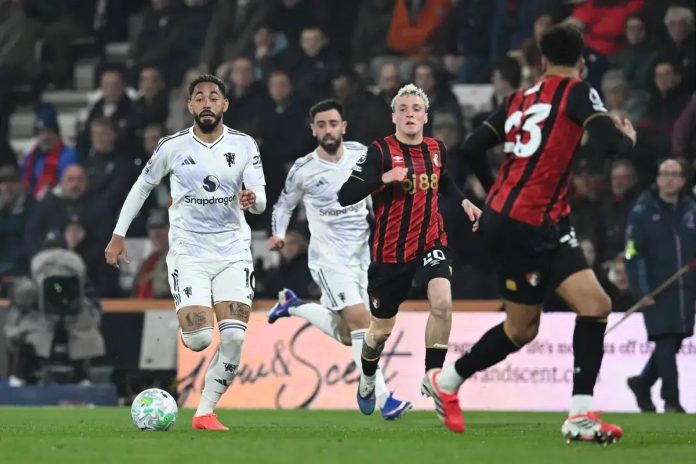
Manchester United faced another tough challenge in the Premier League, drawing 2-2 against Bournemouth in a match that left fans questioning the team’s ability to maintain a lead. With a two-goal advantage, the Red Devils seemed on track to secure three vital points, only to see victory slip away—a reality that has become commonplace against this opponent. An analysis of this clash reveals crucial lessons for Manchester’s squad under the management of Michael Carrick.
“United are unable to give themselves an easy life against Bournemouth,” were the words that echoed after the match. The first goal was scored from a penalty by Bruno Fernandes, followed by an own goal from James Hill, raising the team’s hopes. However, defensive frailties and finishing inefficiencies allowed Bournemouth to equalize with a late penalty, frustrating any illusions of victory for the visitors.
Self-sabotage was a recurring theme in the match. Carrick’s team had a promising start, but a lack of concentration and the inability to capitalize on their early advantage proved decisive. The turning point came with the reckless foul by Harry Maguire, which resulted in a red card, destabilizing the defense and allowing Bournemouth to take the opportunity to get back into the game. The phrase that defines United‘s performance is clear: “Self-sabotage began before the first goal.”
A glimmer of hope was the intensity of the game, which had a vibrant start. After a lethargic phase that culminated in defeat, the team showed determination and a more energetic approach. Players like Matheus Cunha, Amad, and Fernandes brought dynamism, creating several opportunities, although a goal remained elusive. However, the intensity did not hold, and in the second half, the game became disorganized, jeopardizing the solidity the team was beginning to build.
The attacking line of United showed uneven performance. While the left wing, led by Cunha, was in great form, the central attack proved ineffective. Bryan Mbeumo, who started as a starter, failed to justify the selection, delivering a performance filled with misplaced passes and clumsy touches. The lack of alternatives, such as Benjamin Sesko, only exacerbates the situation, leading to growing concerns about the lack of depth in the squad.
On the other hand, the presence of Senne Lammens in goal has been a positive aspect. The young goalkeeper, who joined the club from the Belgian league, has once again demonstrated that he is a valuable addition. Without blame for the goals conceded, Lammens has stood out as a reliable figure between the posts, showing a leadership ability and control that many fans expected. The confidence he exudes is making a tangible difference in the morale of the defense, something that should be noted even in a less favorable result.
In summary, the draw with Bournemouth exposes the weaknesses of a Manchester United that is still struggling to find its identity. The lessons of self-sabotage, the search for intensity, the need for a balanced attack, and the confirmation of a reliable goalkeeper are elements that Carrick will need to address if he wants to transform the team into a genuine contender for success in the Premier League. The near future demands quick answers to prevent history from repeating itself in the upcoming matches.
Discover more from Apito Final
Subscribe to get the latest posts sent to your email.

