


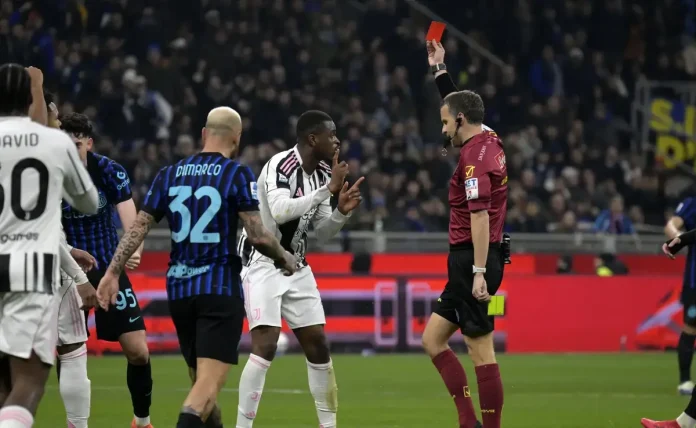
In the heart of Milan, controversy and outrage took over the famous Derby d’Italia between Inter and Juventus, following a refereeing decision that left many questioning the integrity of the game. Referee Federico La Penna became the target of criticism after issuing a red card to Pierre Kalulu, an act that refereeing experts consider a “serious error.” The situation, which unfolded just minutes before halftime, sparked a wave of reactions that reverberated throughout the football community.
Kalulu, already on a yellow card, cut across the path of Alessandro Bastoni, but the truth is that the lack of any real contact between the two players was the cause of a mistake that, according to analysts, could have been avoided. Both experts, Luca Marelli and Graziano Cesari, did not hold back in their criticism of La Penna. Marelli, an official from DAZN, pointed out that “it’s a very serious error, but there’s nothing to be done, as VAR cannot intervene in situations involving a second yellow card.” The indignation was palpable when Kalulu expressed his disbelief with a gesture towards the VAR, which, however, had no power to act in that circumstance.
Television footage was meticulously analyzed, and the conclusion is clear: “There was no contact between Kalulu and Bastoni,” reiterated Marelli. Former referee Cesari was even more emphatic: “It’s a colossal mistake. The second yellow card makes no sense. The distance between the players is evident, and La Penna should have a clear view, but he ends up completely erring. This refereeing failure also spares Bastoni from a second yellow for simulation.”
The atmosphere at the Giuseppe Meazza during and after the incident was electrically tense. Cristian Chivu, the Juventus coach, anticipated potential problems and substituted Bastoni at halftime. However, the controversial display by the Inter defender was not limited to the pitch; cameras captured moments when Bastoni, instead of showing empathy for his struggling teammate, celebrated Kalulu’s dismissal with visible enthusiasm.
As the season progresses and pressure mounts on referees and their decisions, this situation is not just an isolated incident, but rather a reflection of the growing tensions surrounding officiating in modern football. The question now is: how far will the discussion about the effectiveness of officiating technologies and the role of referees in the game go? The answer could have profound repercussions on how football is played and managed in the times to come.
Discover more from Apito Final
Subscribe to get the latest posts sent to your email.

