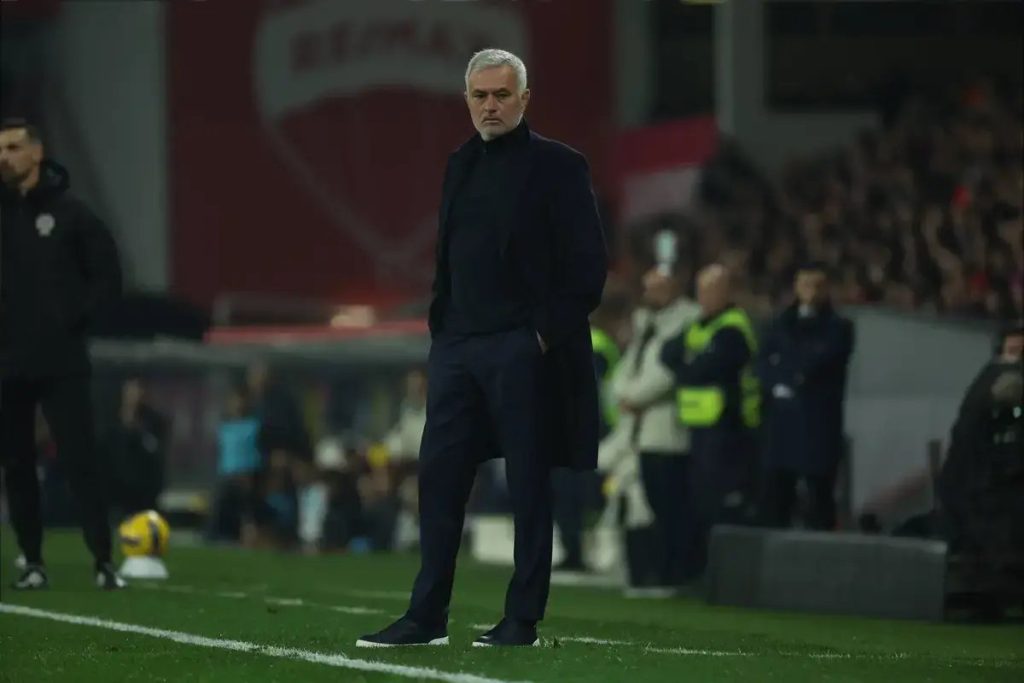
The surprising and controversial return of José Mourinho to the helm of Real Madrid, thirteen years after a tumultuous departure, is reigniting intense debates among fans and experts in world football. Few were astonished by this decision; after all, Florentino Pérez, the president of the club, is known for a tight circle of trusted coaches, and Mourinho is a name that has never faded from his list. The inconvenient truth is that, at Real Madrid, attempts to renew the coaching staff with innovative trainers almost always end in disappointment, leading the club to revert to its traditional choices.
This return of the “Special One” is not a surprise, but rather a confirmation of the philosophy that prevails at the Santiago Bernabéu: the preference for pragmatic coaches who know how to adapt to the stars on the field, rather than imposing complex and revolutionary systems. Carlo Ancelotti and Zinedine Zidane are clear examples of this winning model, both shaping the team to enhance the individual qualities of the players, instead of subjecting them to a rigid tactical dogma. And let us not forget: Real Madrid is the club with the most UEFA Champions League titles, with fifteen trophies.
José Mourinho, although he shares some traits of this pragmatism, has his own approach that, during his first spell at the club, proved to be an authentic carousel of emotions. The defensive and counter-attacking style that took Mourinho to the peak at clubs like Porto, Chelsea, and Inter was used to confront the dominance of Guardiola’s Barcelona, a team that relied on innovative possession and positional football. Recall the famous elimination of Barcelona by Inter in the Champions League, where Mourinho won with only 14% possession, using Samuel Eto’o as an improvised left-back.
However, José Mourinho’s time at Real Madrid was not only filled with glory. The most significant, and perhaps most humiliating, moment was the historic and devastating 5-0 defeat in the clásico against Barcelona in November 2010. This setback not only lingered in the memories of fans but also served as a catalyst for Mourinho to implement his style, which contrasted sharply with the fluid and positional play of the Catalan opponent. For him, it was “his way or a long phase of humiliation.” And despite the criticisms and controversies, this method proved successful: Mourinho’s team won the league with 100 points and 121 goals in his second season.
But the darker side of the Mourinho era in Madrid was far from the pitch. Regrettable episodes, such as the controversial gesture of aggression towards Barcelona’s assistant coach, Tito Vilanova, during an intense confrontation, tarnished his image and created a toxic atmosphere behind the scenes.
Now, with Mourinho back, Real Madrid seems to be repeating a cycle that many consider inevitable: betting on a charismatic and controversial figure who knows how to manage egos and impose discipline, but who can also bring instability. Is this the path to more glories, or a new phase of turbulence? One thing is certain: the world of football is watching and prepared for what promises to be another season of intense emotions at the Santiago Bernabéu.
This article first appeared on Apito Final.
Discover more from Apito Final
Subscribe to get the latest posts sent to your email.