


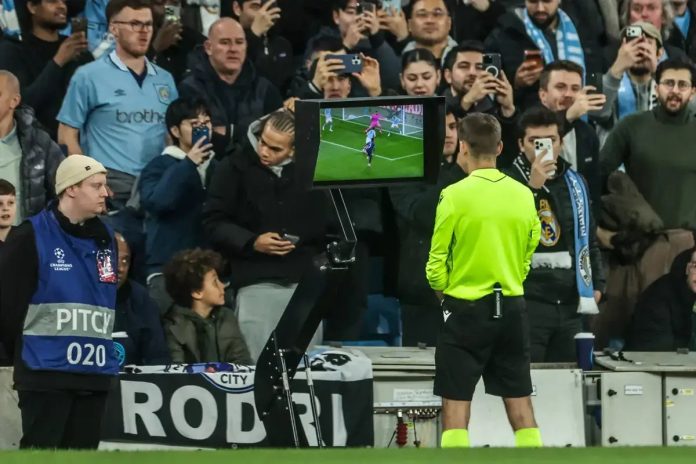
UEFA is about to implement significant changes to the use of VAR in its competitions, especially in the Champions League, with the aim of minimizing the “microscopic” interventions that have generated controversy and dissatisfaction among fans. This decision comes in a context where the differences in the application of VAR between UEFA competitions and leagues such as the Premier League and Serie A are becoming increasingly evident.
The UEFA referee chief, Roberto Rosetti, plans to meet with major European leagues, including the Premier League, after the conclusion of the 2026 World Cup. The focus of these discussions will be to create greater consistency in the application of VAR, a measure aimed at calming both fans and critics of the technology. UEFA is determined to keep VAR in the near future but acknowledges the need to optimize its processes.
In a new approach, UEFA plans to use VAR on corner kicks only when the infringement is easily identifiable before the game restarts, eliminating any delays that could frustrate spectators. This change reflects a clear attempt to make the game more dynamic and less susceptible to prolonged interruptions.
Another topic on UEFA’s agenda is the possibility of eliminating country protection in the early stages of the Champions League, a measure that some clubs are pushing to implement. This move aims to dilute the power of the Premier League, which has dominated the competition. The idea is that national protection would cease to exist from the playoff stage onwards, a change that could have significant impacts, as demonstrated in the clash between Paris Saint-Germain and Monaco this season.
Additionally, UEFA is considering the introduction of streaming platforms for the competition in smaller markets, an initiative inspired by the “Premflix” plan from the Premier League in Singapore. The massive presence of English clubs in the Champions League has sparked heated debates, especially following the reduction from six teams to just two in the quarter-finals, with the eliminations of Man City, Chelsea, Newcastle, and Tottenham.
With the certainty that the Premier League will guarantee five spots every year, there is also a possibility that next season could see as many as seven of the 36 teams, should Liverpool and Aston Villa finish outside the top 5 but secure the Champions League and Europa League, respectively. Some European officials have advocated for the removal of national protection in the early stages, arguing that this could lead to matchups between English teams.
Discussions remain intense among clubs, particularly those in domestic leagues with a single major dominant team. Despite the differences, UEFA and the European Football Club (EFC) are investigating new broadcasting models, including the possibility of making some matches available on platforms similar to Netflix in international markets.
The intention to modernize the way football is presented and consumed is clear, with UEFA trying to adapt to the new realities of the sport and its audiences. The changes being considered promise not only to alter the internal workings of competitions but also to impact the experience of fans, who expect a more fluid game with fewer interruptions due to controversial decisions.
Discover more from Apito Final
Subscribe to get the latest posts sent to your email.

